

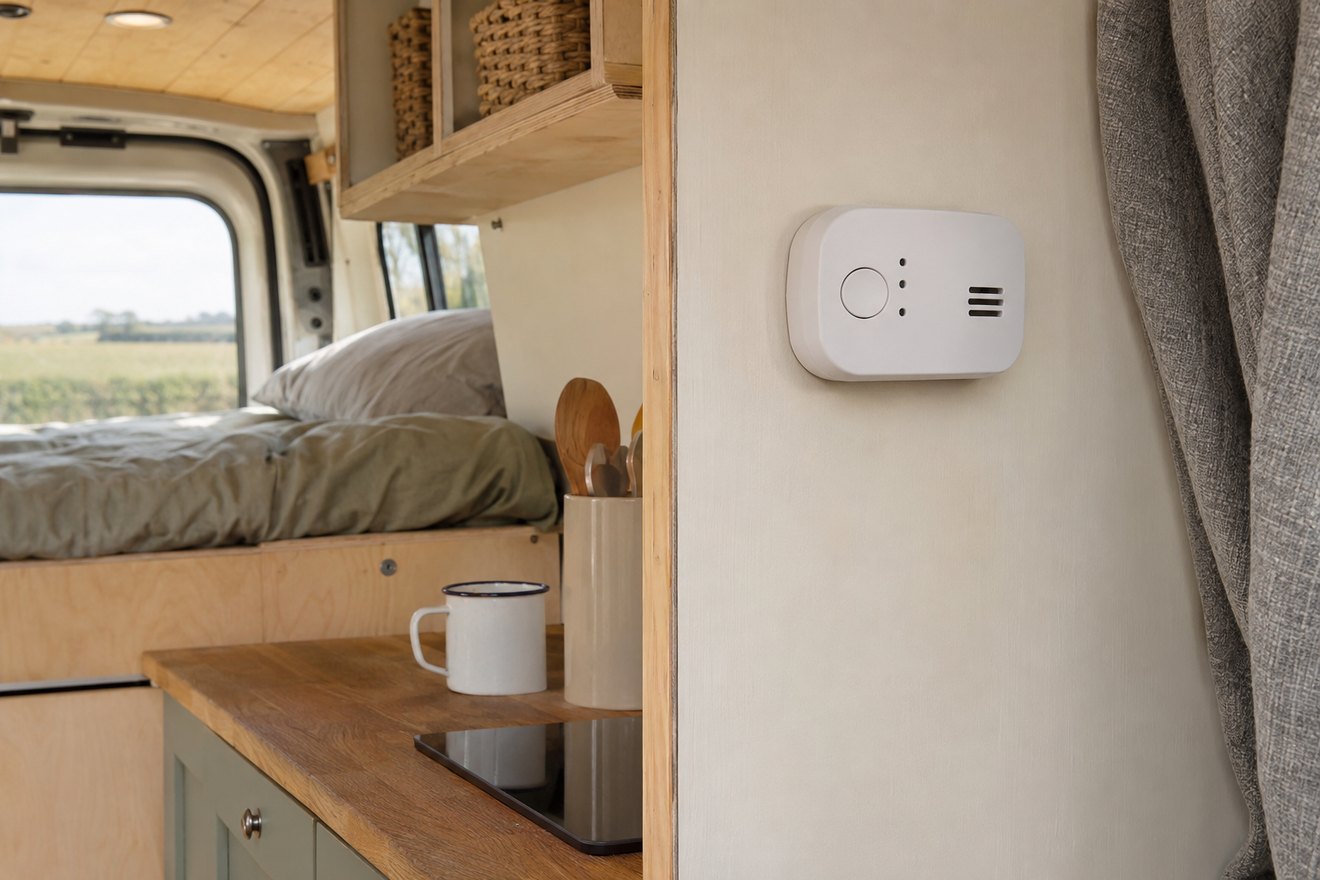
A campervan carbon monoxide alarm provides an audible warning while people are in the van. Choose a model whose instructions cover the vehicle environment. Make its position, testing and replacement part of the handover, alongside the heating and ventilation instructions.
Check the model and its installation guidance
Humberside Fire and Rescue Service directs campervan owners to use a CO alarm tested to BS EN 50291-2. Read the maker’s instructions for the exact model and placement. Check how sleeping areas, cupboards, vents and fittings affect suitable locations and ensure that you can reach the test control. Humberside Fire and Rescue Service campervan safety advice.
Plan what to do if the alarm activates
Make sure everyone staying in the van knows the sound and how to get outside promptly. Follow the alarm instructions and emergency guidance, get into fresh air and seek emergency help if anyone is unwell or there is immediate danger. Keep out until the source is assessed and the van is safe to use. Arrange qualified inspection and maintenance of fuel-burning appliances and keep required ventilation operational. London Fire Brigade carbon monoxide guidance.
FAQ
Can a smoke alarm detect carbon monoxide?
Check the certification and stated functions. Many units are designed for one hazard, and combined units must be suitable for the location and both hazards.
When should I replace a CO alarm?
Use the replacement date and instructions on the unit. Record the date and follow its specified tests between trips.
Read our guide to campervan diesel air heating for the next part of the build. You can also send your layout and measurements to NEVAN.