
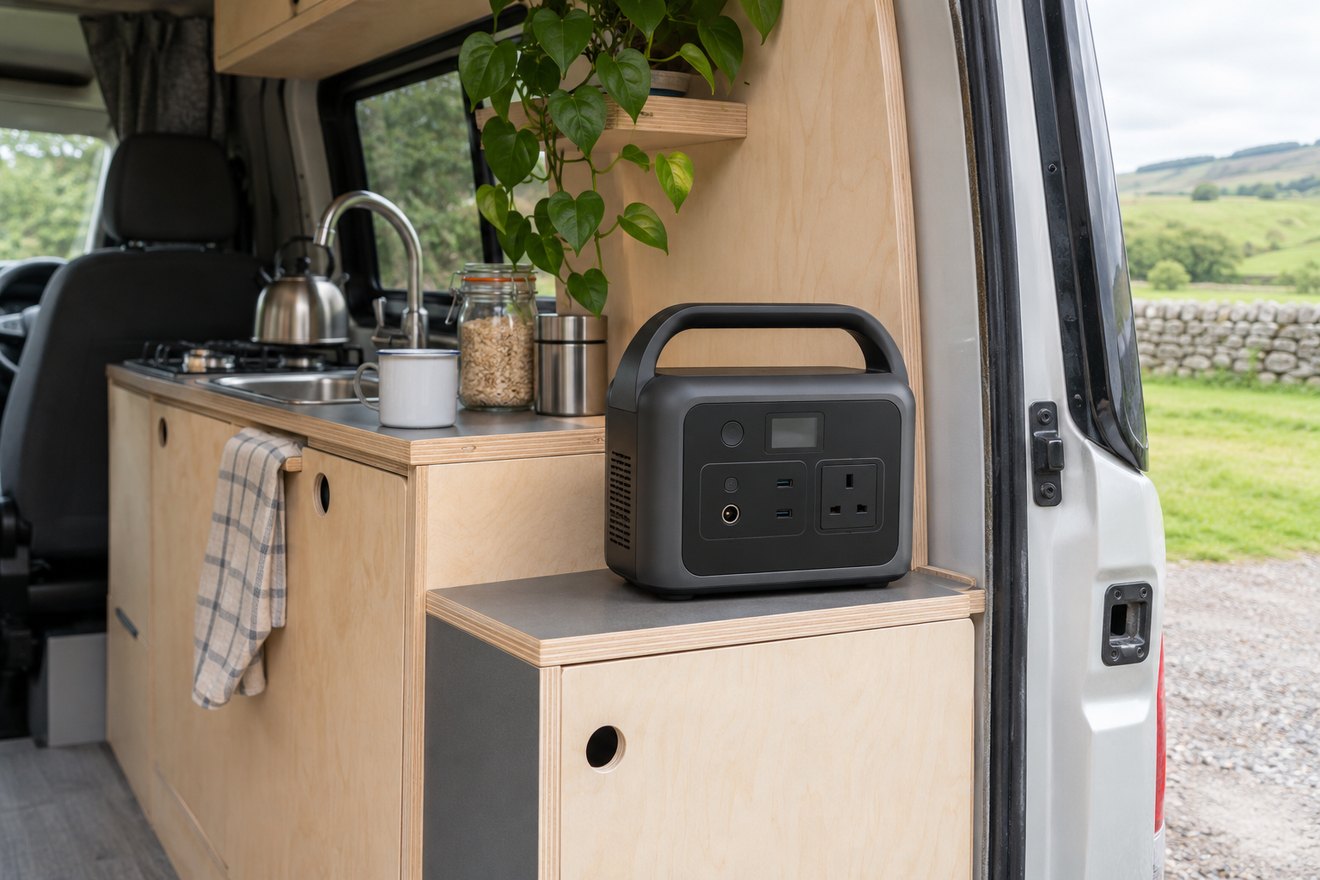
A portable power station can cover a weekend’s small electrical loads without depending on a fixed leisure installation. Start by listing the devices you bring and the hours you use them. The biggest number on the case may describe peak output rather than the amount of energy available on a trip.
Separate watt-hours from output watts
Watt-hours describe stored energy, and watts describe the load a socket needs to supply. As an example, a device drawing an average 25 W for six hours needs about 150 Wh at the device. Add your other loads and allow for conversion losses. Check the unit’s continuous and starting-load limits, and remember that AC and DC outputs can have separate limits.
Work out how you will recharge between stops
Compare the permitted vehicle, mains and solar inputs in the manual. Check the expected charge time at the input you actually have, including a motorhome pitch or a short drive. A large unit can take longer to replenish from a modest power source. Check the operating and charging temperatures, particularly if you travel in winter.
Give the unit a secure, dry place in the van
Use a travel position that meets its instructions, away from heat, water and an escape route. Keep the ventilation openings clear during use. Use approved accessories and have any proposed connection to the campervan’s fixed system checked by a qualified installer. Practise charging and using each essential device before relying on the unit away from home.
FAQ
Can I use the advertised capacity as the usable AC energy?
Allow for inverter losses, standby use and the unit’s operating limits. Check a trial with the actual load.
Will any portable solar panel recharge it?
Match the connector, polarity, voltage and current to the portable station’s input specifications and approved accessories.
Read our guide to estimating campervan energy use for the next part of the build. You can also send your layout and measurements to NEVAN.