
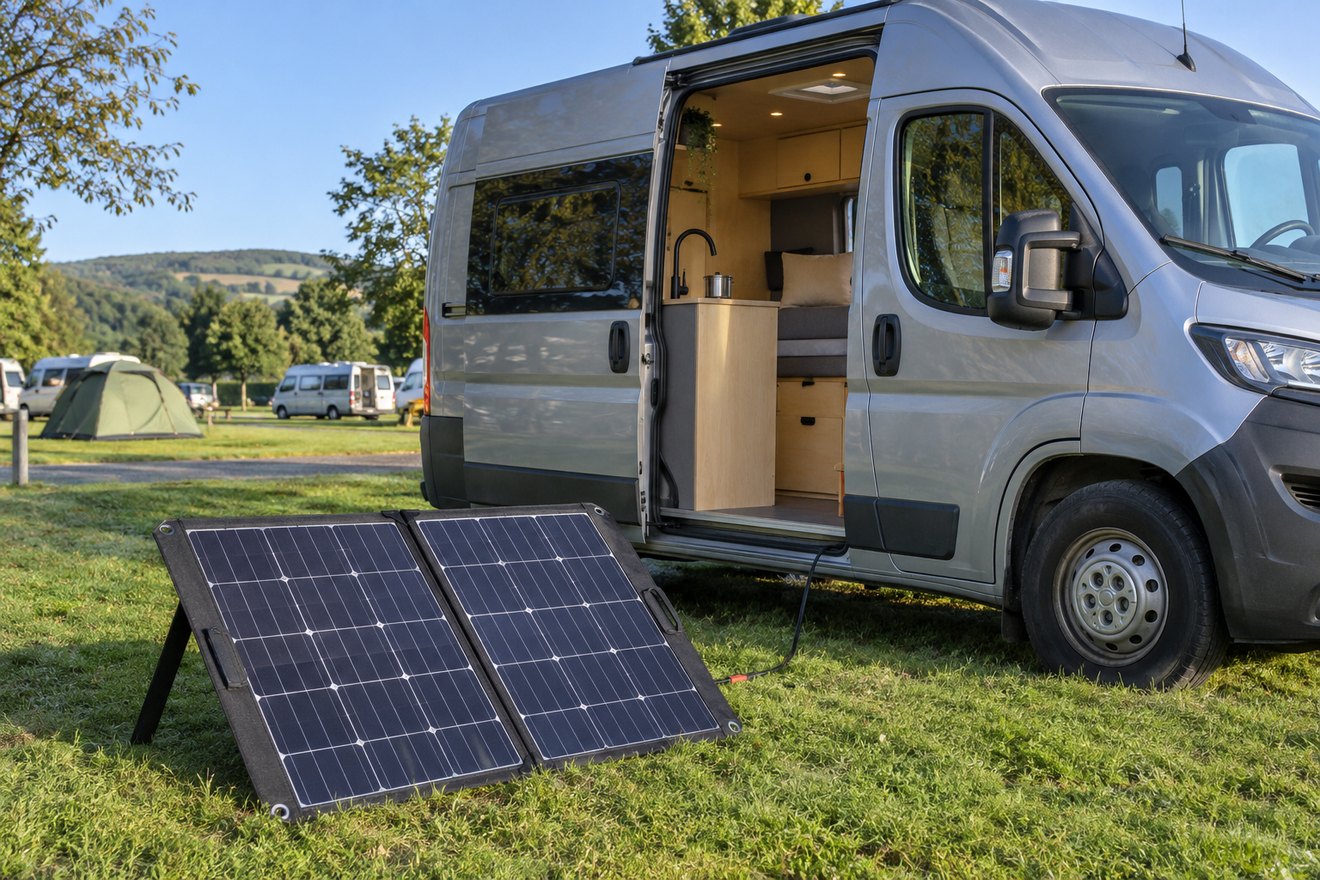
Folding solar panels for a campervan can sit in the sun while the van is parked in the shade. They also take up floor space and need setting out whenever you want to charge. Decide whether you will use them as your main source on short trips or to add charge when parked via a compatible system.
Pick a usable size and storage spot
Measure the folded panel, legs, case and lead, then lift an equivalent weight from the proposed storage bay. A panel behind stacked camping furniture may stay packed all weekend. Reserve a place to store it securely while driving and somewhere to dry the case if you have to pack up after rain. Look at the available space to pitch the panel without sending a cable across the main walking route.
Match the panel to the charging system
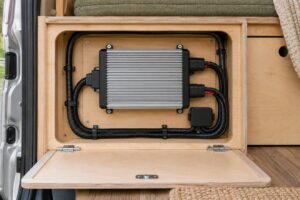
Check the panel’s voltage and current limits against the controller or power station manual, including the input limits for the conditions you expect. Different set-ups may use a bare panel with a separate controller or one with an integrated controller. Ask the installer to confirm how a portable panel can coexist with a fixed array before attempting to combine them.
Judge it on the energy you get
Read the actual charging power at a few times of day and track the energy added over the day if your system reports it. Try the panel in full sun and then where a small shadow reaches it. A labelled wattage gives you a comparison point, while a real day on your usual pitch tells you how often the panel is worth unfolding.
FAQ
Can it replace a roof panel?
It can suit short trips with enough usable sun and a willingness to move or pack it. A fixed panel keeps working while the van is parked away from camp.
Can I leave it deployed in wet weather?
Follow the panel and controller ratings and instructions. Check the connectors and any separate power equipment as well as the panel fabric.
Read our campervan solar sizing guide for the next part of the build. You can also send your layout and measurements to NEVAN.