
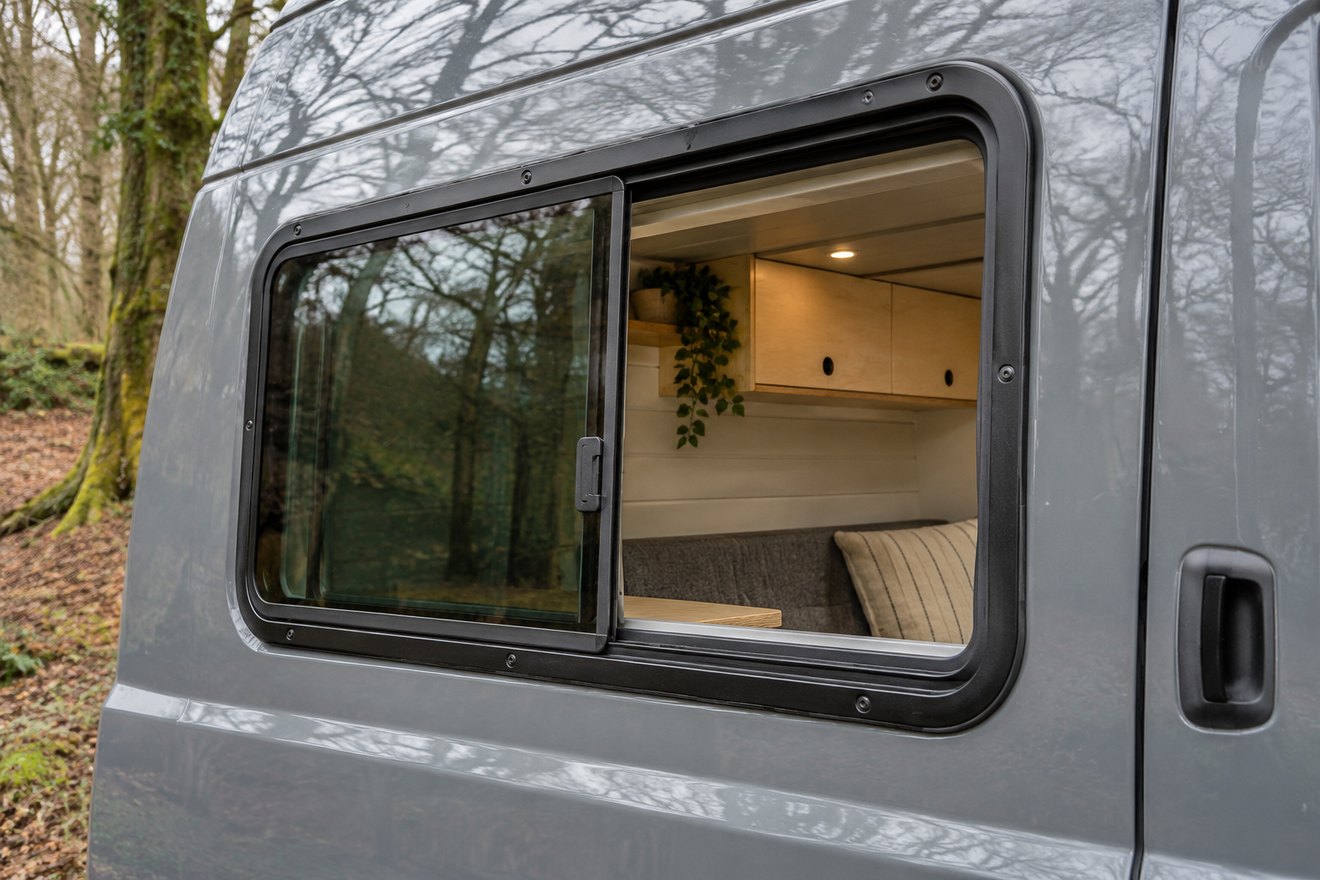
A sliding side window can open without a sash projecting into a campsite pitch. Inside the van, though, the handle and frame still need room. The best position is one you can open and close with the furniture installed and the van parked in its usual setup.
Test the outside with the door open
Make a template of the outer frame and hold it against the panel. Move the sliding door through its full travel and check door furniture, roof or body fittings and nearby openings. Compare the model and door side with the window supplier's fit list. Two vans with similar outside dimensions can have different panel contours and reinforcement.
Draw the reveal on the finished wall
On the inside, add the lining, trim and the depth of any separate blind. Mock up the worktop and the nearest cabinet door. Check whether a seated passenger can reach the latch and whether an open window still gives a useful path for air. A window behind a tall splashback or a cupboard may provide light but be awkward to use.
Compare cleaning, screens and service
Ask how the tracks drain and how the moving pane can be serviced. Find out whether an insect screen is included or needs a separate frame. Test the view from bed and seat height, then think about where rain may collect when the door or window is open. Confirm the approved opening and fitting method with the vehicle and window guidance before cutting the body.
Frequently asked questions
Does the whole glass area open?
Usually only a portion moves. Compare the useful open area, not just the total frame size.
Should I buy the same window for the opposite side?
Check that the supplier offers the right side and opening direction. Include the opposite wall's furniture and access needs in the decision.
For the next step, read our campervan kitchen layout guide. Include the window and its trim on the sketch you send with your quote request. Start your NEVAN layout enquiry.