
When a camper van sink drain loses its fall behind a drawer, the symptoms may look like a blockage even with a clean strainer. Lay out the sink, outlet and waste container together before deciding how deep your drawer can be or where to cut the cupboard back.
Measure from the sink outlet
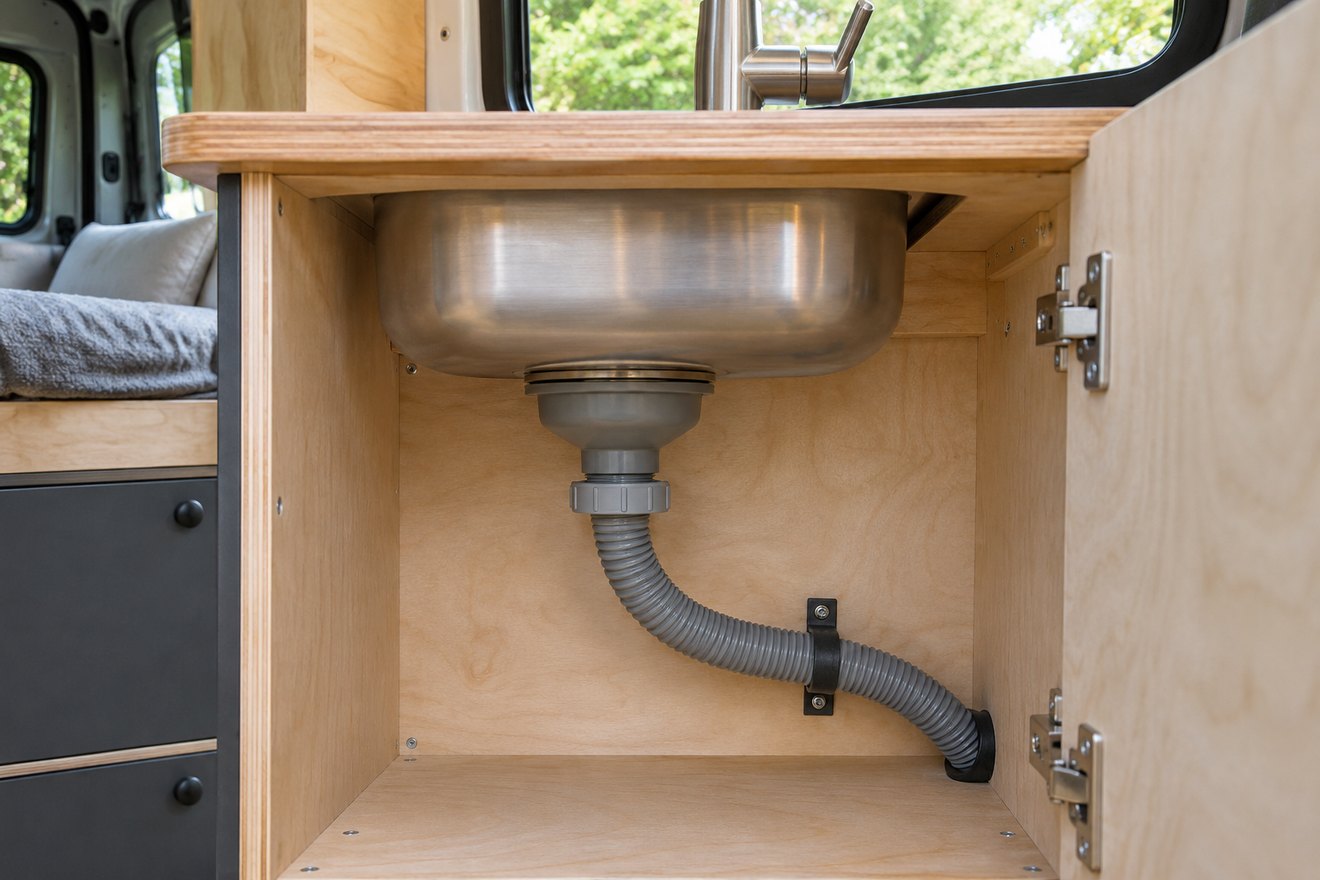
Set the actual bowl and waste fitting into a temporary board at finished worktop height. Measure to the centre of the proposed tank inlet, then check the path of the hose around the drawer box and hinges. Allow room for existing fittings and for a hand around each joint. A route that appears to drop overall may still hold water in a hidden low loop.
Decide where the drain remains accessible
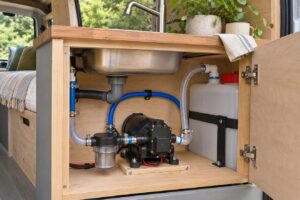
Check the sink and tank instructions for the hose size, trap or waterless valve and venting requirements. Put any serviceable part where you can reach it with the door open. In a shallow galley, moving a drawer divider can create a useful service lane and still leave a full-width cooking drawer underneath. Support the hose so the fitting under the sink carries minimal weight.
Test before the cabinet goes back together
With the van level, tip a normal washing-up bowl of water into the sink and watch both the outlet and tank connection. Repeat with the drawer fully extended and closed. Dry tissue under the connections makes small leaks easier to spot. If the drain slows only once the tank is nearly full, check its fill limit and vent arrangement before changing the pipework.
FAQ
Can I run the waste hose through a moving drawer bay?
Keep the hose outside the drawer’s full travel. Include anything that sticks out behind the drawer, such as the runner release or handle screws.
Does a slow drain always mean the hose is too small?
Check for a kink, a low section, debris and tank venting first. Use the diameter specified for the connected fittings.
Read our guide to a sink with a drainer for the next part of the build. You can also send your layout and measurements to NEVAN.