
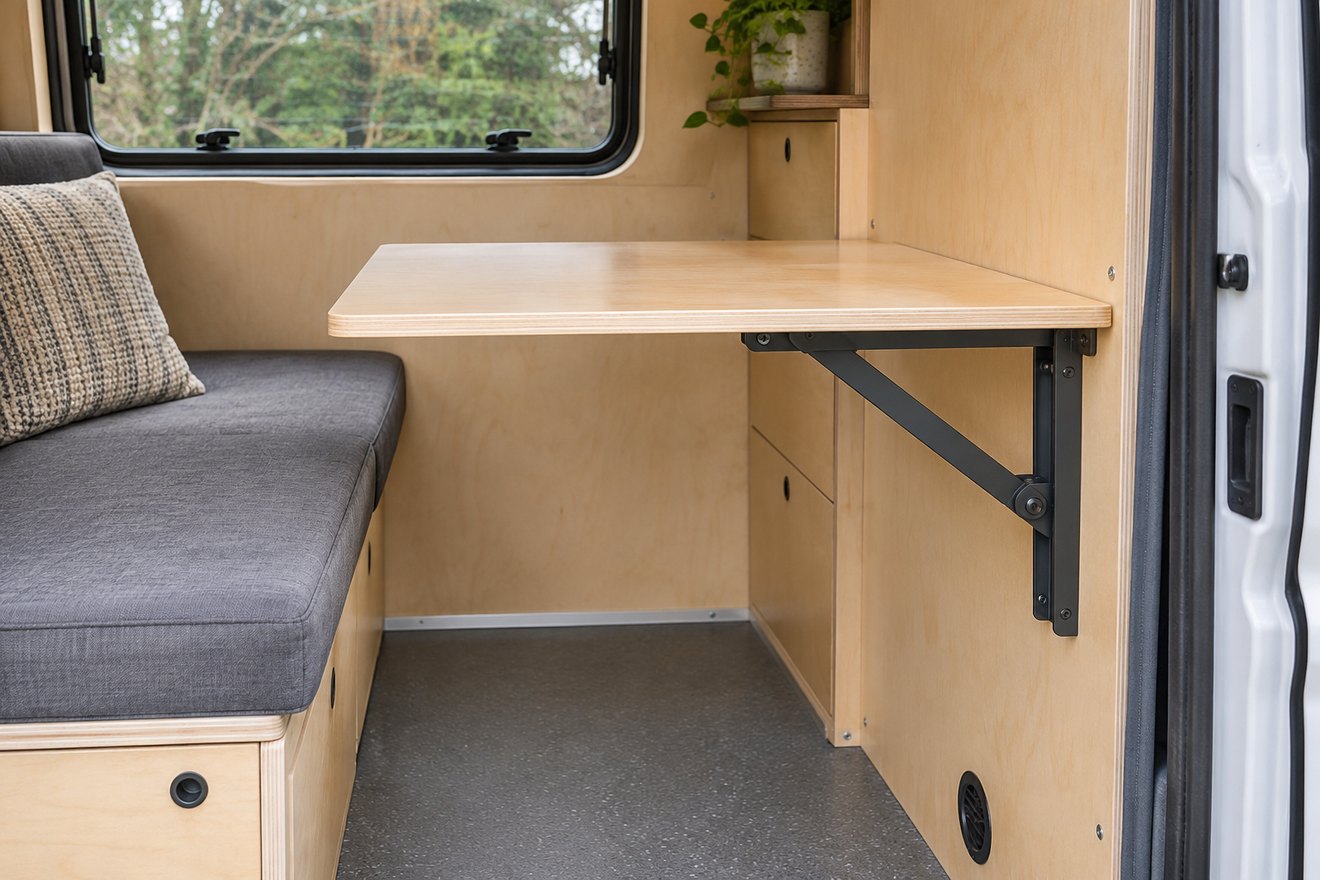
A campervan fold-down table gives you a worktop beside the bench without leaving a leg or swing arm in the aisle. Before choosing a bracket, check what the folded top will cover. A vertical table can block a socket, radiator outlet or seat cushion at exactly the time you want to use it.
Mock up the open and closed positions
Cut a full-size card top and tape a hinge line to the finished wall. Sit in the seat as you normally would and place a plate or laptop on the template. Check the elbow room, the route into the seat and the table edge when you stand. Fold the template away to see which handles, cushions or fittings it would sit over.
Specify the wall and bracket together
A table puts a turning force on the mounting area, especially when someone leans on the outer edge. Check the bracket and fixing instructions against the cabinet or wall structure. Include the tabletop weight and remember that a capacity stated per bracket may depend on the installation. If the furniture design accepts a support leg, mark where its foot will land without narrowing the exit.
Give the table a secure travel position
Test the latch from the main aisle with the van parked and the seat made up. A positive catch and a padded contact point can keep a stowed top where it belongs and cut rattles. Keep cables away from the hinge. Mark access to any nearby socket both with the table folded and with it open.
FAQ
Can a fold-down table be fitted to a sliding door?
Only plan around the door if the structure and fitting guidance support it. Check the table hardware against the door’s full travel and safe operation.
What is a comfortable table height?
Mock it up with the real seat cushions and intended use. Check knee clearance and arm position together.
Read our guide to a swing-out campervan table for the next part of the build. You can also send your layout and measurements to NEVAN.