
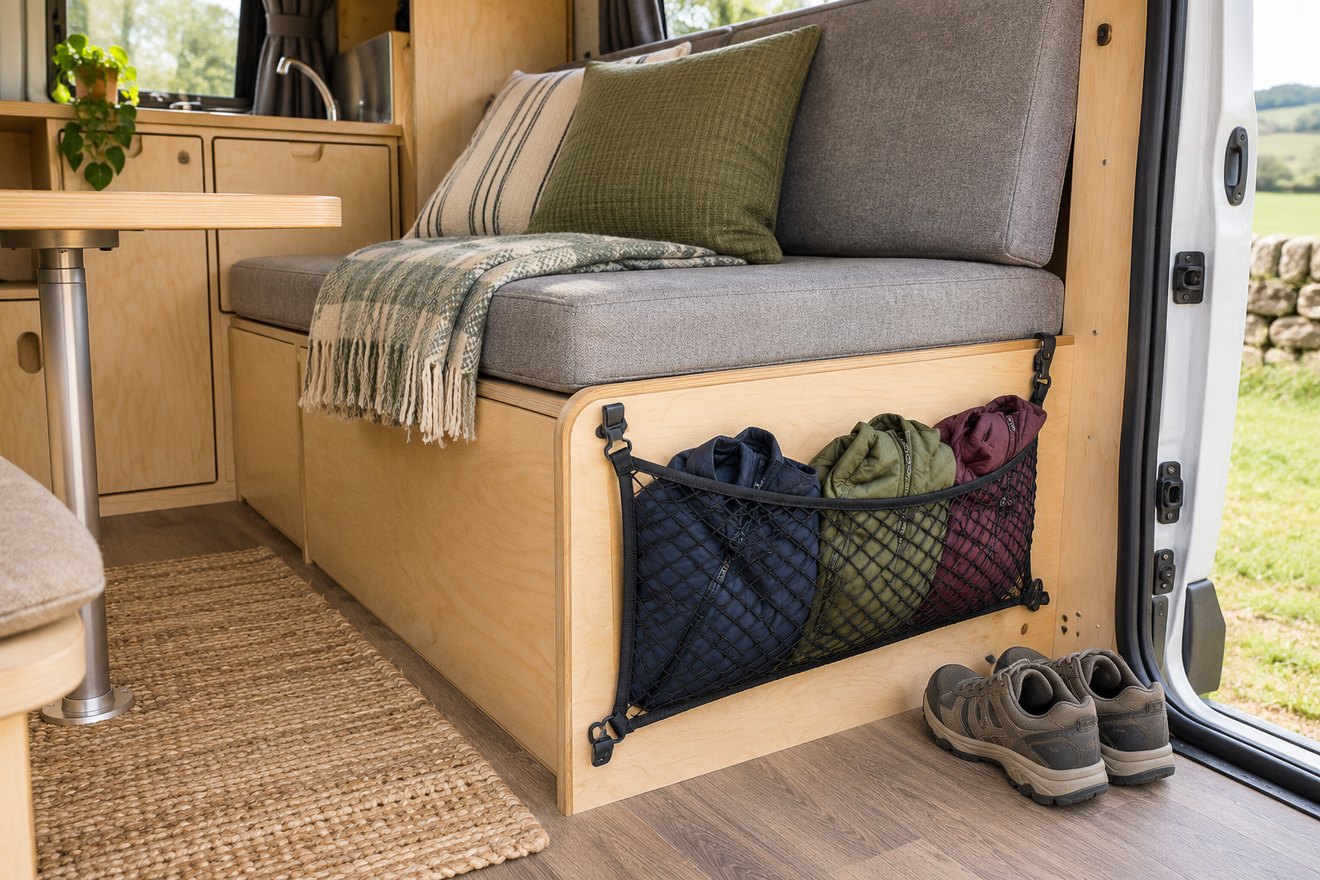
A campervan cargo net can be handy for the fleece you reach for as soon as the sliding door opens. A stretch pocket for soft kit and a rated vehicle restraint serve different purposes. Start by listing what you plan to put in it and how heavy it is when wet or fully packed.
Put soft everyday items within reach
An elastic pocket low on a bench side can hold light gloves or a rolled layer. Test how far it protrudes when full and check whether a passing foot or bag could hook it. Keep the door operating area clear and check what happens with the bed in use. An easy pocket may work best when the heavier shoes, bottles and tools have their own lower home.
Check the restraint as a whole
Heavy or hard equipment needs a properly rated securing system suited to the load and vehicle. Check the ratings of the equipment and attachment points and how loads could move while braking or cornering. The DVSA guide to securing loads explains how equipment and anchorage form part of the same system. A stretch pocket’s mounting screws in furniture are no substitute for suitable vehicle anchorage.
Make the net easy to inspect
Place the hooks or buckles where you can see wear and remove the net when it is damaged. With the van parked, run through the departure check and confirm nothing can move into the doorway or cab. Keep frequently used soft gear in a consistent place so it does not get mixed with loose tools as the trip goes on.
FAQ
Is mesh size the only thing to check?
Check the purpose, mounting, closure and item weight too. A smaller opening does not make an unsuitable net a rated restraint.
Can a cargo net hold water containers?
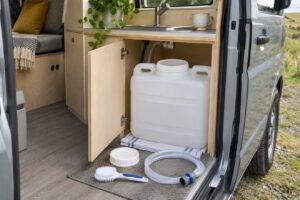
Full containers are heavy. Use suitable storage and rated restraint where required, with proper vehicle anchorage.
Read our campervan garage storage guide for the next part of the build. You can also send your layout and measurements to NEVAN.