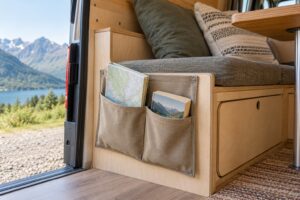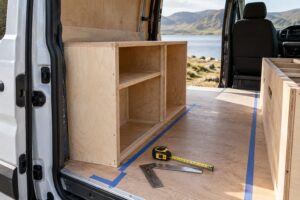

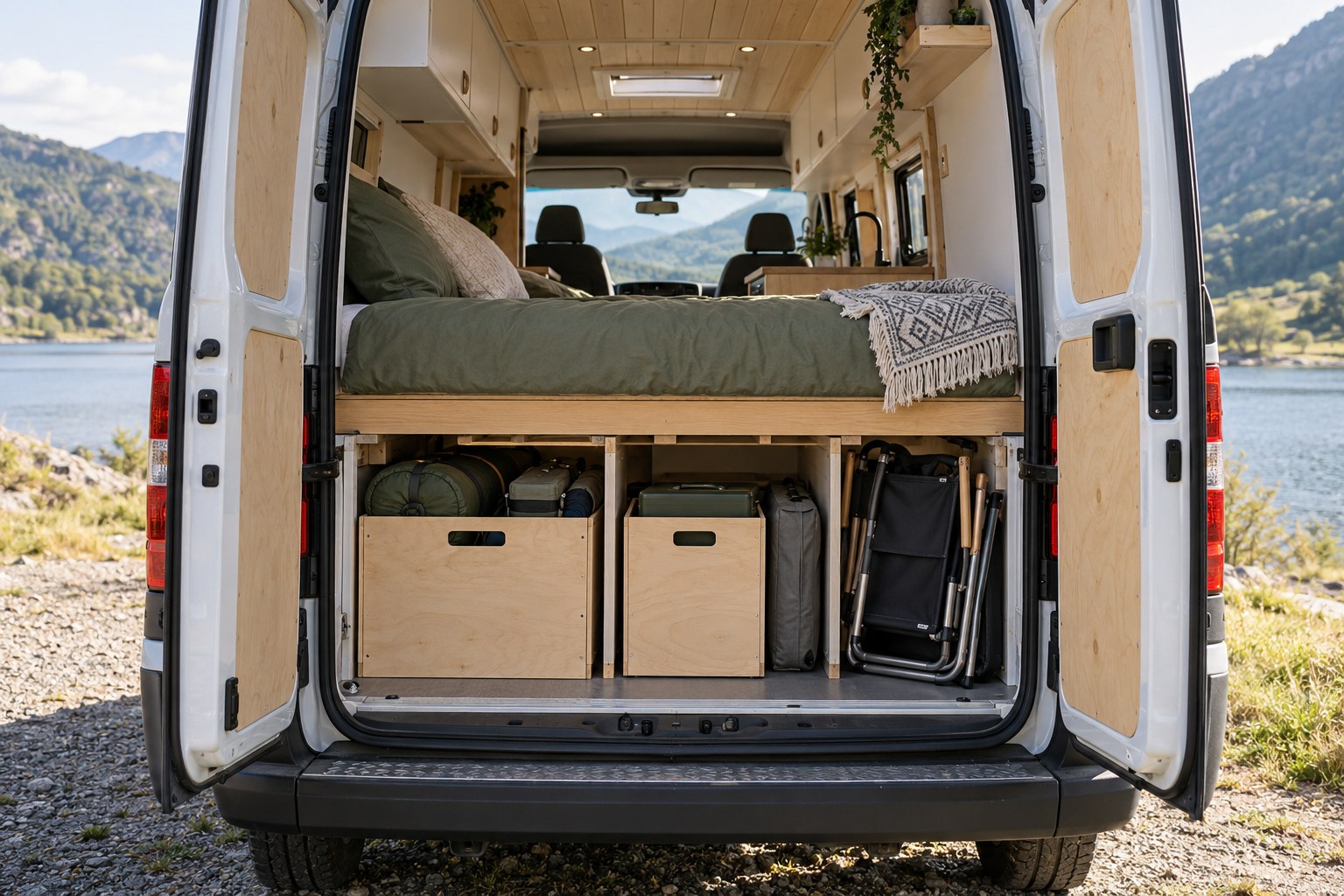
Useful campervan garage storage ideas start with the order in which you unpack at a campsite. If the chairs are behind the water equipment and the levelling equipment is beneath several bags, the garage becomes a daily puzzle.
Treat the under-bed space as a set of access routes rather than one large empty volume. Your aim is to take out a particular item without first making a pile on the ground.
Sort the load by length and frequency
Lay out the actual equipment you want to carry. Separate long items, bulky soft bags, heavy equipment and things you use at every stop. Measure their packed shapes, including chair handles, bag straps and any protective covers.
Place frequent-use items closest to a suitable opening. Reserve deeper positions for equipment that can stay packed for several days. Keep the items needed to set up camp reachable before the rest of the load moves.
A long narrow compartment may suit outdoor poles or a rolled mat better than a square box. Equally, a row of matching boxes is only useful if each one can pass through the door and be gripped when full.
Measure the opening and the approach
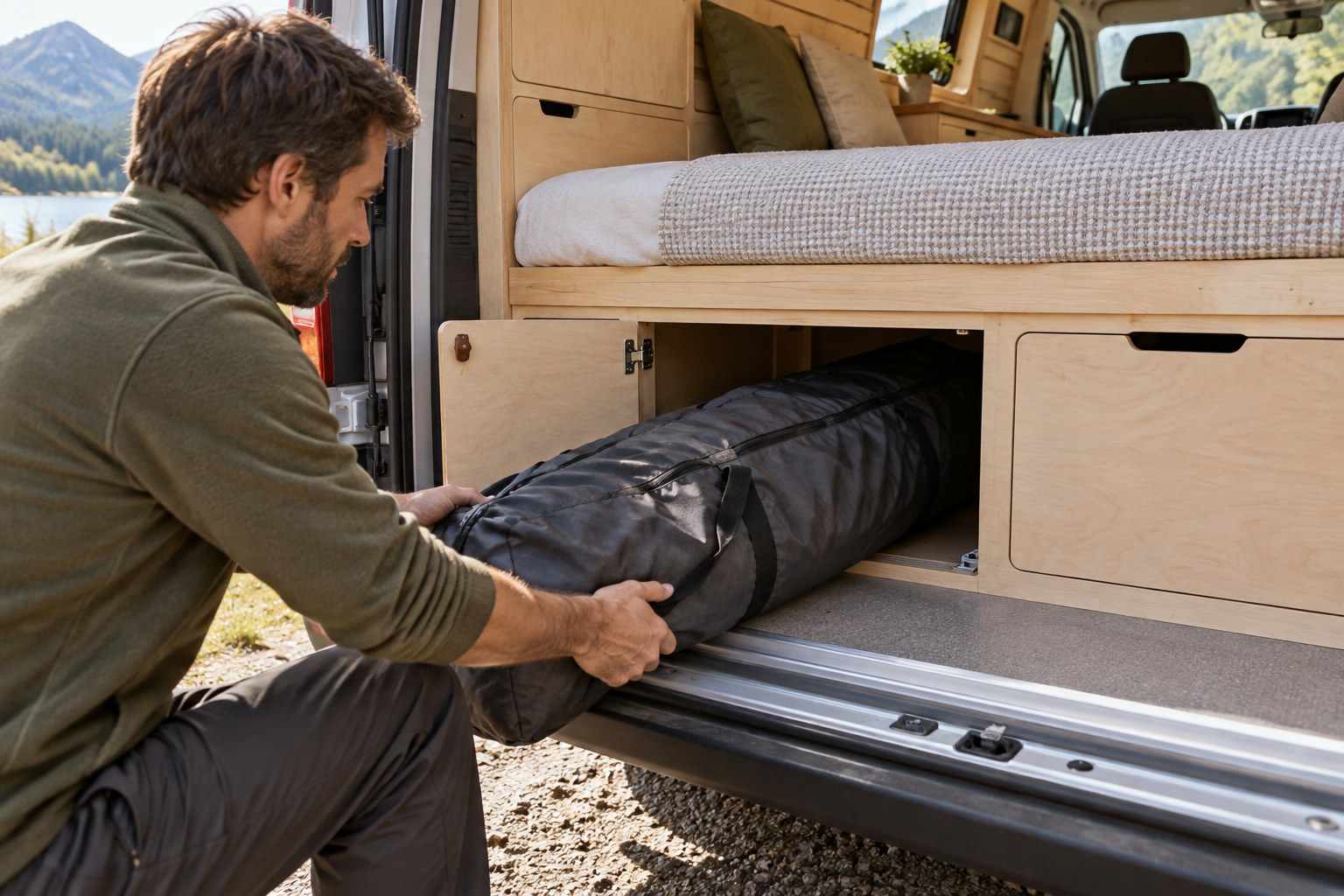
The usable opening can be smaller than the compartment behind it. Account for door frames, hinges, bed legs and the curved rear trim. Check how a large bag turns as it comes out, particularly when there is another vehicle parked behind you.
Test the front access from inside the van as well. A small hatch can make a jacket or tool pouch accessible without opening the rear doors. It may be less suitable for a full storage crate that must be pulled straight out.
- Give each large item a removal direction.
- Allow room for your hand on handles.
- Check access with the bed made.
- Keep equipment needed for arrival near an opening.
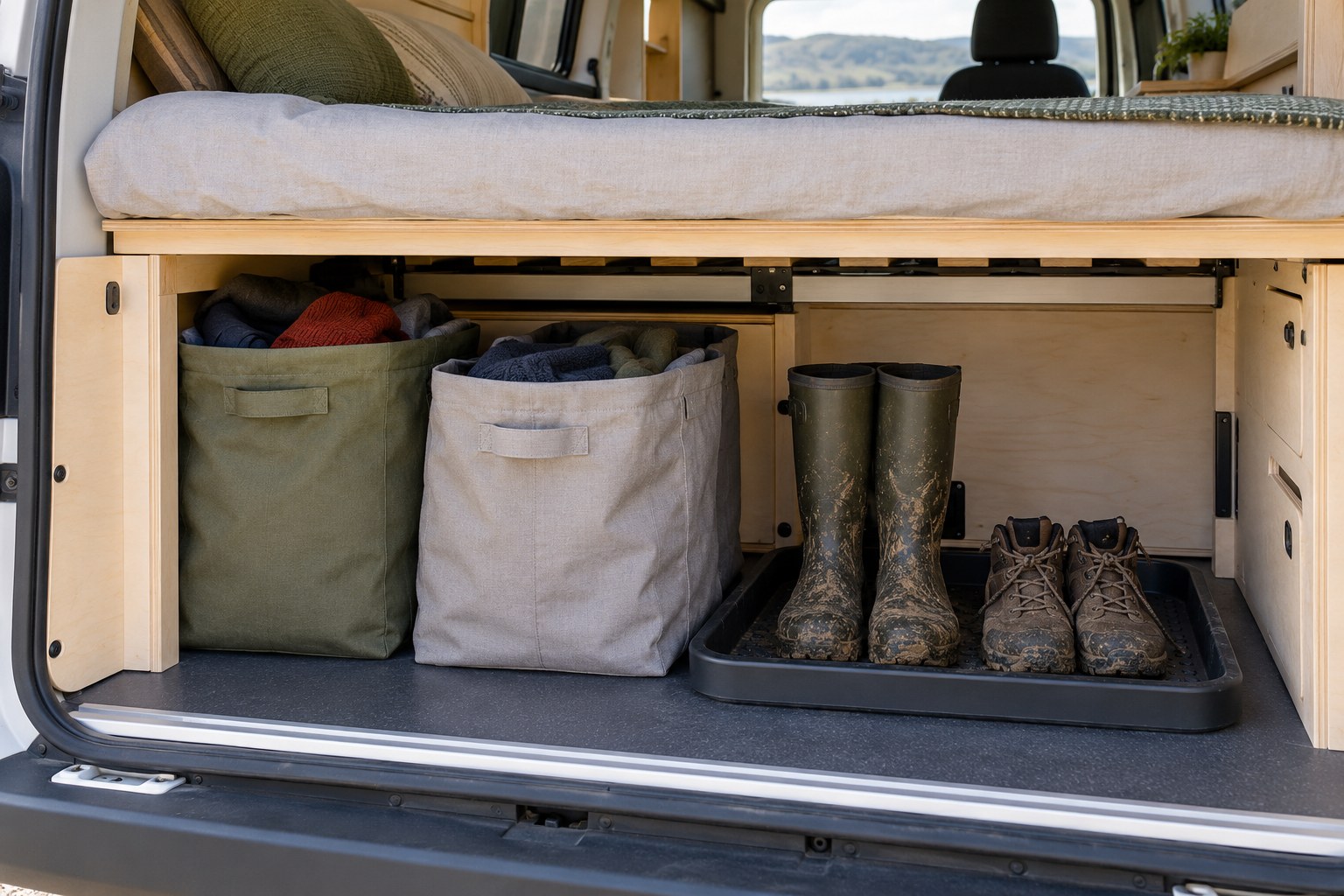
Separate dirty gear from clean storage
Wet footwear, muddy chairs and clean bedding need different treatment. Give damp outdoor equipment a removable, washable container or tray suited to the item, and empty and dry it appropriately. Avoid hiding moisture in an inaccessible corner beneath the mattress.
Use bags to keep clean fabrics together, but do not assume a closed bag will dry its contents. Plan where wet equipment can be aired before it is packed for longer storage. A simple cleaning routine is easier to maintain than layers of permanent compartment lining.
Protect service access and the travel load plan
List the inspection points, isolation controls and equipment panels around the garage. Keep a clear route to them after packing. If reaching an essential service point requires emptying the whole rear of the van, alter the storage plan before the furniture is finalised.
Have storage furniture and load restraints specified for the vehicle and intended contents. Heavy equipment needs appropriate positioning and secure retention; a box fitting tightly into a gap does not establish that it is safely restrained. Check the complete loaded vehicle against its applicable limits.
Choose a bed height with the garage in mind
Raising the bed can add garage height, but it also changes the climb into bed and the room above the mattress. Compare those effects together. The fixed bed access guide looks at the trade-off between storage openings and the sleeping area.
Make a cardboard trial of the bed front and rear openings with the intended bags in place. Then send NEVAN the equipment dimensions when discussing your van configuration. Confirm the available storage and access for the exact layout.