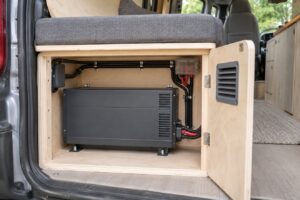

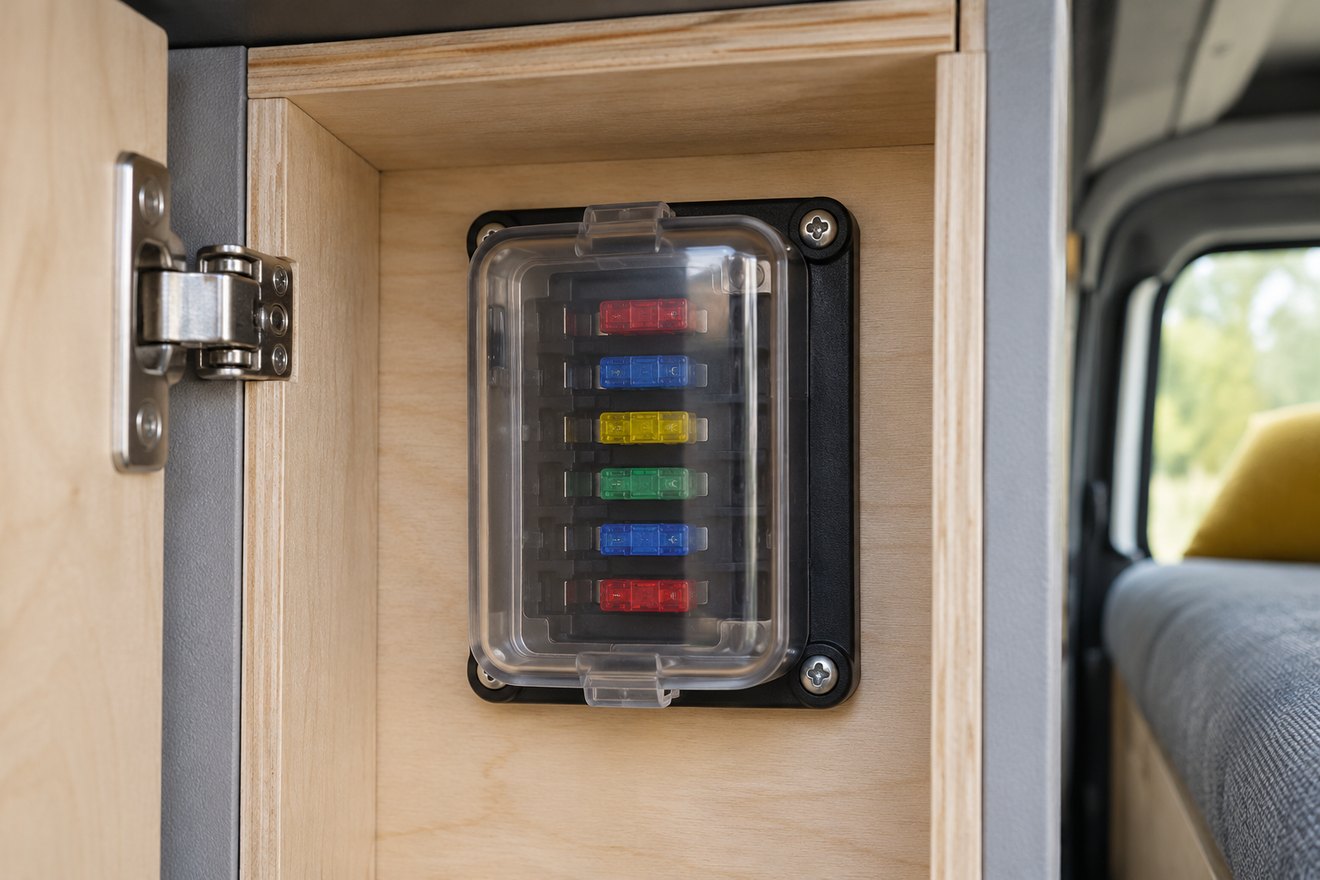
A campervan 12 V fuse box gives the smaller leisure circuits a common place for protection and inspection. Make a list of the circuits first. The space needed for cable entries, labels and future access can be greater than the dimensions of the box itself.
Draw what the distribution box will serve
Use the appliance manuals to list the lights, pump, sockets and other loads, including their rated and starting current where the figures are available. Separate equipment that requires a dedicated protection arrangement. Give the list and cable routes to a qualified auto electrician. Ask them to specify conductor size, protection, voltage drop and the box’s ratings. The Victron guide to DC wiring covers the factors behind protection selection.
Choose a dry service position
Mark the lid in its open position and set aside room to reach the fuse positions safely. Avoid putting the box underneath a water connection or behind a full storage tray. Check the manufacturer’s mounting and cover requirements. Arrange cable entries so a removal panel can come away without pulling on live equipment.
Label circuits in a way you can use away from home
Give each circuit a short name and include a simple locations list. Check that the installed fuses and labels match the electrician’s record. Keep instructions about safe isolation and the permitted fuse replacements with the van. If a fuse blows repeatedly, have the fault checked before using that circuit again.
FAQ
Can all 12 V appliances share one fuse panel?
Have the installation assessed. Some larger or specialised loads need separate protection according to their instructions.
Where should I leave spare positions?
Record their purpose and the distribution box’s limits. Ask your installer to check new circuits before adding them.
Read our campervan leisure battery system guide for the next part of the build. You can also send your layout and measurements to NEVAN.