

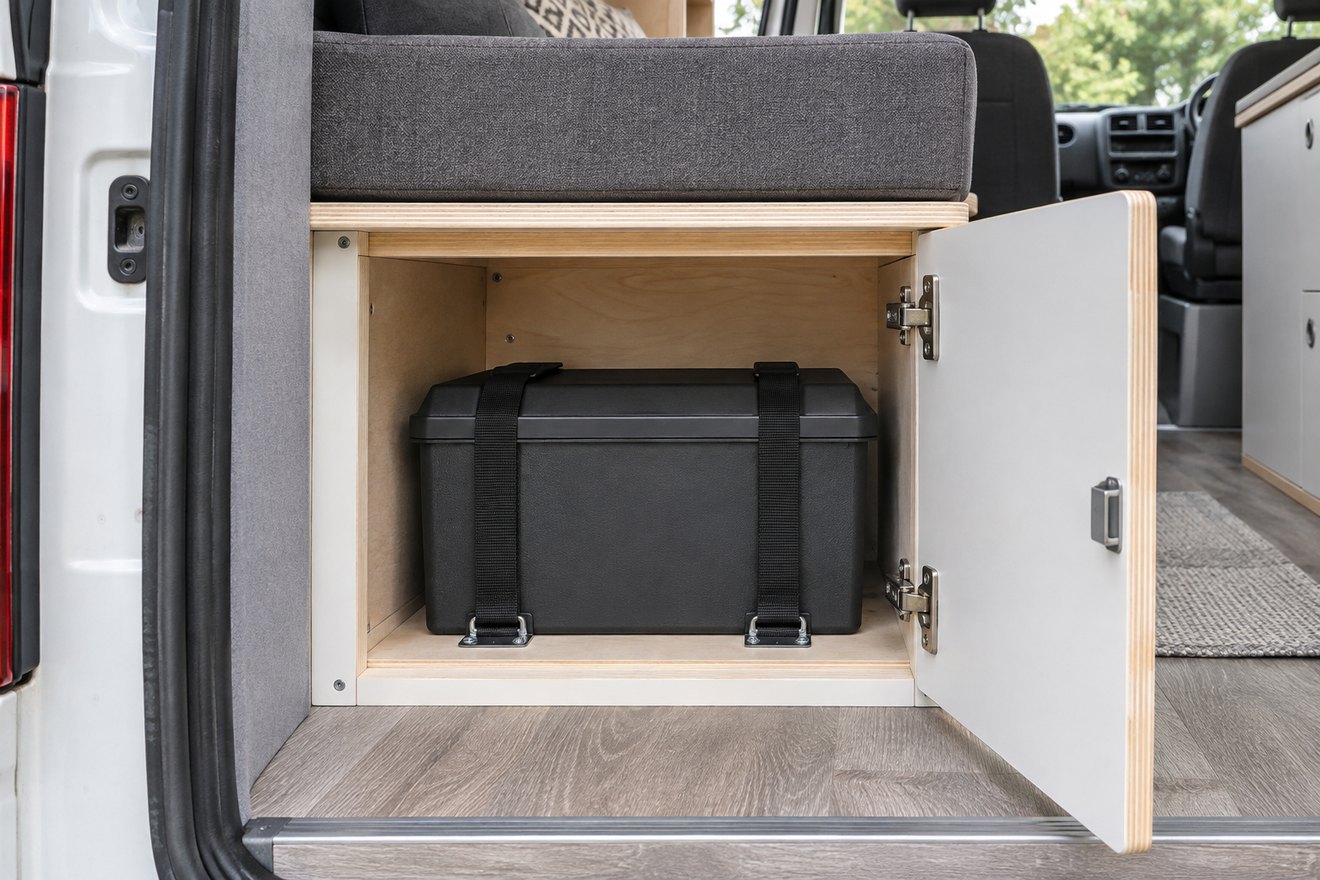
A campervan battery system needs space for more than a battery. It has equipment to protect and charge it, routes that need inspection and a location where you can reach the controls when something stops working. Plan the furniture around the complete design and the loads you actually use.
Separate energy use from peak loads
Write down what you use over a full day and which appliances may run at the same time. A fridge and lights can account for a steady daily load. An appliance used briefly may still place a high demand on the system when it starts. Give those details to an installer before choosing the battery or charging equipment.
Draw a bay that can be serviced
Ask for the dimensions and required conditions for the selected battery and related equipment. Allow for the manufacturer's clearances and the space needed to check or remove components. Draw the path from the compartment to the vehicle door. Decide what you would move to reach an isolator on a rainy night, then adjust the layout if it involves lifting a packed bed.
Leave space for a realistic change
List the features you are likely to add, such as solar or an extra charging source. Keep the intended service routes on a diagram and avoid using them for loose storage. Have a competent installer confirm protection, cable sizing, mounting and equipment compatibility. The Victron DC wiring guide explains how manufacturers approach system design. Use the instructions for the equipment chosen for your van.
Frequently asked questions
Should I choose a battery by capacity alone?
Compare usable energy, permitted loads, charging requirements and installation conditions for the actual model.
Is the space under a bed a suitable battery bay?
It can be considered if it meets the product and installer requirements for mounting, conditions and access. Plan around the bed in normal use.
For the next step, read our campervan garage storage guide. Share the size and access needs of the equipment bay when requesting a layout. Start your NEVAN layout enquiry.