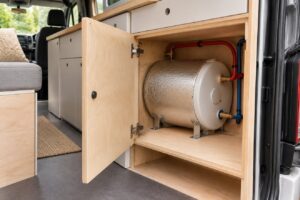

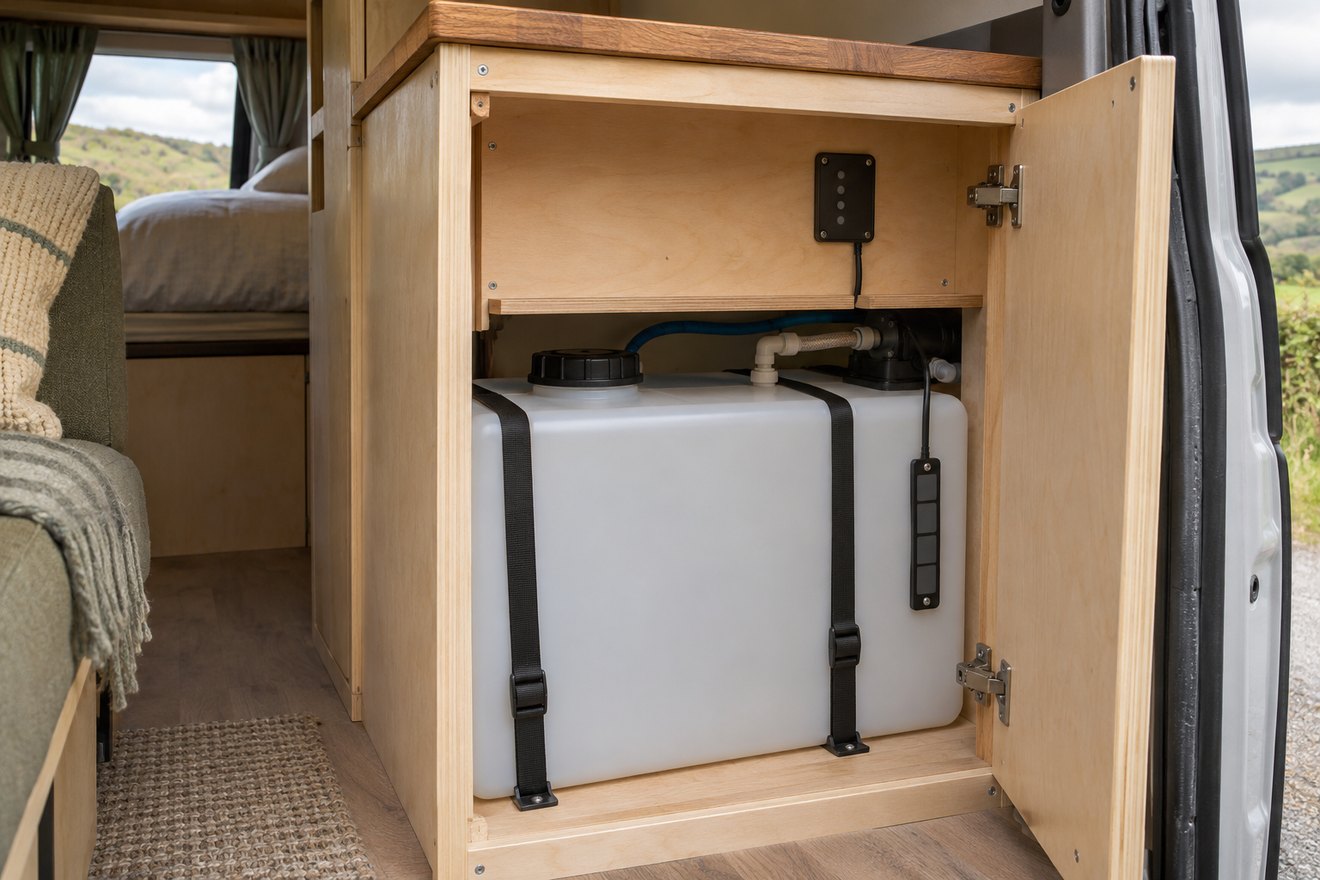
A campervan water tank level sensor is useful when it tells you how much water you can still draw at camp. The reading depends on the tank shape, sensor position and where the pump inlet sits. If your tank wraps around a wheel arch, equal changes in level can represent very different changes in litres.
Compare ways of measuring the tank
An external sensor avoids an extra opening in a compatible tank. Check which wall materials, thicknesses and orientations the product supports. Internal probes and floats require a mounting position and service route that work with the tank and its fittings. Use components intended for the particular tank and, for fresh water, suitable for drinking-water contact where applicable.
Use a test fill to check the display
Park on firm, level ground and follow the manufacturer’s calibration instructions. Record the displayed level while adding known amounts of water, from a usable empty point to the normal fill limit. A half-full indication might correspond to less than half the usable volume, depending on the shape and level of the pump pickup. Put a simple reference near the display if you regularly camp away from taps.
Make the system reachable for faults
Keep the sensor, route and connector accessible where practical. If the readings jump while driving or on a slope, compare again when parked level. Also check the maker’s notes on buildup or cleaning if the sensor sits in waste water. Separate the sensor fault from a pump or pickup issue before changing the tank.
FAQ
Can the same sensor monitor fresh and grey water?
Some products are approved for both uses. Check the required materials, installation instructions and cleaning recommendations for each tank.
Is an empty gauge proof that the tank is dry?
No. The lowest reading, pump pickup and drain can all sit at different heights. Check the tank’s normal drain and winter storage instructions.
Read our campervan water filler guide for the next part of the build. You can also send your layout and measurements to NEVAN.