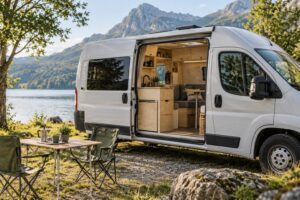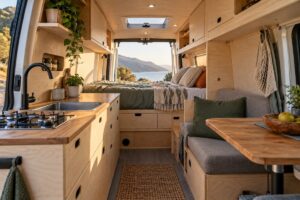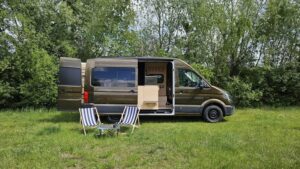

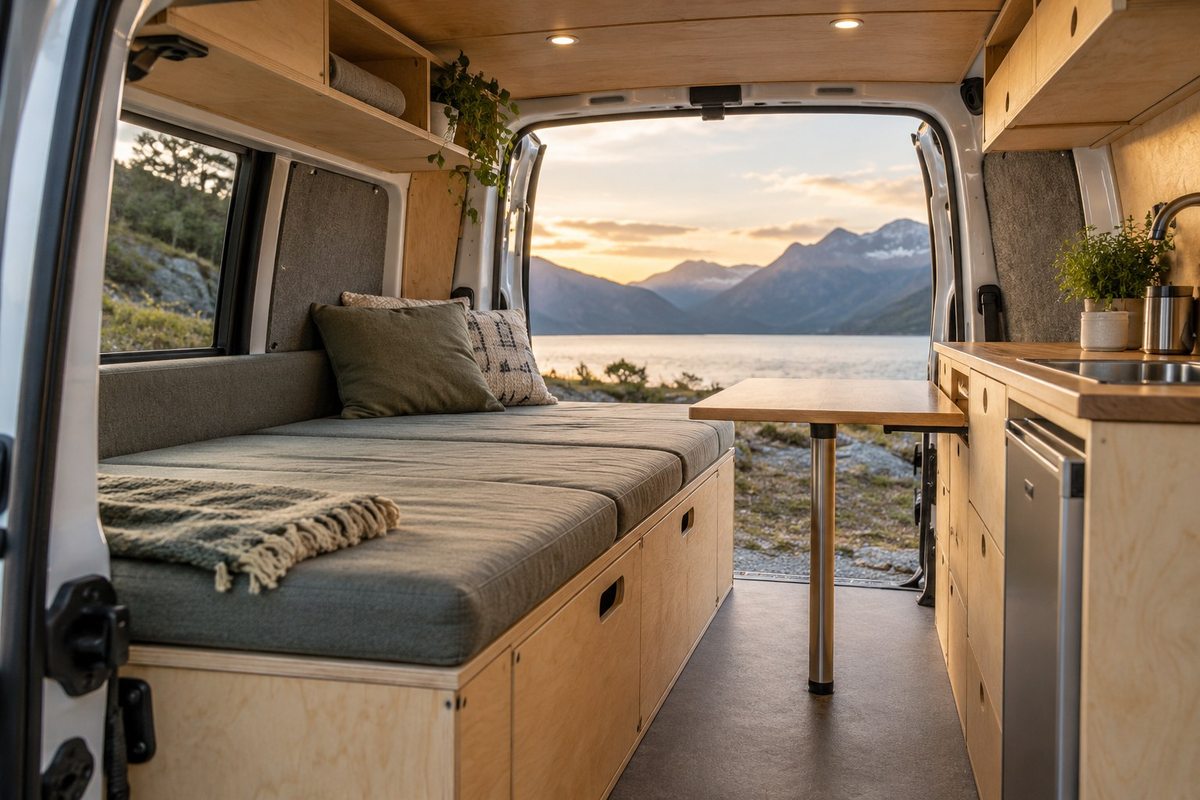
Nissan NV200 camper furniture needs a clear set of priorities. In a small vehicle, adding another function usually changes the space available for something else. A simple arrangement that supports the trips you actually take can be easier to use than a crowded list of features.
Begin with three routines: arriving with your belongings, preparing the sleeping space and packing for travel. Draw those in full before deciding how many modules the interior should contain.
Confirm the exact vehicle and finished dimensions
Record the vehicle year, version, doors, existing seats and trim. Keep different powertrains and body specifications distinct when discussing a conversion. Do not assume furniture fits merely because another vehicle has a similar external shape.
Measure the usable interior with the proposed floor and lining included. Check width at bed level, the available height and the doorway openings. Photographs with clear reference measurements help a supplier understand the real space.
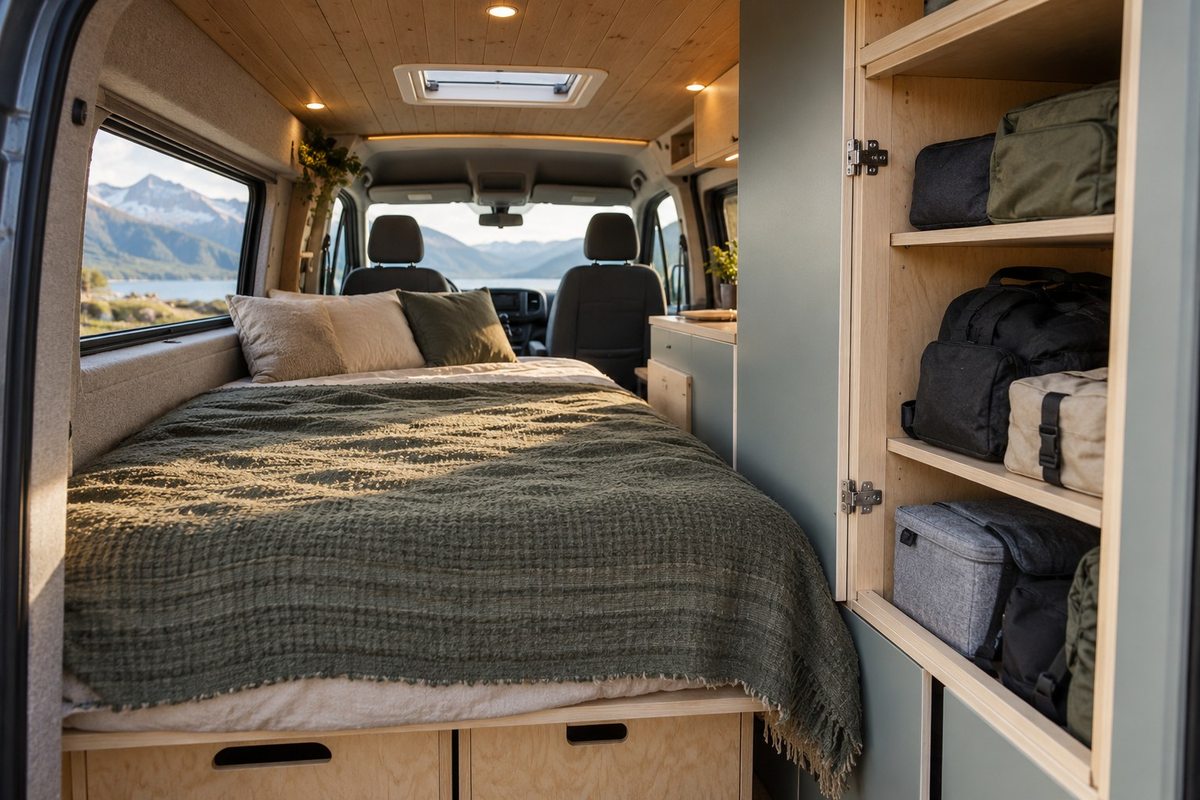
Choose the sleeping routine early
Mark the bed at its complete usable size, including bedding and the space needed to get in and out. If it converts from seating, identify where the table and loose cushions go. Test the movements with the luggage you normally carry.
Be realistic about personal comfort. A nominal sleeping rectangle says little about how it feels with curved walls, a cabinet beside your shoulders or limited space to turn. A safe full-size mock-up can reveal those constraints before furniture is ordered.
Keep essential storage reachable
List the items you may need after the bed is made: a jacket, water, phone, shoes and personal belongings. Give them accessible homes. Avoid relying on a compartment that can only be opened by lifting the entire sleeping platform.
- Use difficult-to-reach spaces for occasional equipment.
- Keep the doorway and exit route clear.
- Choose boxes that pass through the actual openings.
- Plan suitable retention of furniture and contents for travel.
Our campervan organiser guide helps group small items without creating a separate bulky container for every task.
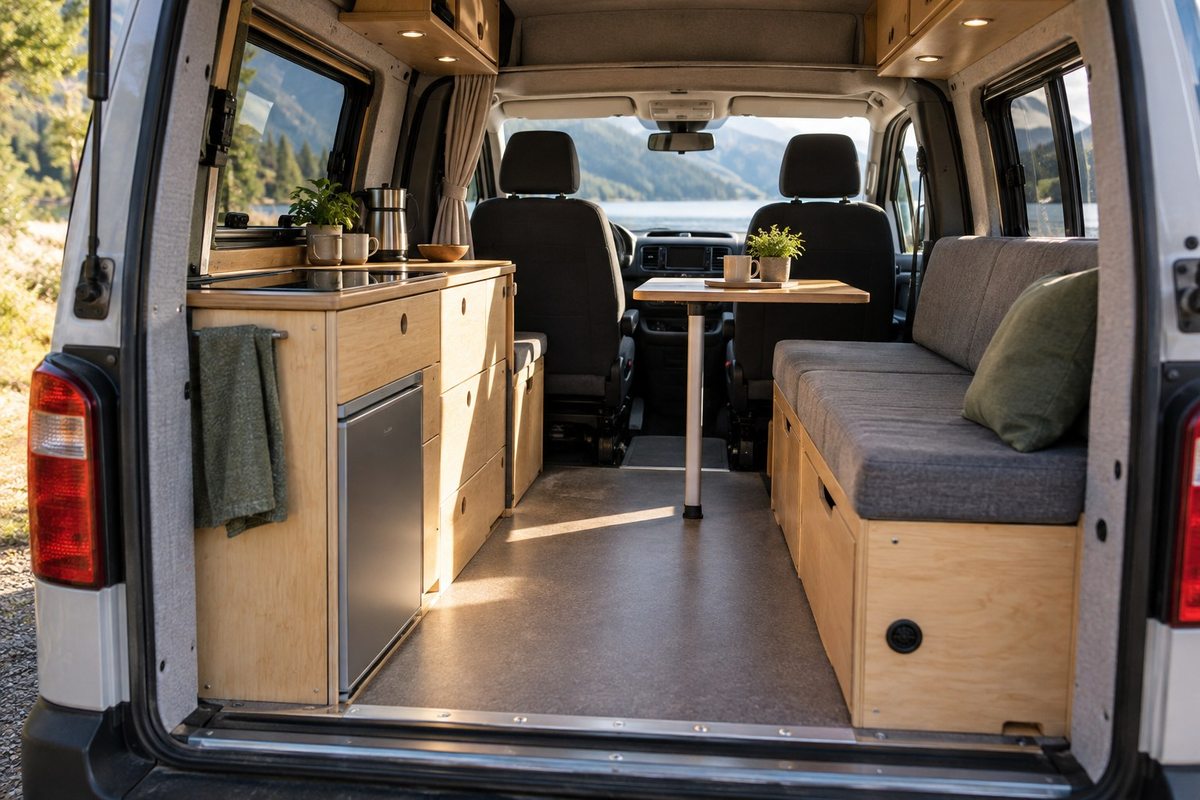
Decide how much kitchen you need
Write a realistic meal routine and compare the space it requires with the benefit of extra living or storage room. Include food, utensils, washing-up equipment and an appropriate place for each item when travelling.
Cooking equipment, ventilation, water and electrical systems need suitable designs and installations for the actual vehicle and products. Do not assume a furniture unit alone makes an indoor cooking arrangement suitable or complete.
Ask about a simple custom brief
Prepare a short proposal with vehicle details, finished measurements, sleeping needs and the belongings that must fit. State which functions are essential and which you would trade away for easier movement. This gives a supplier a useful basis for assessing feasibility.
For the NV200, enquire through NEVAN’s other vans and custom builds page. Confirm availability and the proposed fit directly; a standard kit for another van should not be treated as an interchangeable NV200 product.