
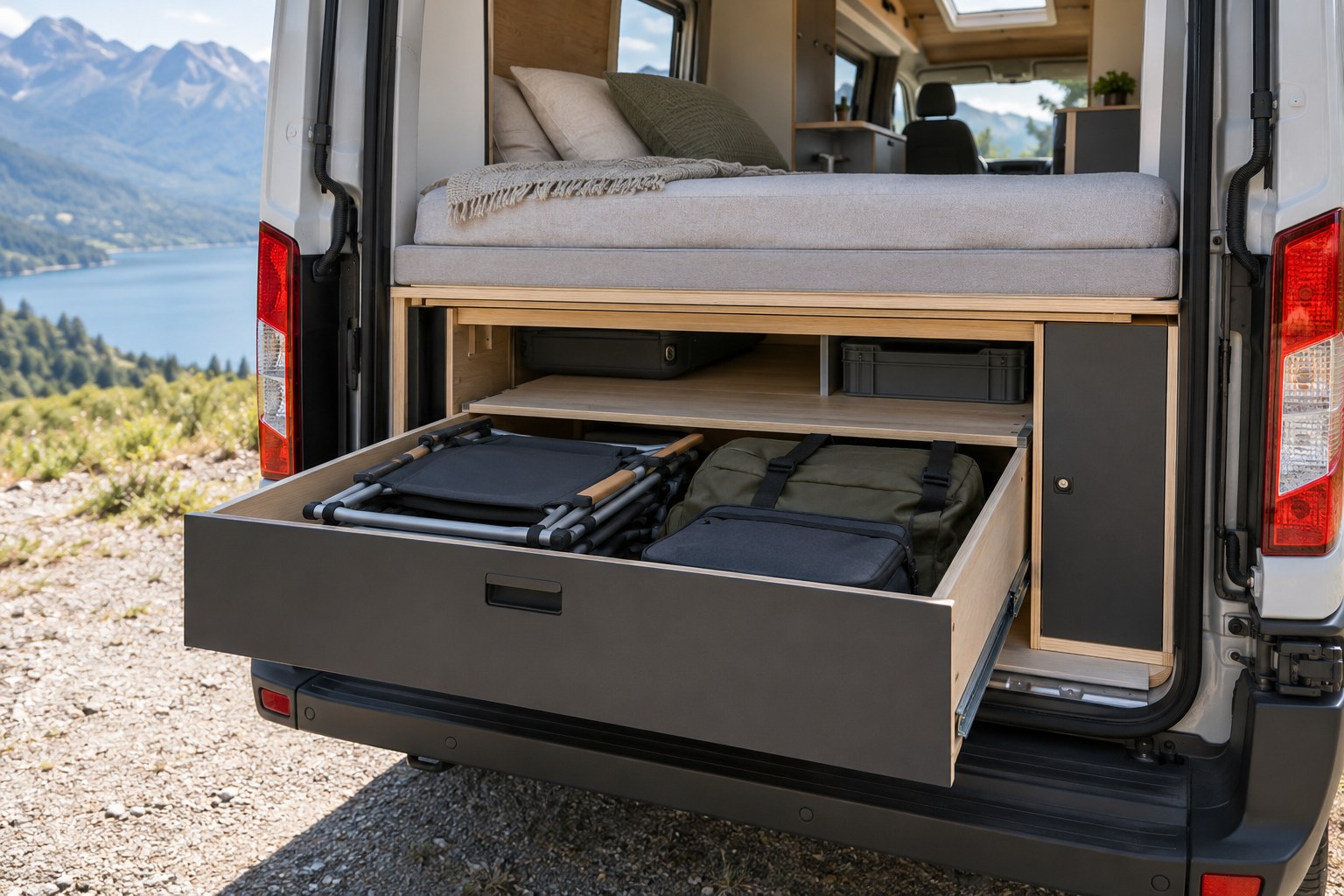
Campervan pull out drawers can turn an awkward rear storage bay into something you can use without climbing inside. Their value depends on the whole loading routine: opening the doors, extending the drawer, lifting out the gear and closing everything again.
Before choosing hardware or a ready-made unit, decide what the pull-out will carry. A few lightweight storage boxes create a different brief from bicycles, tools or a concentrated stack of equipment.
Start with the objects and the loading direction
Arrange the proposed contents as they would travel. Measure the complete group, including handles and anything that projects above the boxes. Keep regularly used items accessible without dismantling the whole load.
Check the route into the van as well as the space beneath the bed. Rear-door openings, seals and adjacent furniture can narrow the usable entry. Our bike storage guide explores this issue for an especially awkward load.
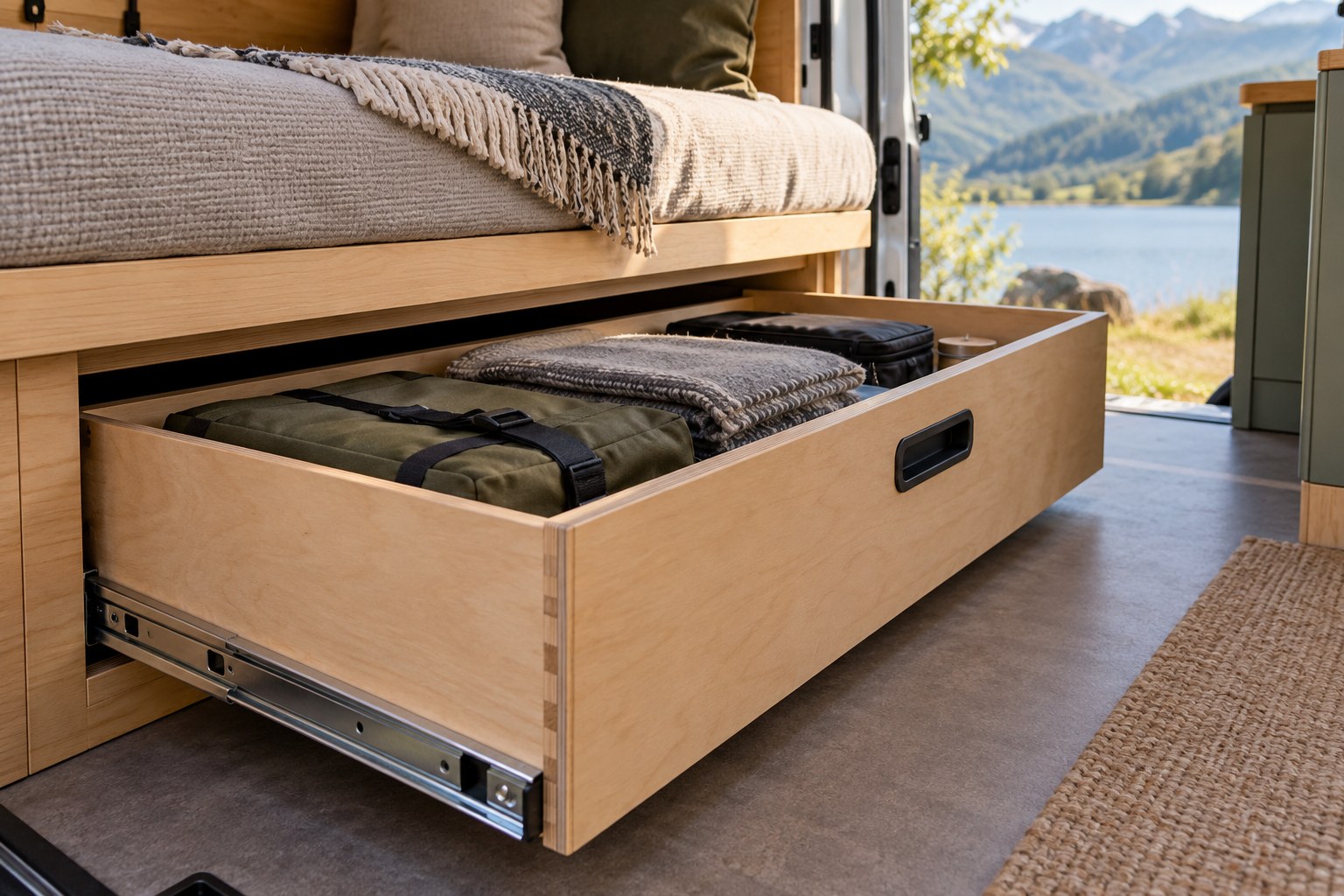
Mark the drawer at full extension
Draw the open drawer behind the van and leave room for a person to stand and lift objects. Consider a campsite pitch where another vehicle, a hedge or a wall limits rear access. A long pull-out may be convenient at home and difficult in a tighter parking space.
Look at the open rear doors in the same drawing. Confirm that the drawer and its load clear the actual door arrangement without relying on forcing or holding a door in an unsuitable position.
Ask for the complete load specification
The usable load is a property of the installed system, not just a number printed on a runner. The tray, supports, fixings, vehicle interface and distribution of the contents all matter. Have the complete arrangement specified for its intended use by a competent supplier or installer.
- Record the weight and distribution of the planned contents.
- Confirm travel locking and load retention requirements.
- Check how the system behaves at the intended extension.
- Keep necessary vehicle and equipment access available.
Do not assume a storage drawer is a seat, step or working platform. Use it only for the purposes and loads approved for the actual system.
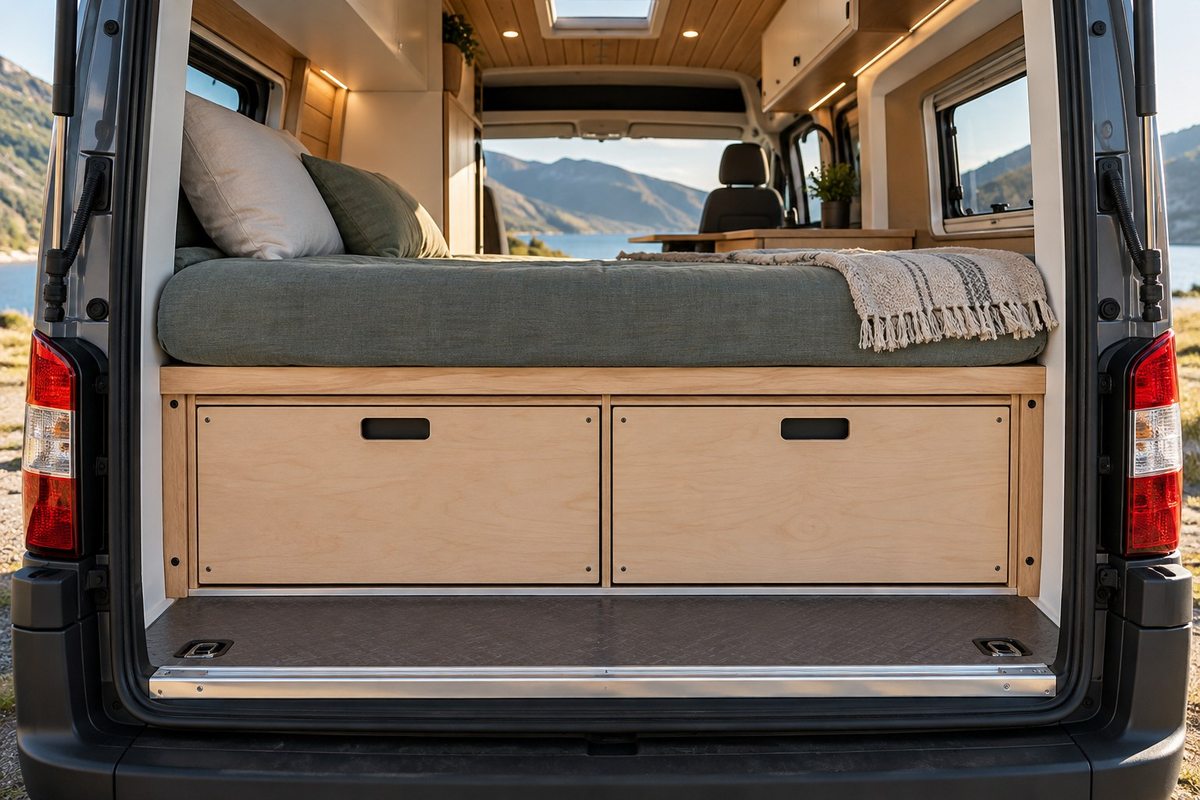
Preserve access around the pull-out
A full-width tray can occupy the easiest route to the back of the garage. Decide what must remain accessible while it is closed, and whether another compartment needs its own opening. Everyday items should not require a complete unload.
Check the space between the top of the contents and the bed structure. Objects need clearance for loading, and the bed may have supports that do not appear in a simplified side view. Agree the bed and storage geometry together.
Rehearse packing and cleaning
Put the gear in temporary boxes and try the loading order. Keep wet or dirty equipment separate from bedding and clean indoor supplies. Check that the drawer can be cleaned and inspected following the supplier’s procedure.
Our garage storage guide helps divide the surrounding space. Discuss any pull-out with NEVAN before adapting kit furniture; confirm the interface, available space and responsibilities for the complete installation.
Frequently asked questions
What should I measure before adding a rear pull-out?
Measure opening height, usable slide length and the clear space behind the vehicle. Try it with the other rear gear and door catches in place.
Should the heaviest kit go on a pull-out?
Check the fully loaded weight against the runner, cabinet and anchorage specifications. A low fixed compartment may give easier handling for dense equipment.