
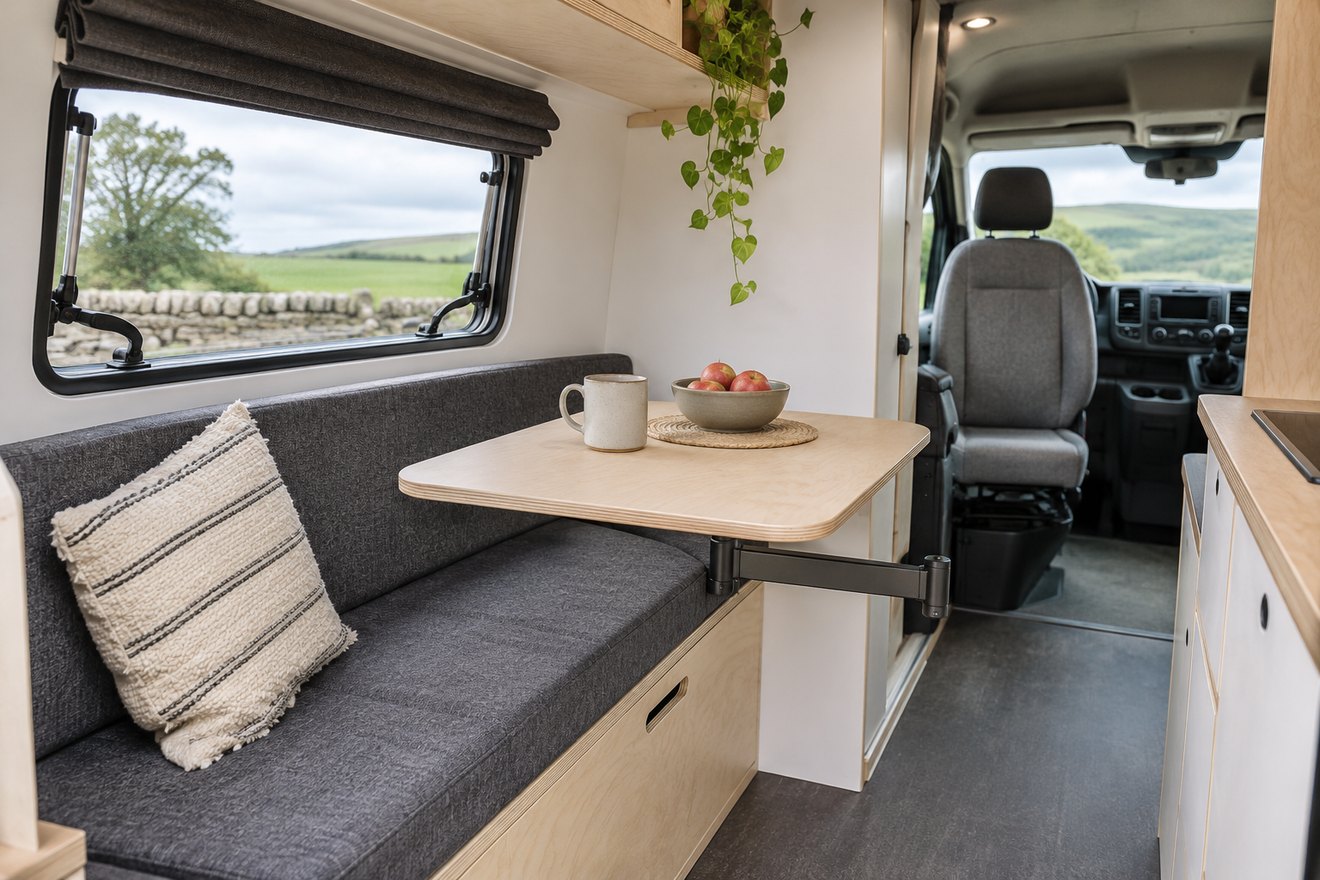
A campervan swing out table can serve a bench without a floor leg in the middle of the aisle. Its most useful measurement is the space swept by the tabletop and arm as they move. Draw that arc before buying the bracket or cutting the top.
Put a cardboard top on the bench plan
Trace the proposed shape at full size. Sit where you normally would and test where the nearest edge reaches. Add the space for a mug and plate, then try standing up without moving the other person. Turn the template away from the bench as if you were getting to the door. Rounded corners can help where a rectangular corner would hit a cushion or your hip.
Check the mounting point against the actual arm
The bracket needs a suitable fixing location. Compare the supplier's load rating and mounting instructions with the furniture structure and the top you plan to use. Include the load on the outer edge when a person leans on it. Avoid relying on a thin decorative panel. Decide whether the arm can be removed without emptying the cupboard beside it.
Give the table a travel position
Find out how the manufacturer expects the arm and top to be secured when the vehicle moves. Test the packed position with the bed set up, the door open and the passage clear. If the table comes off, find a padded, secure location for both pieces. A bracket you can reach from the aisle will get more use than one you have to climb over the bed to adjust.
Frequently asked questions
Is the maximum table width the most useful measure?
Check width, depth and the route the corners take when turning. Two tops of the same width can have very different clearances.
Can a swing arm replace a dining table leg?
It can work if the arm, fixing point and top suit the load. Check the manufacturer's limits for the whole setup.
For the next step, read our guide to stowing a campervan table. Send the seating plan and the intended fixing location when requesting a layout. Start your NEVAN layout enquiry.