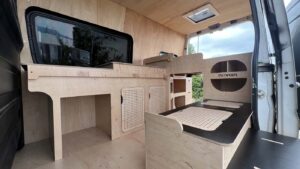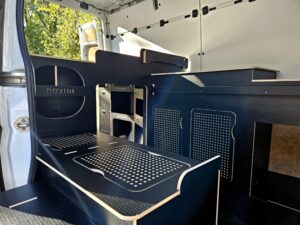


A campervan table storage kit solves a small but persistent problem: where the table goes when you need the space for something else. Without a planned location, the top tends to lean against a cupboard, the leg rolls under the bed and every change of layout involves moving both again.
Start with the table you will use, including its top, leg, brackets and any loose fittings. Then work backwards from the stowed position. The storage arrangement should suit both normal travel and the conversion between seating and sleeping.
List every part that needs a home
Measure the tabletop’s full outline, thickness and weight, including any bracket attached underneath. Check whether the leg is one piece or separates into sections. An apparently flat tabletop may need a deeper storage slot because of the hardware on its underside.
Keep small removable fittings in a dedicated pouch or container. Make sure the container itself has a retained location. A fitting that disappears into a large under-seat locker can prevent you using the table even when the other parts are easy to reach.
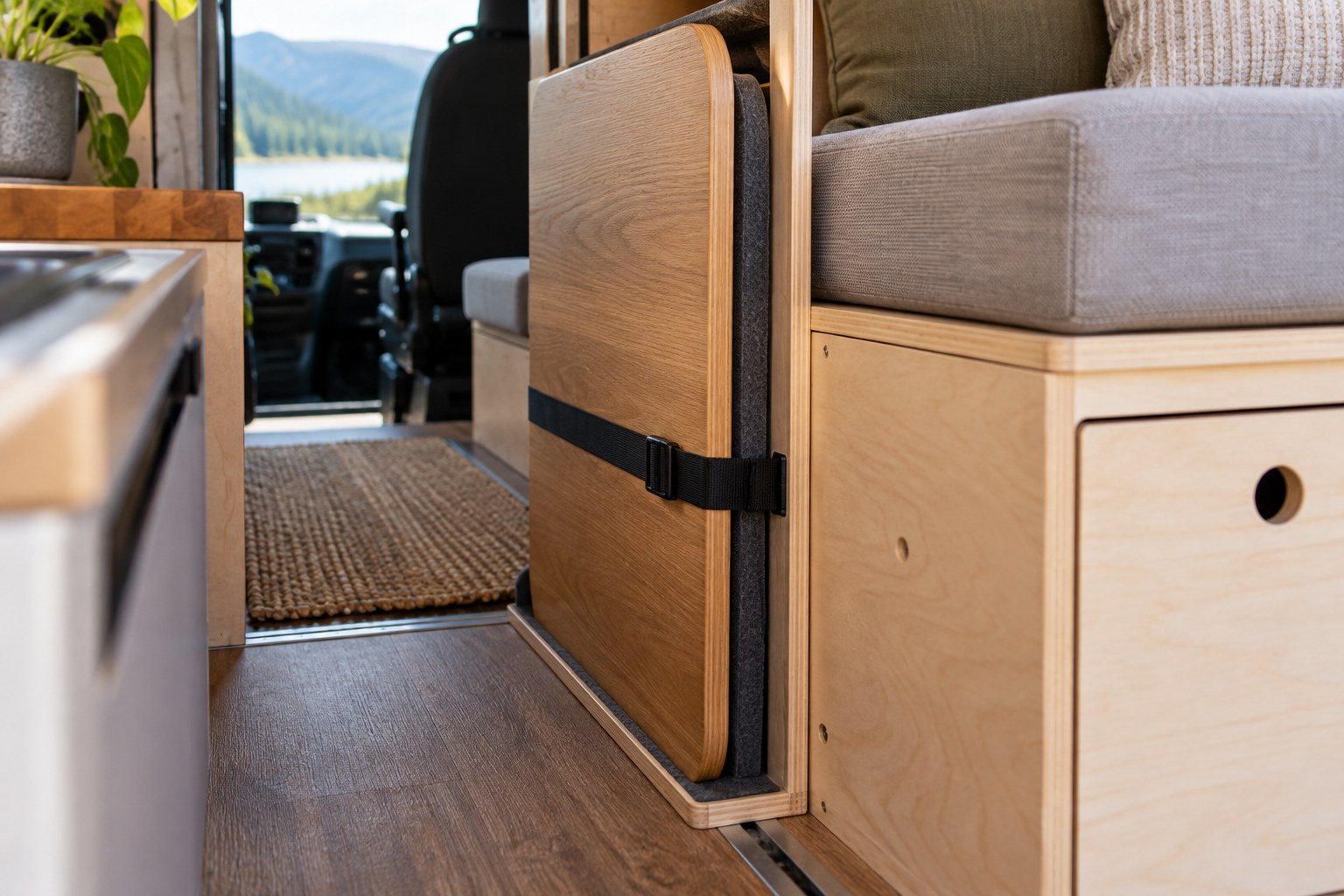
Compare a vertical slot with under-seat storage
A vertical position can be convenient when there is a protected space beside a bench or wardrobe. Test the direction in which the top enters the slot and the room needed to lift it out. A narrow gap is useful only if the tabletop can pass through the approach to it.
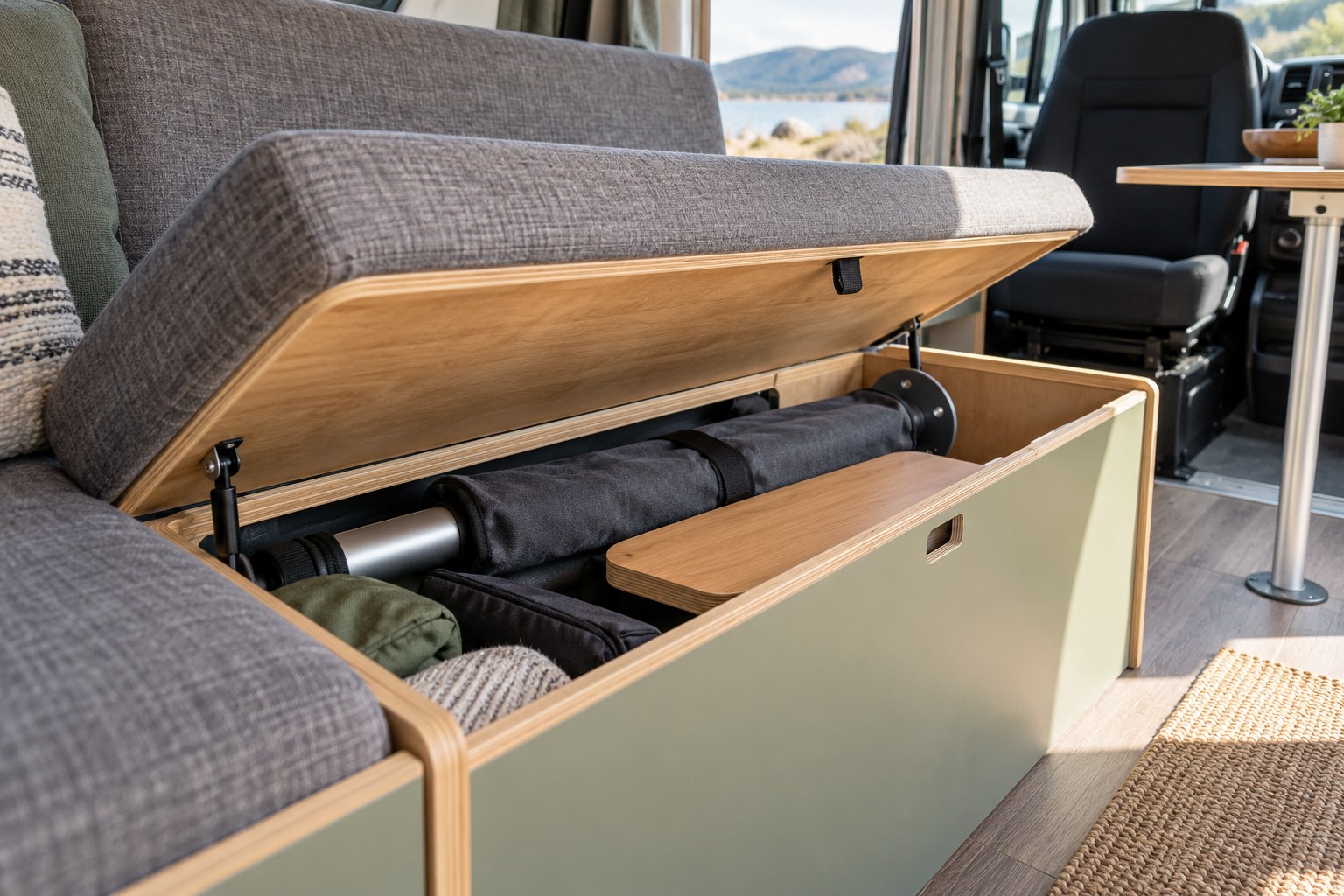
Under-seat storage can protect the top from passing feet and bags, but access may involve removing cushions. Check whether that still works when someone is using the bed. Consider a separate protected place for the leg so it does not strike the tabletop or other contents.
- Measure the actual opening, not just the storage cavity.
- Allow for the top’s rounded corners and projecting fittings.
- Keep hinges and service access clear.
- Check that soft protection can be removed for cleaning.
Where a table has a purpose-designed stowage system, follow its instructions. Do not improvise retention from an accessory intended only to stop light rattling. Ask the table and furniture suppliers to confirm the intended travel arrangement.
Test the complete bed conversion
Set out the evening sequence: clear the table, detach the top, deal with the leg, place both in storage, then move the bed components. Repeat it in reverse. The order matters because a storage hatch may become inaccessible halfway through.
If the tabletop forms part of the bed support, it has a different night-time role. Confirm how it is supported, which side faces up and where the leg travels. Our bed design guide explains the wider trade-offs between fixed beds and convertible seating.
Protect the furniture without creating a damp hiding place
Use protection suited to the tabletop finish and the storage system. Keep abrasive grit out of sleeves and slots, and dry a wet tabletop before putting it into enclosed storage. Protection that traps dirt can mark a surface instead of preserving it.
Leave enough access to inspect the retainers and the surrounding furniture. Check their condition as part of the pre-trip routine, following the supplier’s advice. Avoid locating the table across a ventilation opening or in front of an isolation point that needs to remain reachable.
Buy fittings for the actual load and furniture
Check the storage kit’s stated compatibility and intended use. Dimensions, attachment requirements and weight limits need to match the complete table. A kit described as universal can still require a particular panel thickness or mounting arrangement.
Have the attachment and travel restraint checked for your furniture and vehicle. The tabletop should not be able to slide into the aisle or doorway during a journey. Keep the stowed leg from moving independently, even if the top has its own secure holder.
Make the table easy enough to use every day
Try a mock-up before drilling or ordering. Carry the cardboard tabletop between its working and storage positions with the bed and cupboards represented at full size. If it requires a complicated turn every time, change the position or table design.
When discussing a NEVAN kit, confirm the dinette and table arrangement for your configuration. Ask specifically about the top, leg, bed conversion and travel storage rather than assuming a separate storage accessory is included.