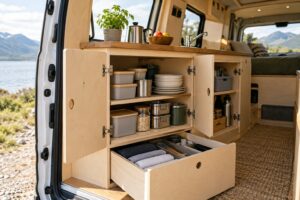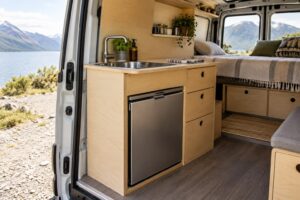

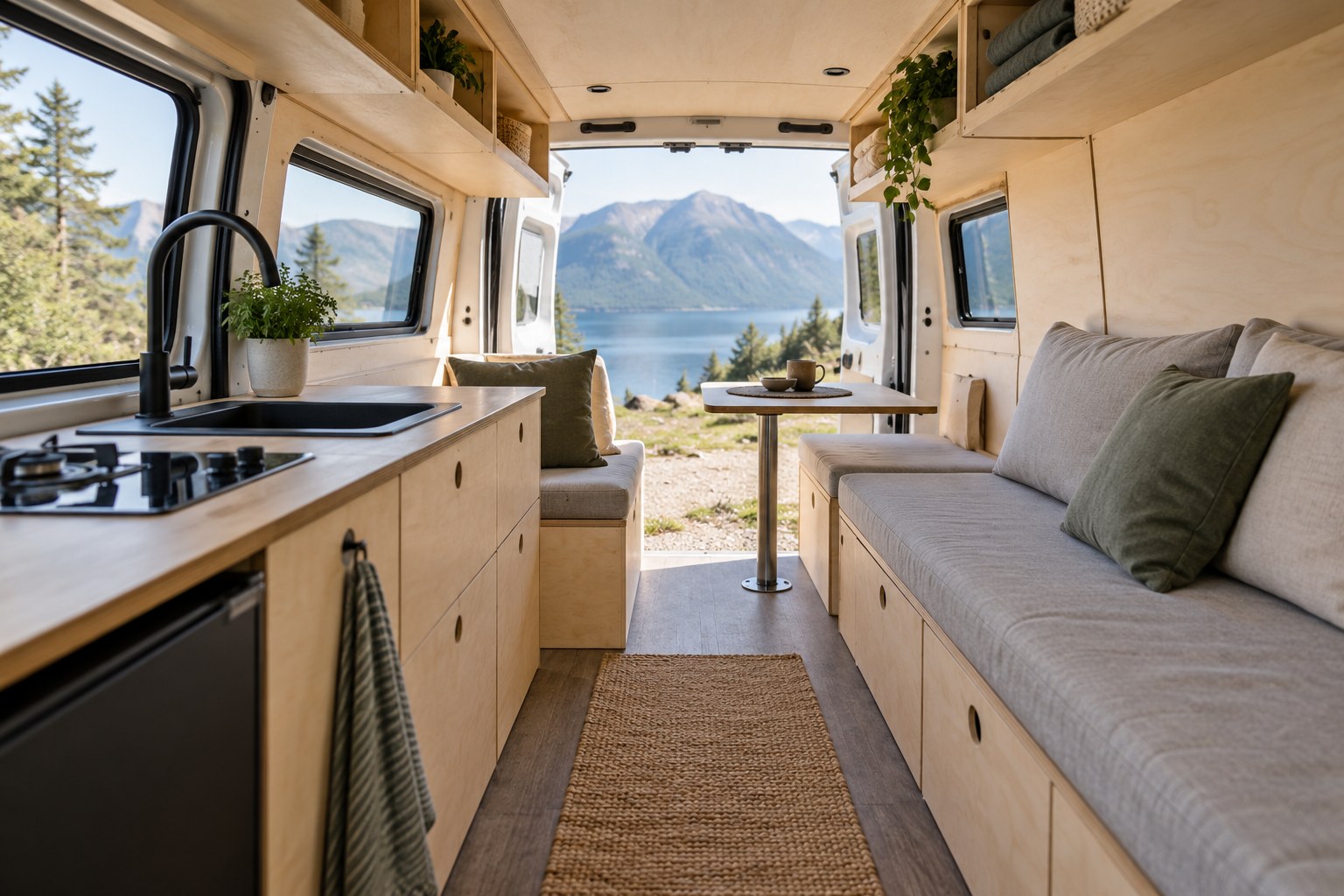
Campervan space saving ideas often add another folding surface or hidden compartment. A useful first step is to check the space already drawn between the furniture. The aisle has to accommodate people, open doors, wet shoes and the normal movement of a day on the road.
Use a full-size rehearsal to find the moments when a compact layout becomes crowded. It is easier to adjust a cardboard cupboard than a finished kitchen.
Mark the finished furniture on the floor
Use tape and temporary cardboard panels to show the real edges of the bed, kitchen and seating. Include handles and worktop overhangs. Account for the wall lining and insulation rather than drawing furniture against the widest part of the bare van shell.
Stand at the kitchen and ask the other traveller to move past. Sit at the table while someone opens a cupboard. These movements reveal more than an empty floor plan with attractive dimensions.
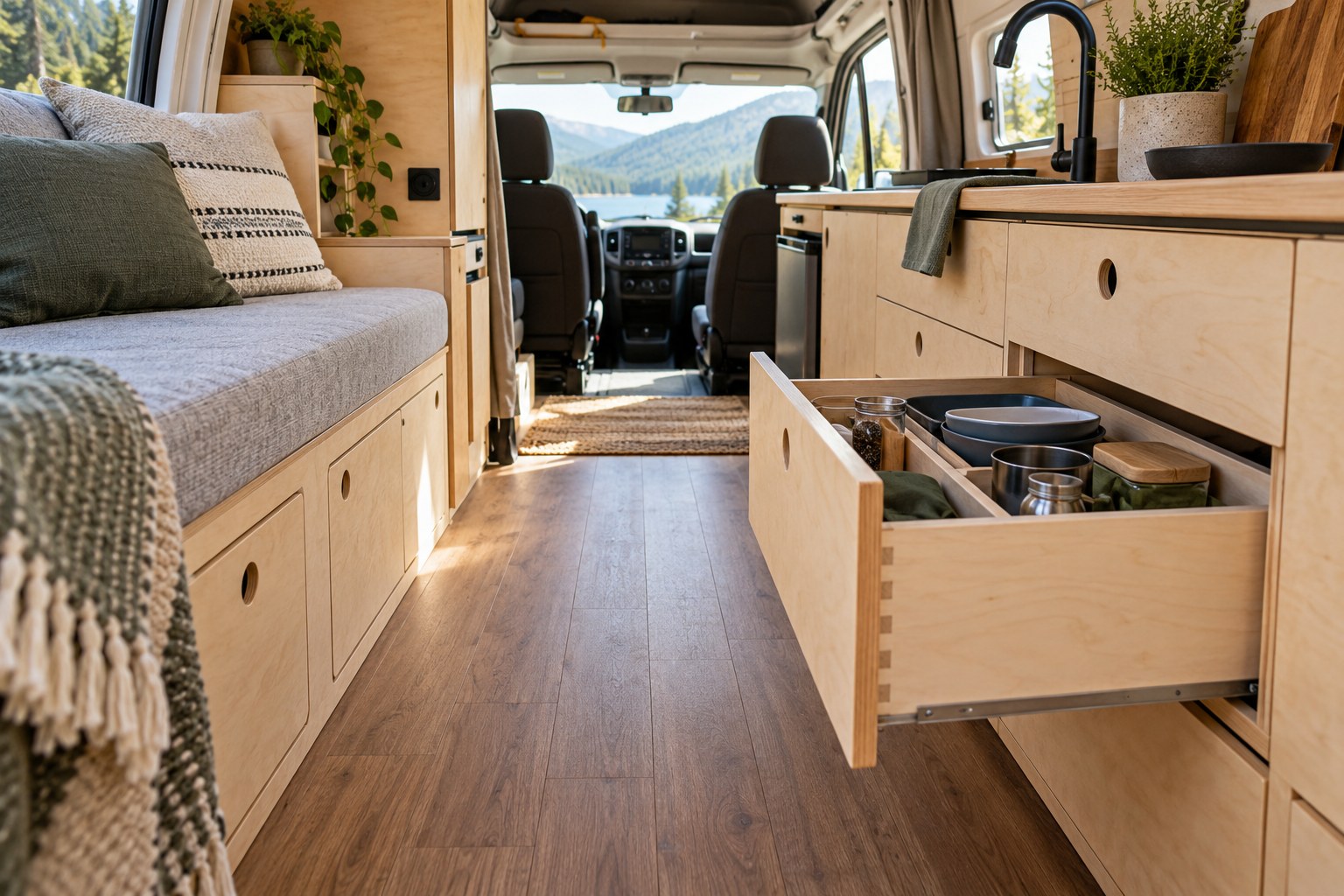
Test the furniture while it is open
Draw the complete movement of drawers, fridge doors and folding tables. Check the overlap between them. A room may have plenty of closed storage but still require one person to leave whenever another opens a lower drawer.
Rank the conflicts by frequency. A cupboard used once a week may tolerate an extra step; the cutlery drawer opened at every meal deserves easier access. Move the high-frequency function before trying to solve everything with a more complicated mechanism.
- Open the fridge with the table in use.
- Reach daily clothing with the bed made.
- Take out the bin without moving a storage box.
- Enter the van with wet shoes and a bag.
Count the objects moved at bedtime
List everything that changes place when the bed is made: table, leg, cushions, topper, bedding and daytime bags. Give each item a destination. A bed that folds neatly is less helpful if its accessories fill the only seat.
Keep the route to the exit usable throughout the changeover. Try the sequence with two people inside rather than relying on one person waiting outdoors. The folding bed guide looks at that routine in more detail.
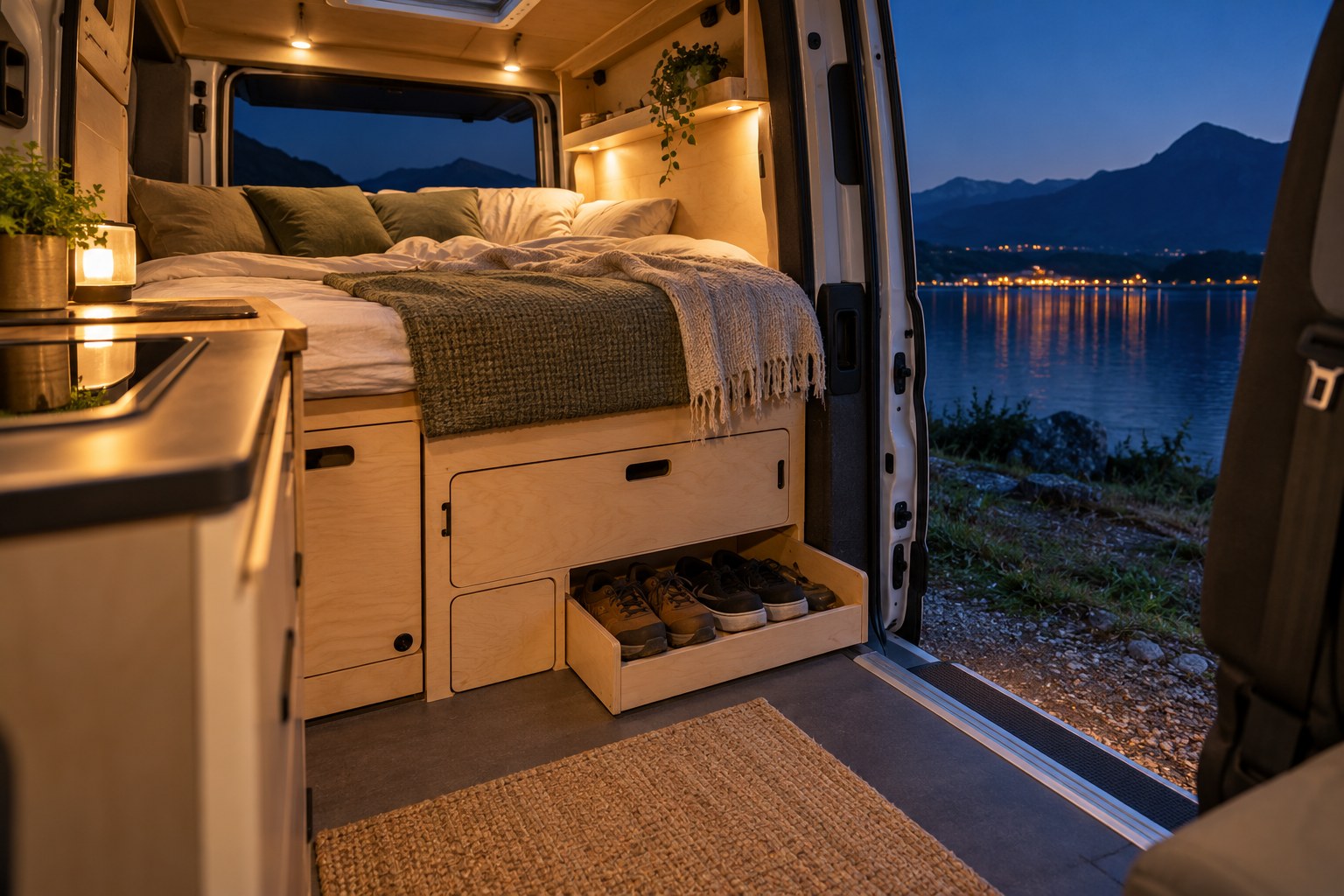
Choose one job for each extra feature
Before adding a fold-out shelf or accessory, describe the task it solves. Check where the accessory lives when closed and what it blocks when open. A surface that serves a daily purpose may be worthwhile; one added only because there is a gap may create more work.
Review the equipment list at the same time. Removing a rarely used bulky item can free more useful space than adding several tiny organisers. Keep some adaptable room for groceries and changing travel needs.
Preserve access to the systems behind the furniture
Space saving should not conceal the equipment that needs inspection. Keep the required ventilation, clearances and service panels accessible according to the equipment and furniture suppliers’ instructions.
Have furniture installation and travel retention checked for the intended loads. Folding or sliding parts still need an appropriate stowed position. Do not trade those requirements for a slightly wider aisle.
Bring the results of your rehearsal to the NEVAN configuration process. Discuss the specific movements that cause conflicts, so the final choice responds to daily use rather than adding features without a clear purpose.