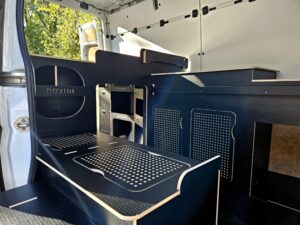

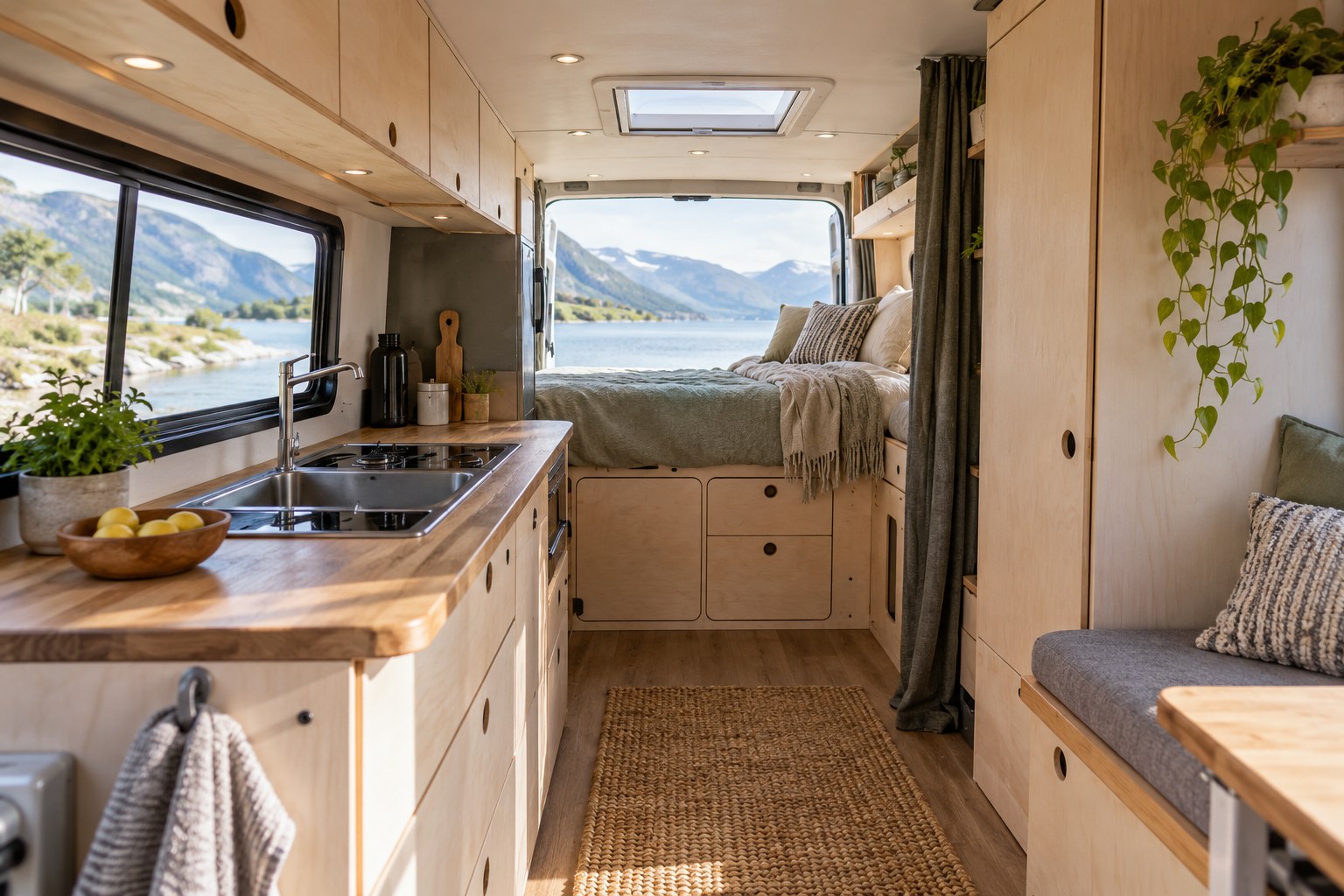
Campervan overhead storage ideas can add useful space for light everyday items. They can also make an interior awkward if a cupboard projects into the place where you sit up, lean over the sink or move from the cab to the living area.
Start by deciding what needs to go overhead. Then test the cabinet outline in the finished room. Extra storage is worthwhile when you can reach it comfortably and still use the space underneath.
Measure headroom where people actually move
Standing height in the centre of the aisle tells only part of the story. Sit on the bench, sit up on the bed and stand at the kitchen. Mark the position of your head and shoulders as you reach into lower cupboards or put on shoes.
Include the finished floor, ceiling lining and real seat cushion thickness. A mock-up made before those layers are accounted for can exaggerate the available space. Tape a full-size cardboard cabinet outline in the intended location and repeat the movements slowly.
Check both travellers if their heights differ. Pay particular attention to the transition from sitting to standing, when your head moves forward as well as upward. Cabinet depth and corner shape can matter as much as its bottom height.
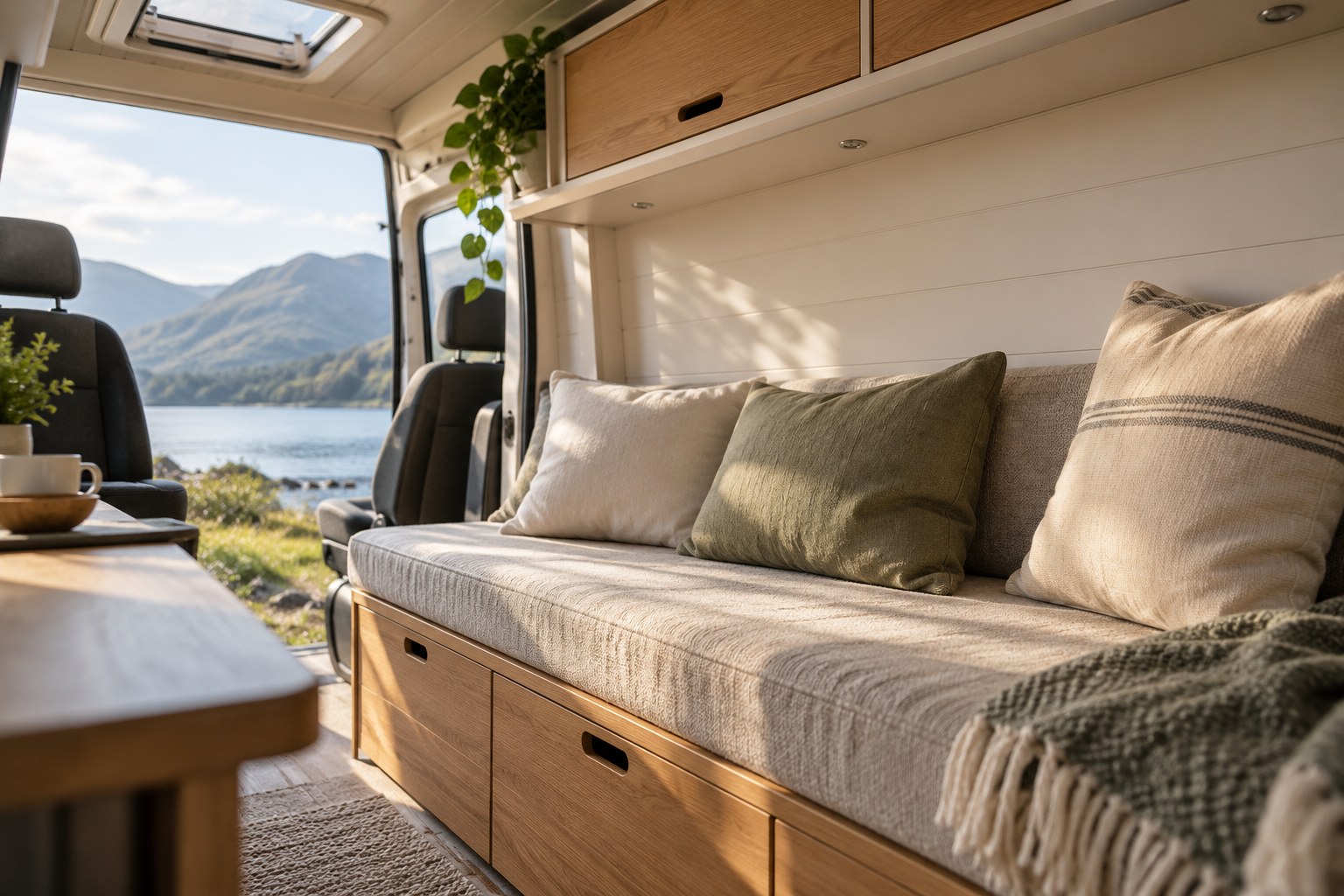
Compare shallow cabinets with deeper ones
A shallow cupboard may hold folded layers, towels or small soft bags while preserving a more open seating area. A deeper one offers more volume, but items at the back may be hard to reach and the cabinet can project farther into the room.
Use the items themselves to judge useful depth. Place a folded towel or filled organiser on a shelf mock-up and allow room to grasp it. Avoid sizing a cupboard around a theoretical volume that you cannot use without removing everything in front.
- List the intended contents before choosing dimensions.
- Keep heavy equipment in suitable lower storage.
- Check reach from the floor without standing on furniture.
- Leave access to windows, lights and required ventilation.
Open the doors in the mock-up
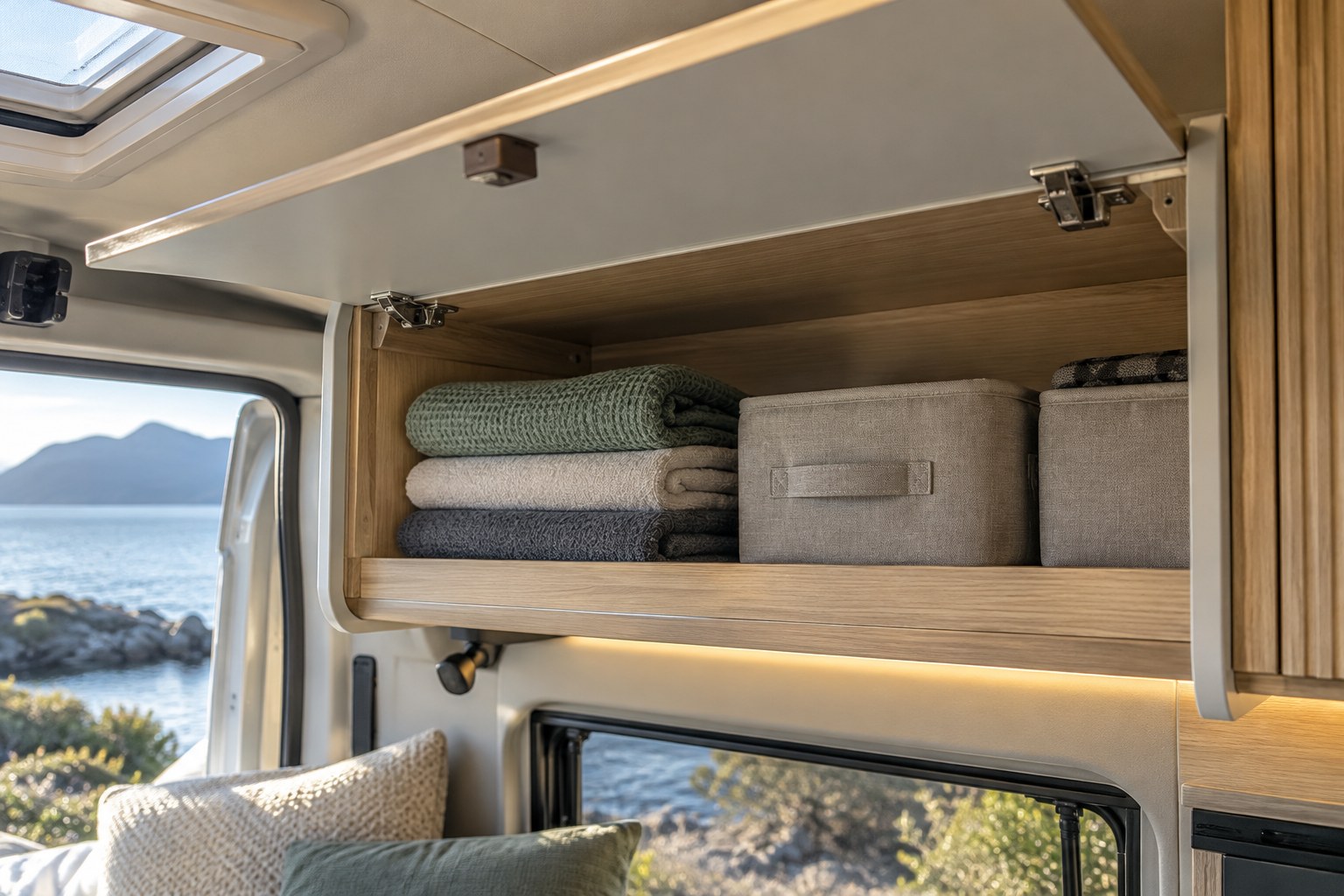
Draw the entire door movement, including handles and stays. An upward-opening door needs space above and in front; a side-hinged door may project into the aisle. The closed cabinet outline does not show those clashes.
Try taking out an item with one hand while holding the door as its design requires. Check whether an adjacent door can open at the same time. Ask the supplier about the intended hinges, stays and travel catches rather than selecting hardware from appearance alone.
Treat attachment and loading as part of the furniture design
Upper cupboards and their contents need suitable attachment and retention for the vehicle. Obtain the furniture supplier’s installation and loading requirements. Have the fixing arrangement checked for the van structure and finished wall system; decorative lining should not be assumed to provide a suitable fixing point.
Keep within the specified loads and distribute contents as advised. Soft organisers can help stop light items wandering, but they do not replace proper door catches or suitable installation. Check that nothing is trapped in the catch before setting off.
Consider the whole vehicle’s load plan too. Adding storage does not create extra carrying capacity. The completed van, passengers, water and luggage all need to fit within the vehicle’s applicable limits.
Leave room for inspection and cleaning
A cupboard should not conceal equipment that needs regular checks. Confirm access around wiring routes, roof fittings and any nearby ventilation components with the relevant installers. Keep the required clearances clear after packing, not just on an empty design drawing.
Choose an arrangement you can wipe out and inspect. Avoid stuffing soft bags so tightly into curved corners that they become difficult to remove. Check for moisture during normal cleaning and allow any affected items and surfaces to dry appropriately.
Decide whether the cupboard is worth the space
After the mock-up, remove it and compare the room again. If the upper cabinet is essential, refine its depth and position. If it stores only a few rarely used items, a different packing arrangement may give you a more comfortable interior.
Use our clothes storage guide to reduce unnecessary volume first. Then confirm the upper storage available with your NEVAN layout, including the intended contents, installation and finished headroom.