
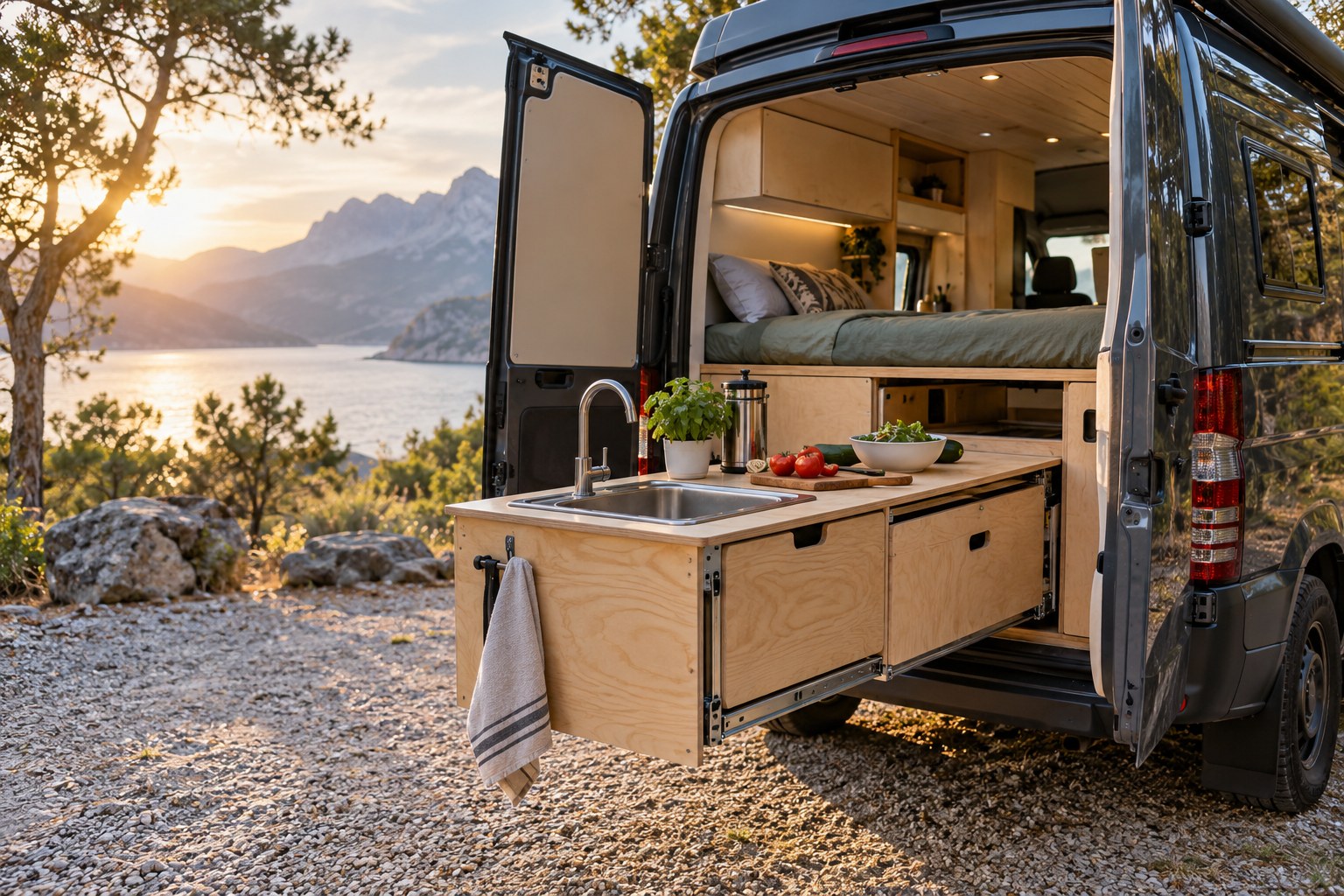
A campervan pull out kitchen can provide a useful preparation surface outside the living area. It also makes the campsite part of the kitchen layout. The unit needs space to extend, a suitable working position and a workable alternative when you do not want to stand outdoors.
Plan the extended and stowed versions together. The space used by the closed cabinet is only the starting point; the route around the open kitchen determines whether it will be convenient on a real trip.
Draw the full extension and standing area
Mark the cabinet footprint, full drawer travel and the space where the cook will stand. Include rear or sliding doors in their intended positions. A unit can clear the van perfectly while leaving too little room to walk around it.
Check the route for another person to enter and leave. Think about the places you normally stop: a narrow pitch, a roadside parking bay and a compact driveway have different constraints. Do not rely on always finding a wide empty area behind the van.
Make a full-size cardboard mock-up if the layout is still flexible. Add the chopping board, washing-up bowl and food containers you use. Check whether the useful work surface remains clear after those items are in place.
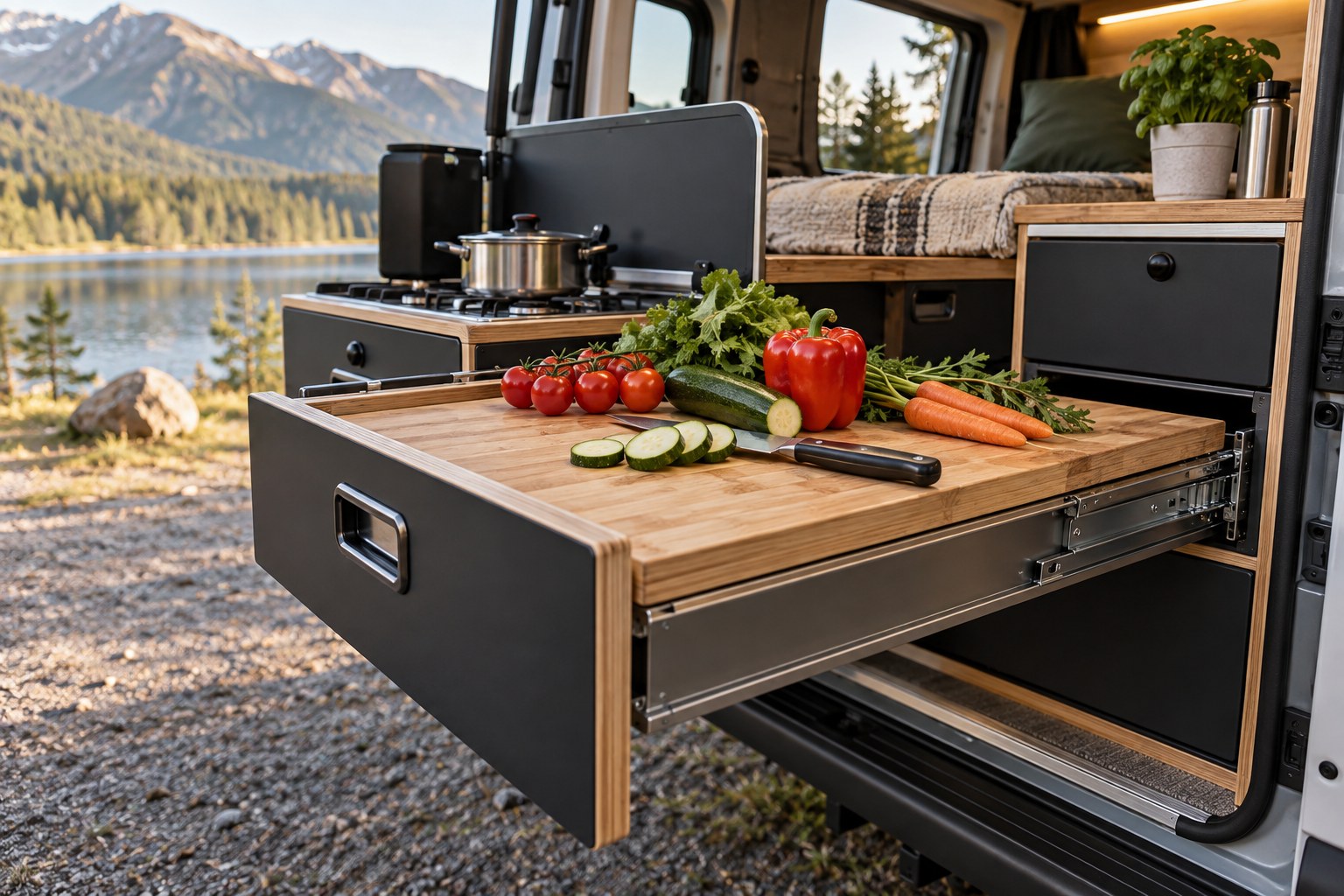
Decide what the outdoor unit needs to do
A preparation drawer, a sink module and a cooking station need different equipment and connections. List the tasks you want to move outside. Keeping the unit focused on preparation may simplify the design if water and cooking already have suitable locations inside.
If equipment is included, follow its intended use and installation instructions. Have gas, electrical and plumbing arrangements designed by competent people where required. An extended drawer or open rear door does not, by itself, establish a safe location for a cooking appliance.
Make a bad-weather plan
Imagine arriving in persistent rain with groceries to unpack. Decide where you can prepare a simple meal, wash up and put wet items away. An outdoor kitchen that works beautifully on a dry weekend may need a different routine on longer trips.
An awning can change the working area, but it brings its own setup, weather limits and storage requirements. Follow the awning and appliance instructions, including clearance and ventilation requirements. Do not assume an enclosed shelter makes any outdoor appliance suitable for use inside it.
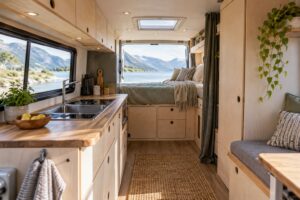
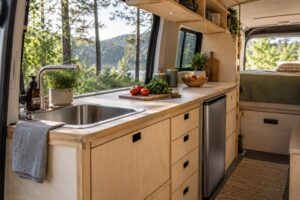
If the van also has a compact indoor worktop, keep it accessible when the pull-out unit is closed. Our kitchen layout guide can help you balance the two working positions.
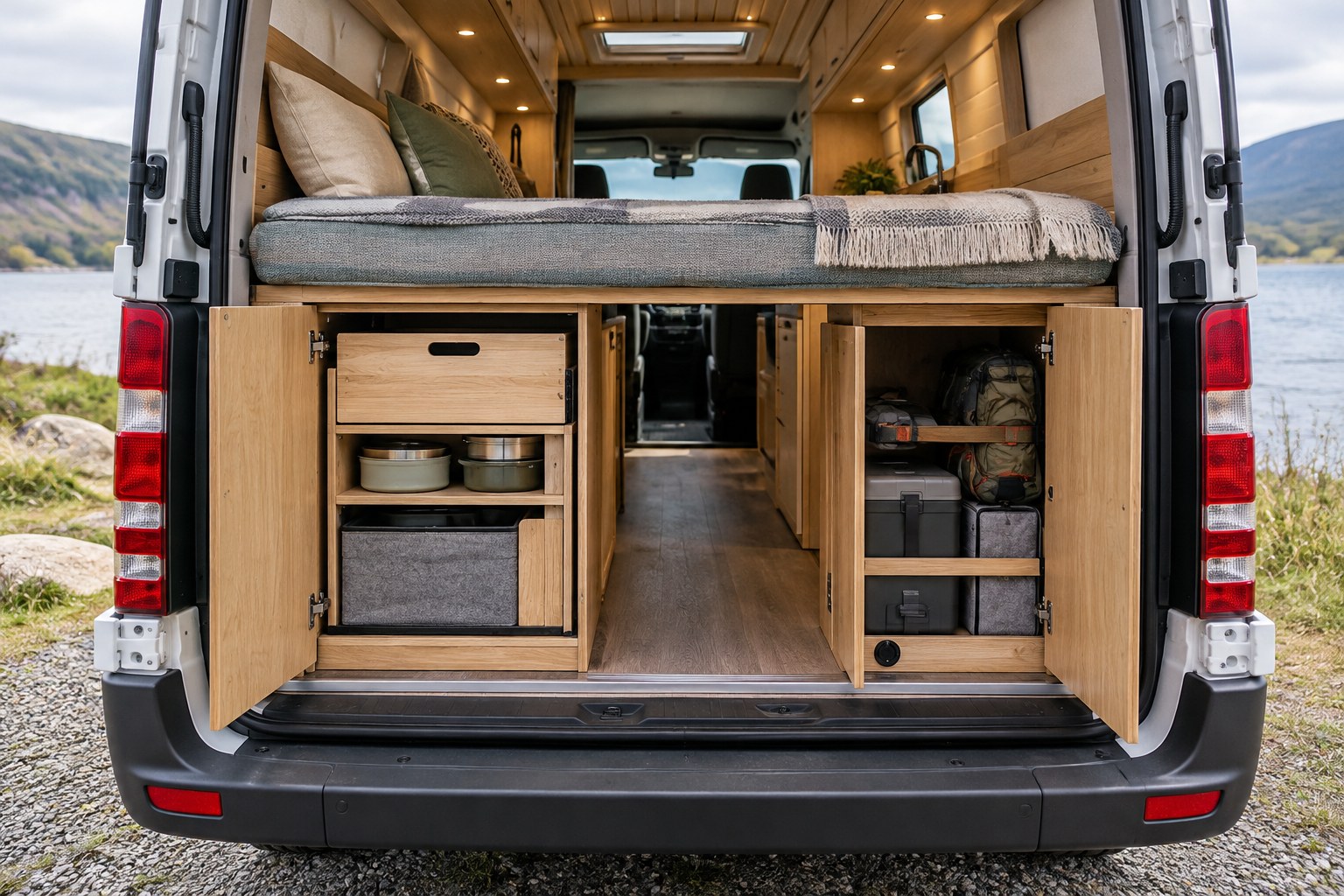
Check the loaded drawer and its retention
Ask the furniture supplier for the intended extension hardware, operating conditions and load limits. Consider the complete load, including the worktop, appliances and items placed on it during use. Do not interpret a runner’s headline rating as approval for an entire custom installation.
- Use the supports and operating procedure specified for the design.
- Check the mechanism can be operated from a comfortable position.
- Provide suitable retention in the fully stowed travel position.
- Secure loose contents separately where the design requires it.
Never use the drawer as a seat or step unless it was specifically designed and approved for that purpose. Close and retain the unit before moving the vehicle, following the supplier’s checks.
Keep connections and cleaning accessible
Where services move with the drawer, their movement needs to be accounted for in the design. Ask the installer to demonstrate operation through the full travel and explain inspection and maintenance. Avoid adding equipment later without reviewing the arrangement.
Plan how crumbs, grit and splashes will be cleaned from the work area and mechanism. Dry wet surfaces appropriately before closing the cabinet, and keep required access panels reachable. Follow the hardware manufacturer’s care instructions rather than applying a generic lubricant.
Check fit with the whole conversion
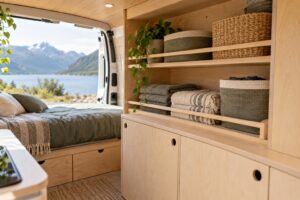
A rear kitchen may compete with bikes, outdoor furniture or the under-bed garage. List what still needs to be reached when it is extended and when it is closed. A smaller work surface can be the better choice if it preserves access to the equipment you use every day.
Discuss the idea with NEVAN before choosing your furniture configuration. Confirm whether a pull-out arrangement is available or requires a separate custom solution; do not assume it is included in a standard van kit.