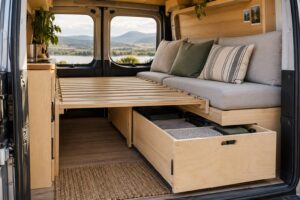

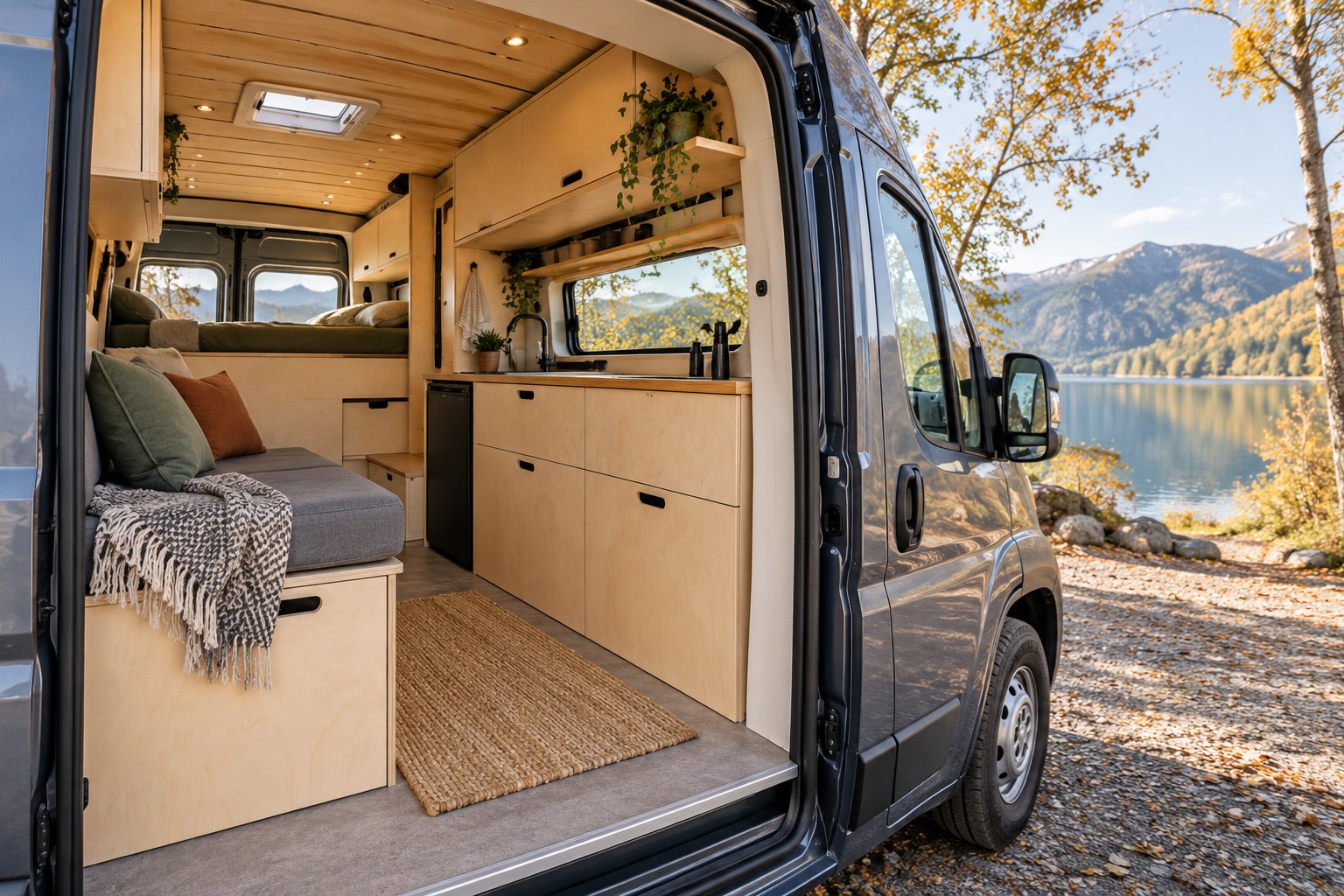
Removable campervan furniture makes sense when the same van needs to carry camping equipment on Friday and something quite different on Monday. The useful question is how easily the complete change can happen. A cupboard that comes out only after dismantling half the interior may be technically removable, but it will rarely leave the van.
Start with the two layouts you actually need: the camper in use and the van with its modules removed. Draw both before choosing a furniture kit. This guide focuses on the change between them; our conversion kit compatibility checklist covers the wider vehicle checks.
Decide what must come out
Write a short list of the loads that require the empty space. A bicycle, a stack of work cases and a large flat panel create very different problems. Measure the narrowest doorway, wheel arches and the space needed to turn each load inside. Keep the measurements from the finished floor and wall lining, rather than the bare metal shell.
You may only need a removable rear bench or storage box. Keeping a kitchen fixed can simplify the routine if it does not obstruct the load you carry. Conversely, a single large camping pod may clear the van quickly but be awkward to handle and store. Choose the smallest change that gives you the second useful layout.
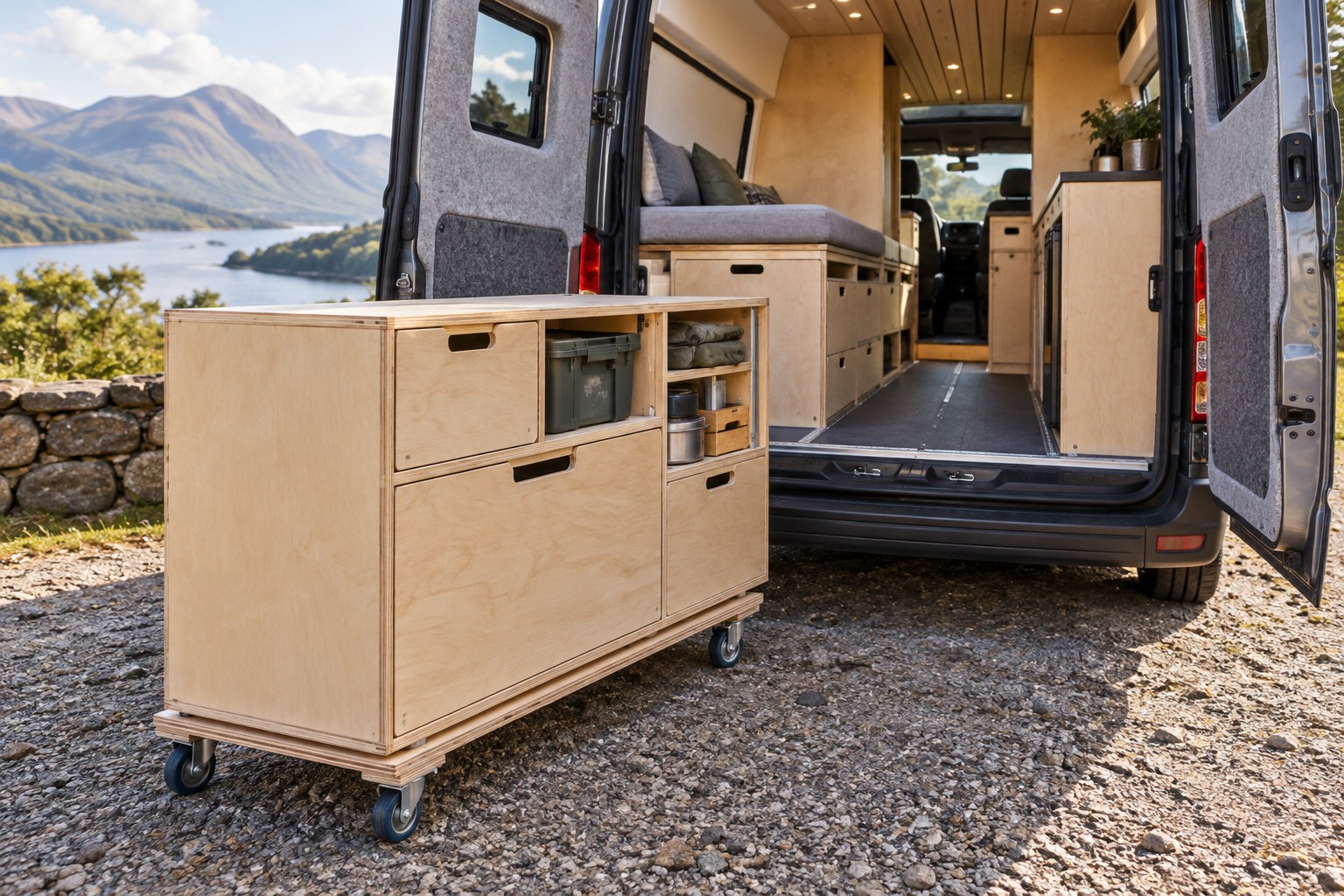
Plan the journey from van to storage
Make a cardboard outline of the largest module and carry it through the route you expect to use. Include the doorway at home, the garage threshold and the turn beside a parked car. A unit can fit through the van doors and still fail at the next doorway.
- Ask for the finished weight and dimensions of each module.
- Allow space for suitable handling equipment and the people required to use it.
- Choose a dry storage location before ordering.
- Keep loose shelves, cushions and fittings together in a labelled storage box.
Consider the module when empty and when loaded. Removing clothes and crockery first adds time, but may be essential for safe handling. Do not judge the process from an empty display unit alone. Ask the supplier to explain the intended removal procedure for the exact configuration.
Keep service connections accessible
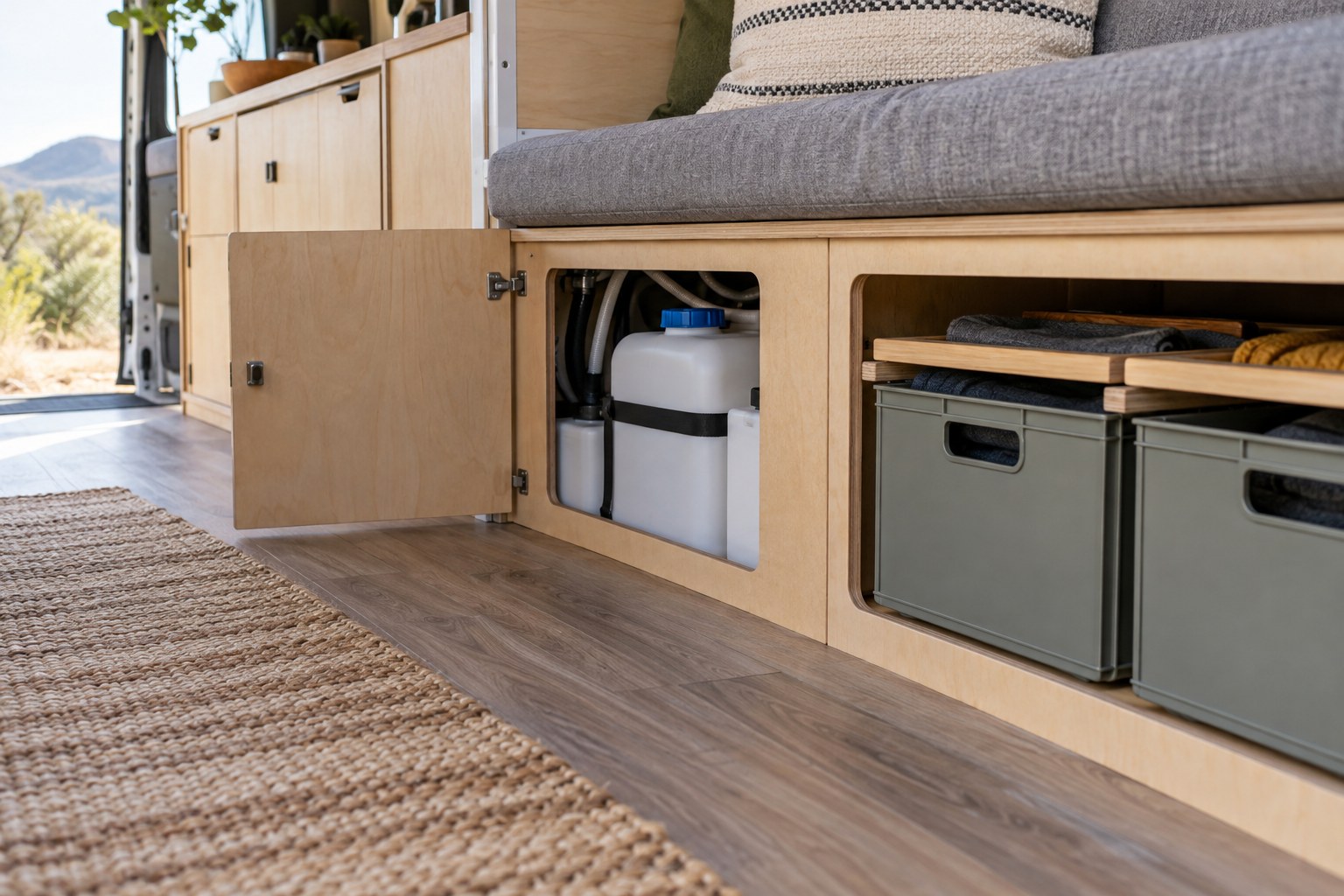
A storage-only module and a working kitchen present different challenges. Water containers, electrical equipment and plumbing can make removal more involved. List every connection that crosses from the van to the furniture and establish who is responsible for disconnecting it.
Leave access to isolation points, inspection panels and removable containers. Follow the equipment manufacturer’s instructions and use competent installers for systems that need them. Treat furniture removal as a planned procedure, rather than pulling a cabinet away until a hidden connection becomes visible.
Removable still needs secure installation
Furniture and its contents need appropriate restraint while travelling. A convenient release mechanism does not, by itself, establish that a module is suitable for a particular vehicle or loading situation. Obtain the fixing specification from the furniture supplier and have its suitability for the van checked before installation.
Also plan the empty configuration. Remove or protect protruding fittings, retain access to the vehicle’s load securing points and provide proper restraint for whatever replaces the camping modules. A furniture attachment point should not be assumed suitable for an unrelated load.
Time the whole changeover
Rehearse a complete weekend sequence on paper: unload equipment, remove bedding, disconnect approved services, release the module, move it into storage and secure the remaining load. Then reverse the sequence. Count the accessories and tools involved, including items that need a separate home.
If the process is too cumbersome, simplify the layout before adding more removable parts. A lighter box used every week may serve you better than a larger multi-function module that stays in place all year.
Questions to ask before buying
Confirm which parts are intended to be removed, how often the system is designed to be dismantled, and which fixings or connections need inspection or replacement. Ask whether floor coverings, bed supports or adjoining cupboards depend on a module remaining fitted.
Explore the NEVAN van kits for your base vehicle, then send the team your two proposed layouts. Confirm removability, service arrangements and availability for your chosen kit before treating any example layout as an included option.