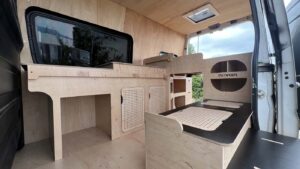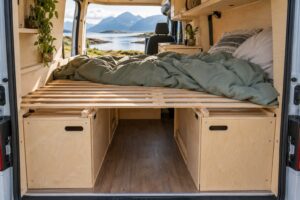

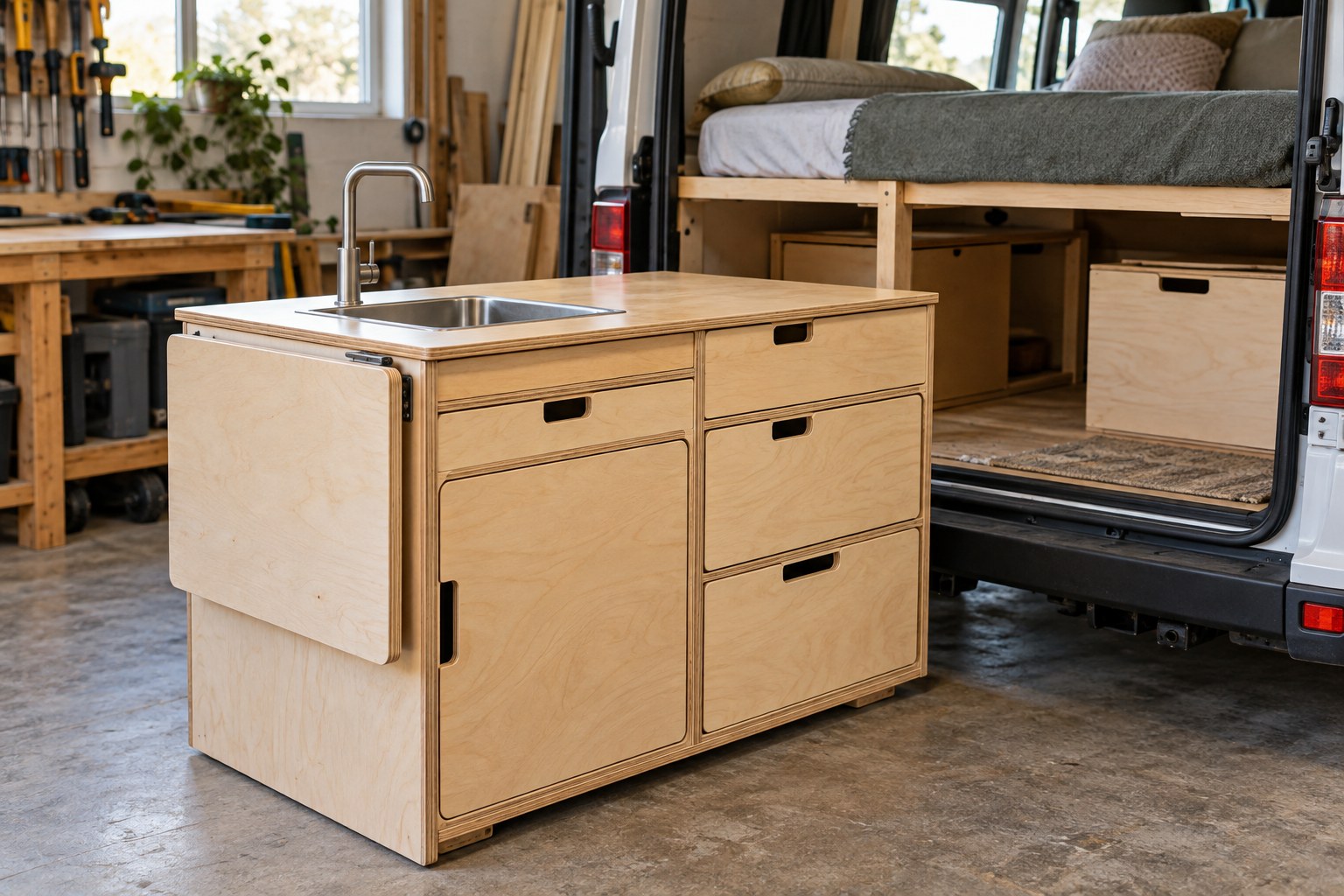
Lightweight ply camper van units can help keep a conversion’s furniture weight under control. To compare them fairly, look beyond the weight of an uncut sheet. The finished units also contain worktops, hardware, supports, finishes and the equipment you put inside.
Start with a weight plan for the complete van, then compare furniture designs that meet the same needs. A lighter panel does little for the overall project if an unnecessarily large cabinet encourages you to carry more equipment than you need.
Compare like-for-like furniture
Ask for the weight of the finished configuration you are considering. Check whether the figure includes doors, drawers, bed supports, worktop, fittings and floor components. A bare cabinet carcass and a complete kitchen unit cannot be compared directly.
Use the same layout and equipment list for each quotation. Note any items supplied separately and add their weight to the plan. Keep an allowance for small fittings and contents instead of treating the furniture estimate as the final loaded figure.
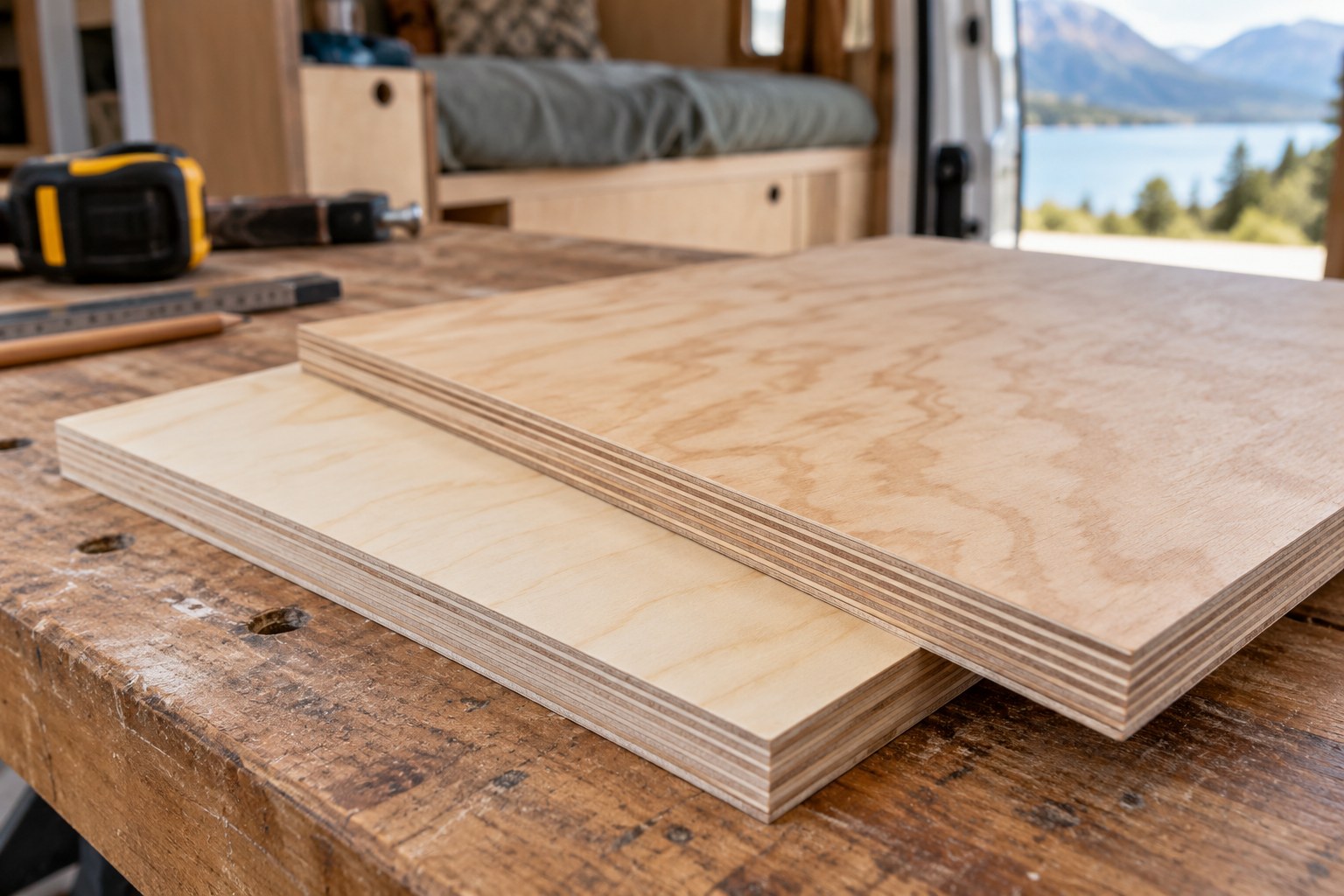
Ask what the plywood actually is
Find out the panel construction, thickness, finish and relevant product specification. The terms lightweight, birch and poplar do not describe every feature of a finished panel. Face veneers, core construction and coatings can differ between products.
As an example of why the specification matters, Garnica’s comparison of birch and poplar describes different densities for its reference materials. Those figures are useful context, not a weight certificate for an unrelated furniture kit. Ask for the actual panel data and finished-unit weights used in your quotation.
Handle a sample if possible. Look at the surface, exposed edge and finish you will live with. Consider how it suits the cabinet design and your cleaning routine rather than choosing from wood colour alone.
Keep strength and hardware in the discussion
A furniture design depends on panel spans, supports, joints, attachment and hardware as well as the panel itself. Do not reduce thickness or remove bracing simply to save weight. Changes should be assessed by the furniture designer for the intended use.
- Ask how the bed and seating components are supported.
- Check the intended loading of drawers and shelves.
- Confirm the specified hinges, catches and fixings.
- Discuss repairs and replacement parts before ordering.
Heavy worktops, large drawer systems and extra doors can offset savings elsewhere. Ask whether a simpler arrangement would meet the same need. The most practical weight saving may be removing an unnecessary unit from the plan.
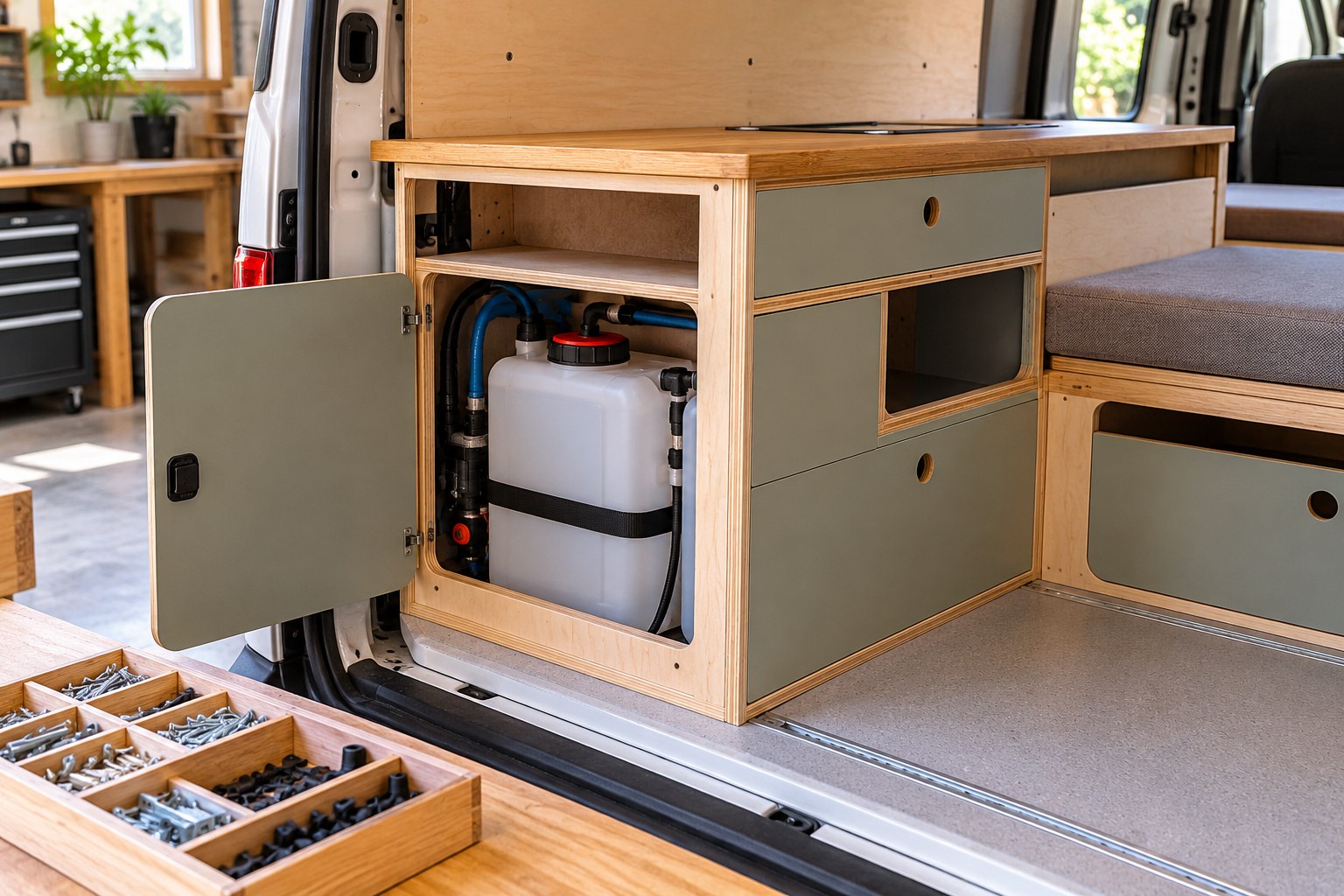
Allow for water, passengers and luggage
Furniture is only one part of the completed vehicle. Keep the planned loads for water, appliances, batteries, passengers, food and travel equipment alongside it. Confirm what is already included in any base-vehicle weight figure so it is not counted twice or omitted.
For UK terminology, GOV.UK explains maximum authorised mass as the vehicle’s permitted loaded weight. Use the limits applicable to your particular van and have the completed travel configuration weighed, including axle loads as appropriate. A spreadsheet estimate helps planning but does not verify the finished vehicle.
Check service access and durability
Lightweight furniture should still let you reach the equipment inside it. A removable panel may make inspection easier than a cabinet that requires dismantling. Ask how plumbing, appliance fixings and other service points can be accessed after installation.
Follow the supplier’s care instructions for the surface and cut edges. Discuss how spills should be handled and how damaged parts can be replaced. These details matter in a van where a kitchen cupboard may see wet coats, cooking splashes and repeated packing.
Choose the complete package
Compare the final layout, included components, installation requirements and total weight before choosing a material. Record unresolved items on the quotation rather than filling gaps with assumptions from photographs.
NEVAN offers furniture options discussed in its FAQ and vehicle kit pages. Confirm the plywood option, finish and finished kit weight for the configuration you intend to order.