


Useful campervan lighting ideas begin with what you are doing, not the number of fittings in the ceiling. Preparing dinner, reading in bed and finding your shoes at night need different kinds of light. A single bright source can leave the worktop in shadow while lighting the sleeping area more than you want.
Map the tasks first, then discuss the fittings, controls and electrical installation with a competent installer. This guide is about the layout and daily use of the lighting.
Draw three everyday lighting scenes
Start with cooking, relaxing and night-time movement. Mark where people stand or sit in each scene and which surfaces need to be visible. Include the bed in its made position, the table and cupboard doors.
For cooking, imagine your body between a ceiling light and the chopping board. A fitting closer to the work area may be more useful than making the central light brighter. Check that upper cupboards and open doors do not obstruct the proposed light.

Place reading light for the person using it
Mock up a reading lamp beside the real pillow position. Check whether you can aim it comfortably and reach its control while lying down. Try the other side of the bed as well, especially if two people keep different bedtime routines.
Keep the lamp and its operating space clear of bedding and other materials according to the manufacturer’s instructions. Confirm whether the fitting is suitable for the location and the way it will be used, rather than selecting it from appearance alone.
If a dinette becomes the bed, test the lamp in both arrangements. A position that suits a seated reader may be behind a pillow once the cushions move.
Make the night route easy to control
Trace the short journey from bed to shoes, toilet compartment or doorway. Consider a modest low-level light that can be used without turning on the main ceiling lighting. Keep the illuminated route clear of loose storage.
- Put frequently used controls within a natural reach.
- Check that a cupboard door does not hide a switch.
- Allow one traveller to use a reading light independently.
- Test controls with the bed made and curtains closed.
A dimming option may be useful where the fitting and control system are designed to work together. Have compatibility confirmed instead of assuming any dimmer can be added later.
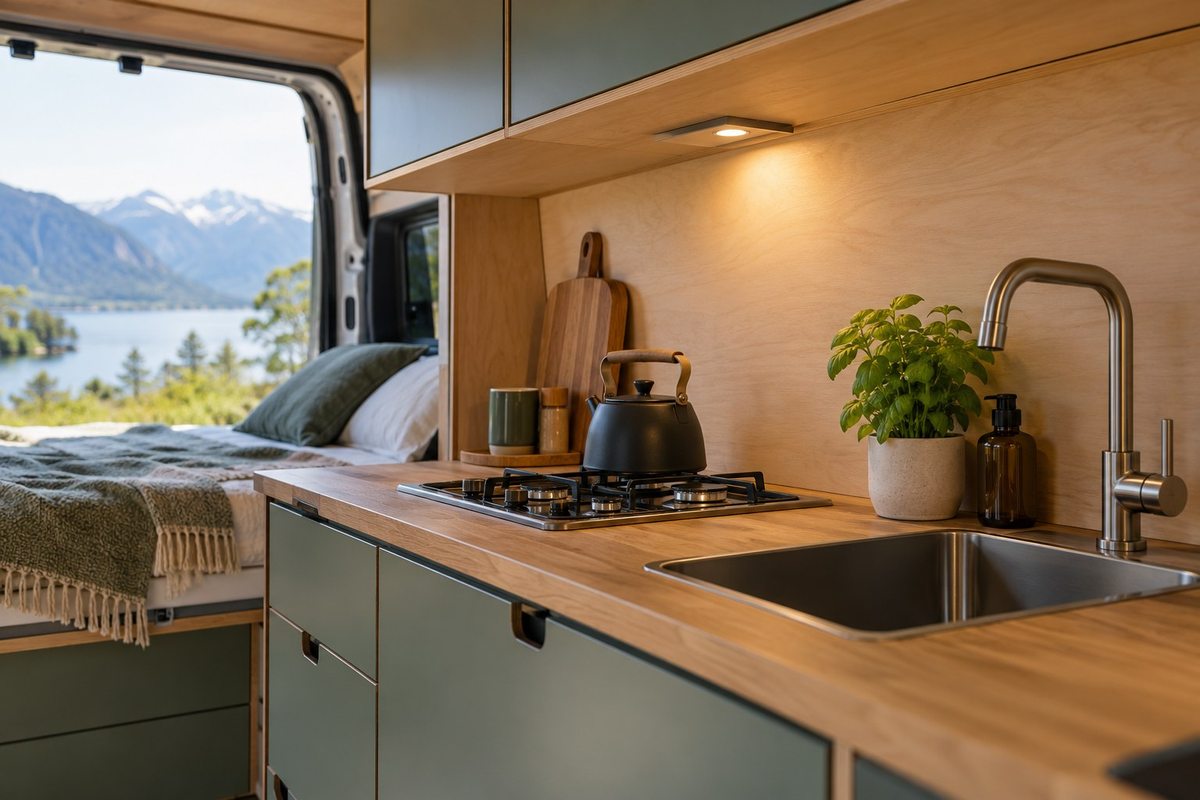
Look at reflections as well as brightness
Check the direction of light on a laptop screen, a glossy worktop and nearby windows. A reflection that is barely noticeable in daylight may be distracting after dark. Use a temporary light to explore positions before committing to the furniture cut-outs.
Compare the feel of the lighting as a complete room. Ask for suitable samples or a demonstration where possible. Product colour descriptions alone do not tell you how a fitting will look beside your wall finish and upholstery.
Coordinate fittings with furniture and services
Plan wiring routes, protection, access and the expected electrical load with the installer. Keep the specified ventilation and equipment clearances, and leave a practical way to inspect or replace fittings after the cupboards are installed.
Do not cut a structural panel or place a cable behind inaccessible furniture without an agreed design. An early lighting plan can prevent a later compromise in an otherwise finished interior.
Use the NEVAN configurator to settle the main layout, then confirm how the furniture can accommodate your lighting plan. Check what is included in the kit and which electrical components or installation services are supplied separately.