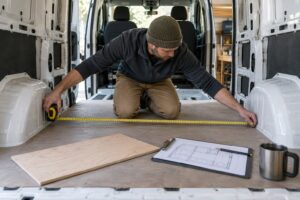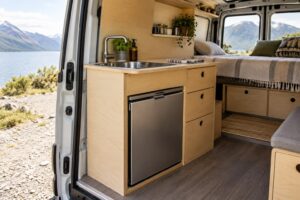

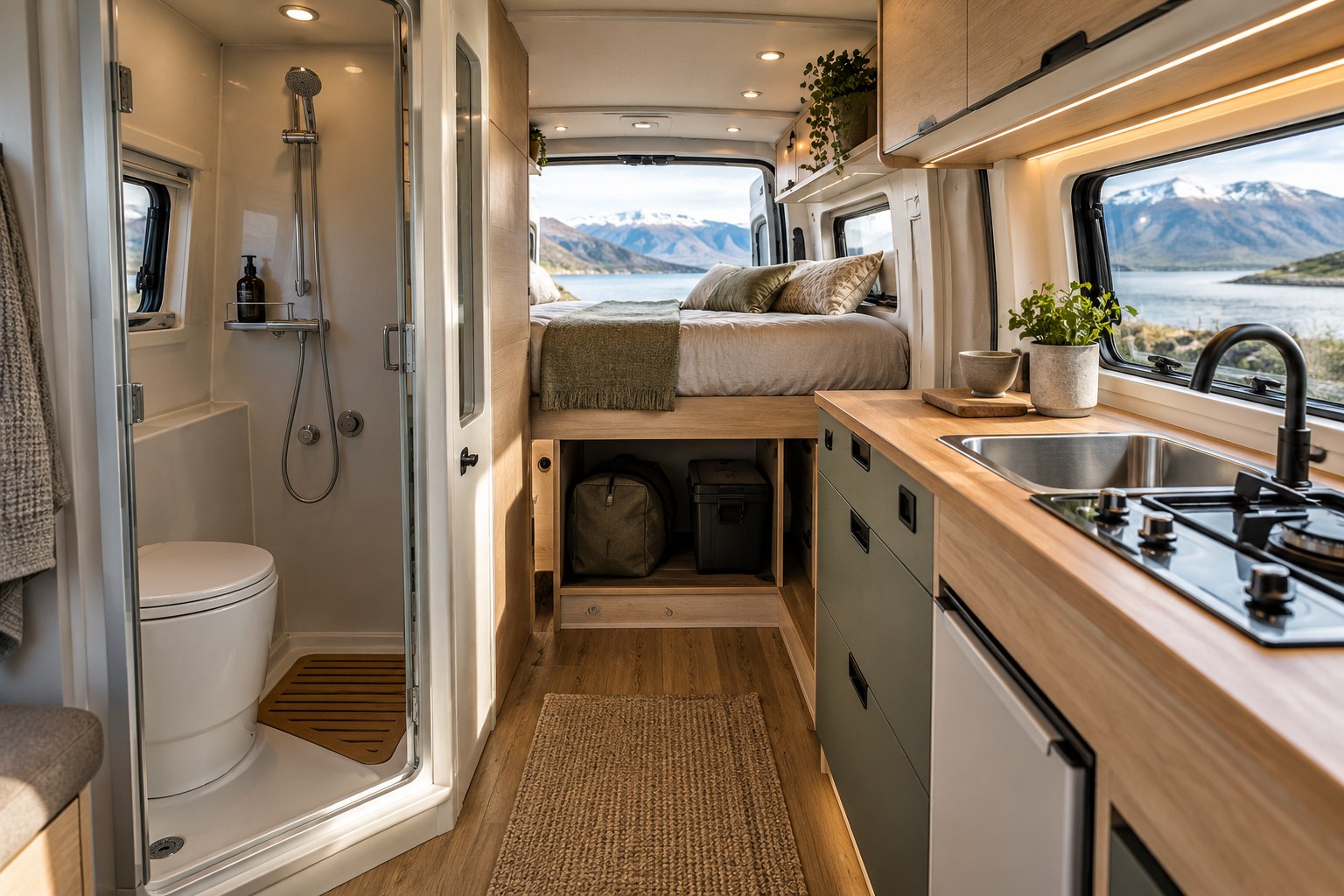
A small camper van with shower can be appealing if you often travel away from campsite facilities. The useful question is how much of the interior you are prepared to give to washing, and what that decision changes for the rest of the day.
Start with your trips. How frequently do you need an onboard shower? Who uses it? Where will you obtain water and empty waste appropriately? A realistic routine is more helpful than adding a shower symbol to a floor plan.
Decide what the shower replaces
Mark the wash space at its full finished size, including enclosure, fittings and access. Then identify what would occupy that area in another layout: a cupboard, part of a kitchen, an open aisle or a larger sleeping area.
Compare two complete layouts rather than squeezing the shower into an otherwise unchanged drawing. The effect may be felt elsewhere, such as a shorter worktop or less room to dress beside the bed.
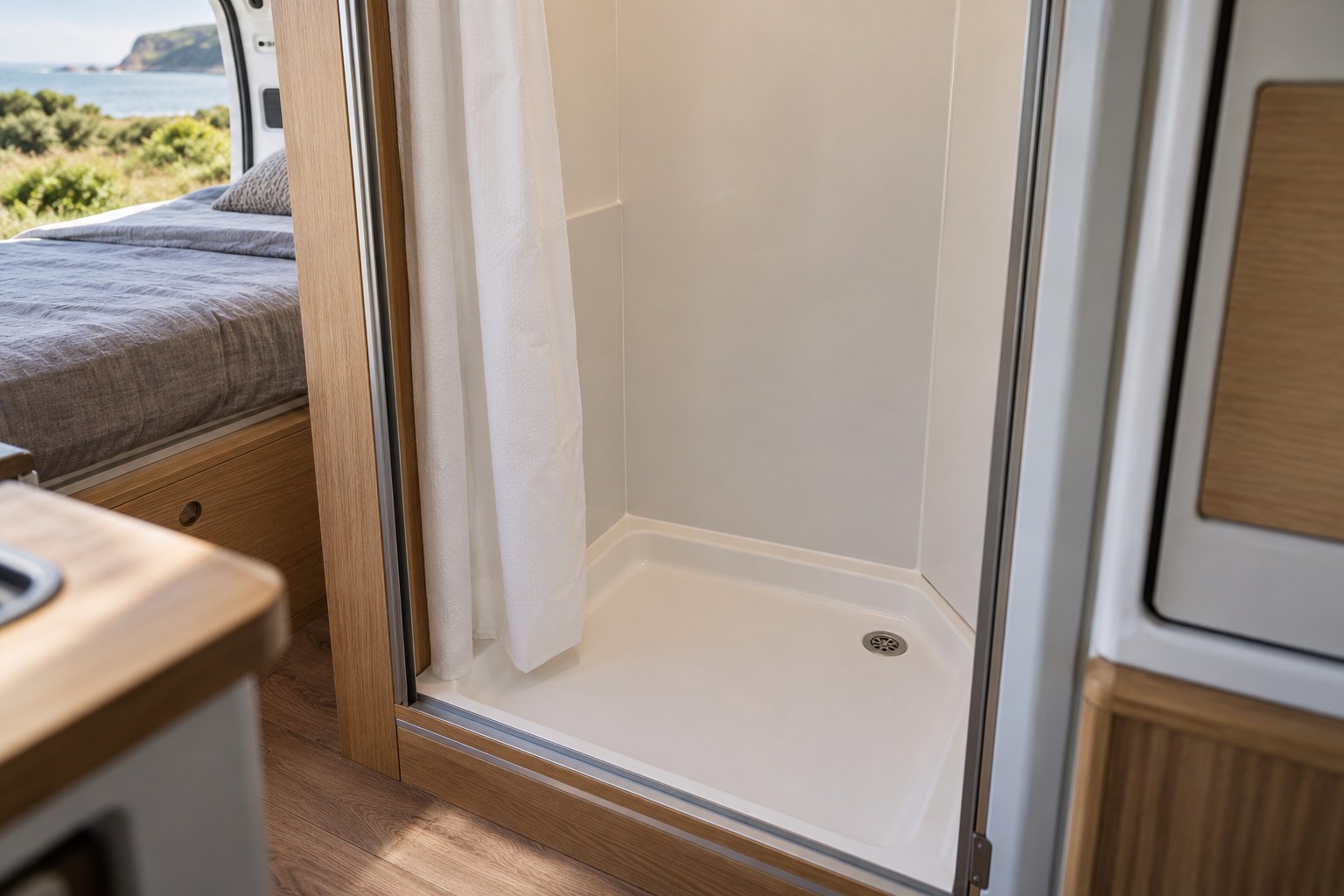
Test the movements inside and outside
Make a temporary full-size outline and act out entering, turning, washing and reaching a towel. Consider the user’s height and normal movements. A space that can be stood in is not automatically comfortable to use.
Now check the doorway and the person waiting outside. Can another traveller reach the kitchen or exit? Where do clean clothes stay dry? The dry area beside the enclosure is part of the practical wash routine.
Plan the systems with the layout
Water storage, drainage, ventilation and any hot-water equipment need a complete, competent design. Include their space, access and weight implications when comparing layouts. A compact enclosure does not make those supporting requirements disappear.
- Identify the proposed equipment before finalising cabinets.
- Keep inspection and maintenance routes accessible.
- Plan suitable drying for towels and wet surfaces.
- Check the vehicle’s complete load and installation requirements.
Discuss plumbing, electrical work and heating with qualified or otherwise appropriately competent installers. Use the equipment manufacturers’ current instructions for the actual products.
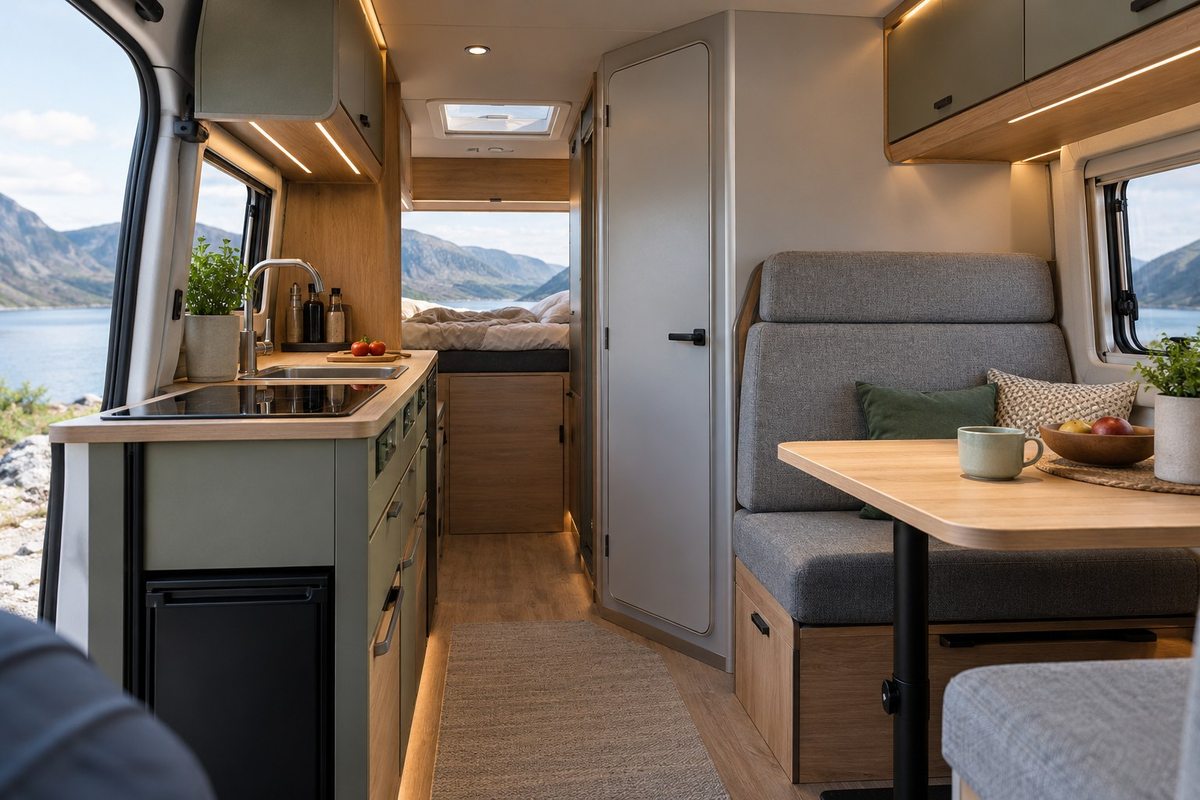
Compare fixed and temporary wash spaces
A dedicated enclosure reserves its footprint all day. A folding arrangement may free some living space when packed away, with extra setup, drying and storage tasks. Compare those tasks honestly rather than treating the temporary arrangement as space-free.
Our folding shower guide helps test that alternative. An external shower point can suit some outdoor cleaning jobs, but its usefulness depends on the location, weather, privacy and appropriate water disposal.
Choose around the trips you take
Write a short comparison of a normal week with and without the onboard shower. Include where washing happens, how often you refill, what needs drying and what you gain from the alternative storage or living space.
NEVAN layouts and options depend on the chosen vehicle and kit. Ask about the available shower arrangement for your exact project rather than assuming every small van or furniture package includes a complete bathroom.