

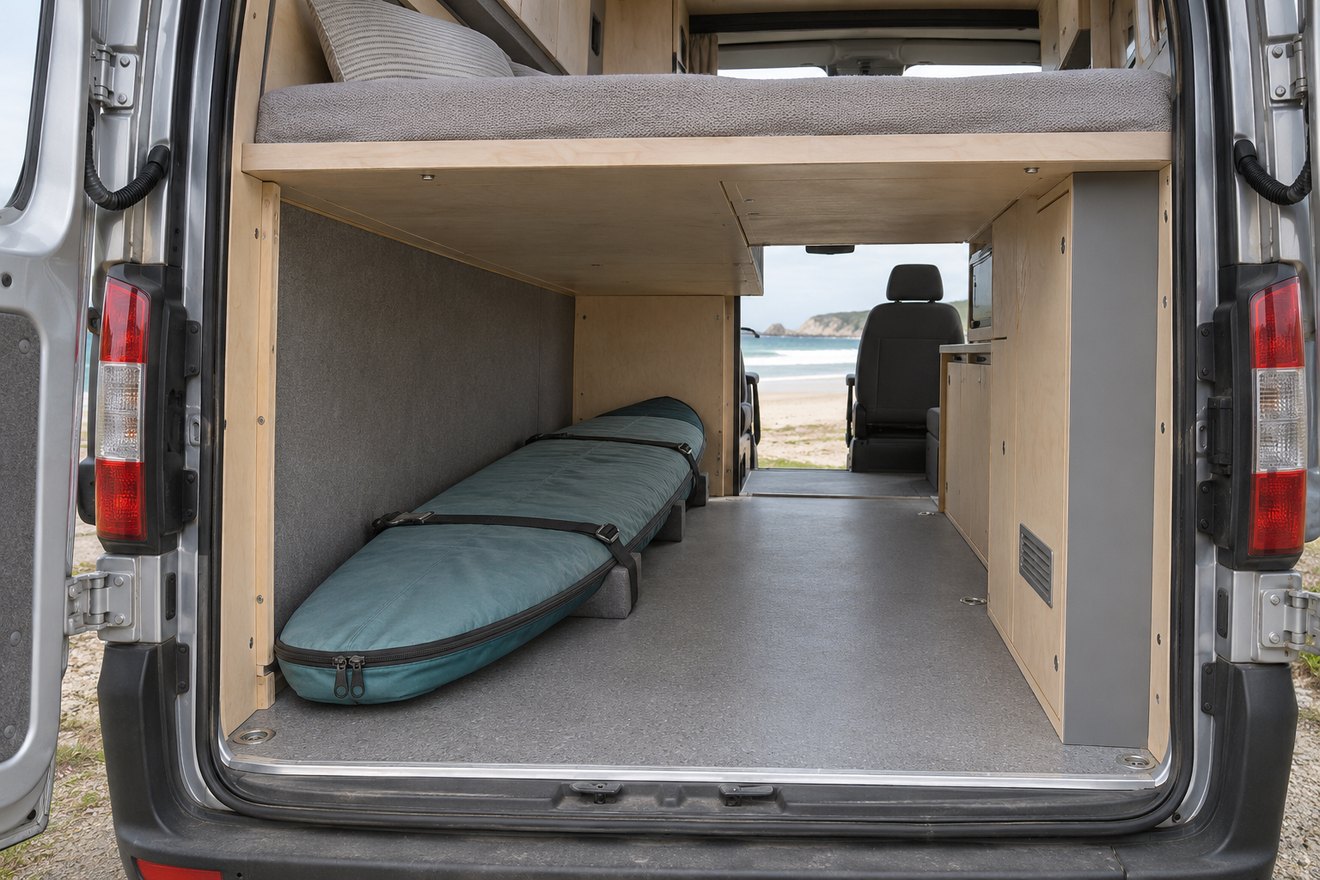
Campervan surfboard storage should work when the board is sandy, the board bag is damp and you still need access to your bedding. Measure the bag with the board and fins in their normal travel arrangement. The board’s published length leaves out the padding at each end and any handles or straps.
Find a loading path from the rear doors
Measure the full width, length and depth of the bag and mark the largest shape on the garage floor. Try swinging the board into place without leaning it against the bed or opening a cupboard. If it must pass through from the garage into the living space, check that the tip stops in a protected position and leaves normal access clear.
Support the board along its length
Plan padded supports where the bag will rest on the cabinet or floor, and check that straps will not press over a fragile fin or unprotected edge. Use suitable restraint and vehicle anchorage for the actual load. Keep heavily loaded kit low and clear of the passenger space. Pack multiple boards one at a time to see which one you need to remove first.
Give sand and water a simple route out
Choose a garage liner or tray you can remove and clean. Let damp gear dry as conditions and manufacturer guidance allow, and keep wetsuits apart from sleeping gear. Test access to any pump, battery or drain behind the board before you settle on a permanent rack.
FAQ
Can I use the space below a fixed bed?
Yes if the board can be loaded and secured there while preserving equipment access. Measure the rear opening, the bag and the route to its final position.
Is a soft board bag enough to hold it in transit?
The bag protects the surface. Use a suitable retention arrangement to hold the board and bag against vehicle movement.
Read our campervan garage storage guide for the next part of the build. You can also send your layout and measurements to NEVAN.