
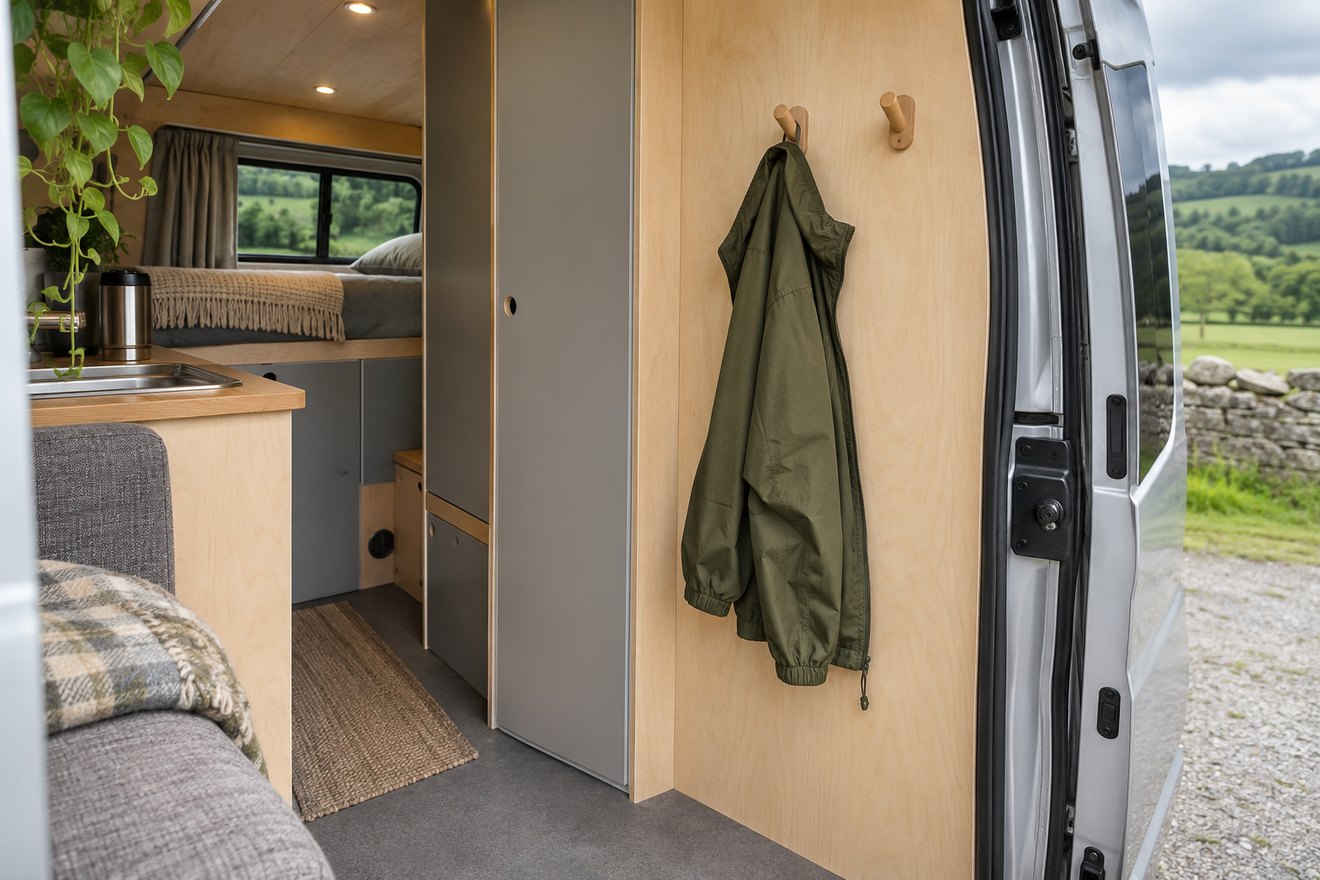
Campervan coat hooks are useful when someone steps inside holding a wet jacket and the door still needs to close. Hang the longest coat from a temporary position first. Its hem can land on a bench, block the step or trail across the place where you store shoes.
Pick a position people can reach
Stand just inside the parked van with the slider open and mark a comfortable reach. Check that children and shorter adults can use at least one hook if needed. Then hang a real jacket from the mark and test the nearest cupboard door and the path to the bed. A low hook at the galley end can be easier to reach than one tucked behind a tall cupboard.
Keep the fixings and the doorway clear
Choose rounded hardware and check what it will screw into. The supplier or furniture designer can advise whether the panel needs reinforcement. Look behind the proposed position for wiring and existing hardware. Keep hooks and garments clear of door handles, seat movement, ventilation and any space needed by safety equipment. Put bulky coats away before driving where they could swing into seats or outlets.
Give wet layers somewhere to finish drying
Keep damp coats clear of unsealed edges and bedding. Try the hook position with the van set up for the night, when the bench or aisle may already be in use. For a longer stay, move wet layers somewhere ventilated and appropriate for drying. Check the panel behind the hanging coat after your first wet trip.
FAQ
Can I fix hooks with adhesive pads?
Check the pad maker’s surface, temperature and load instructions. Consider the weight of a wet coat and repeated pulling when someone removes it.
Where should coats go while driving?
Use secure storage suited to the garments and clear of passengers, controls and access routes.
Read our campervan cupboard storage guide for the next part of the build. You can also send your layout and measurements to NEVAN.