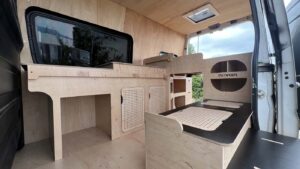

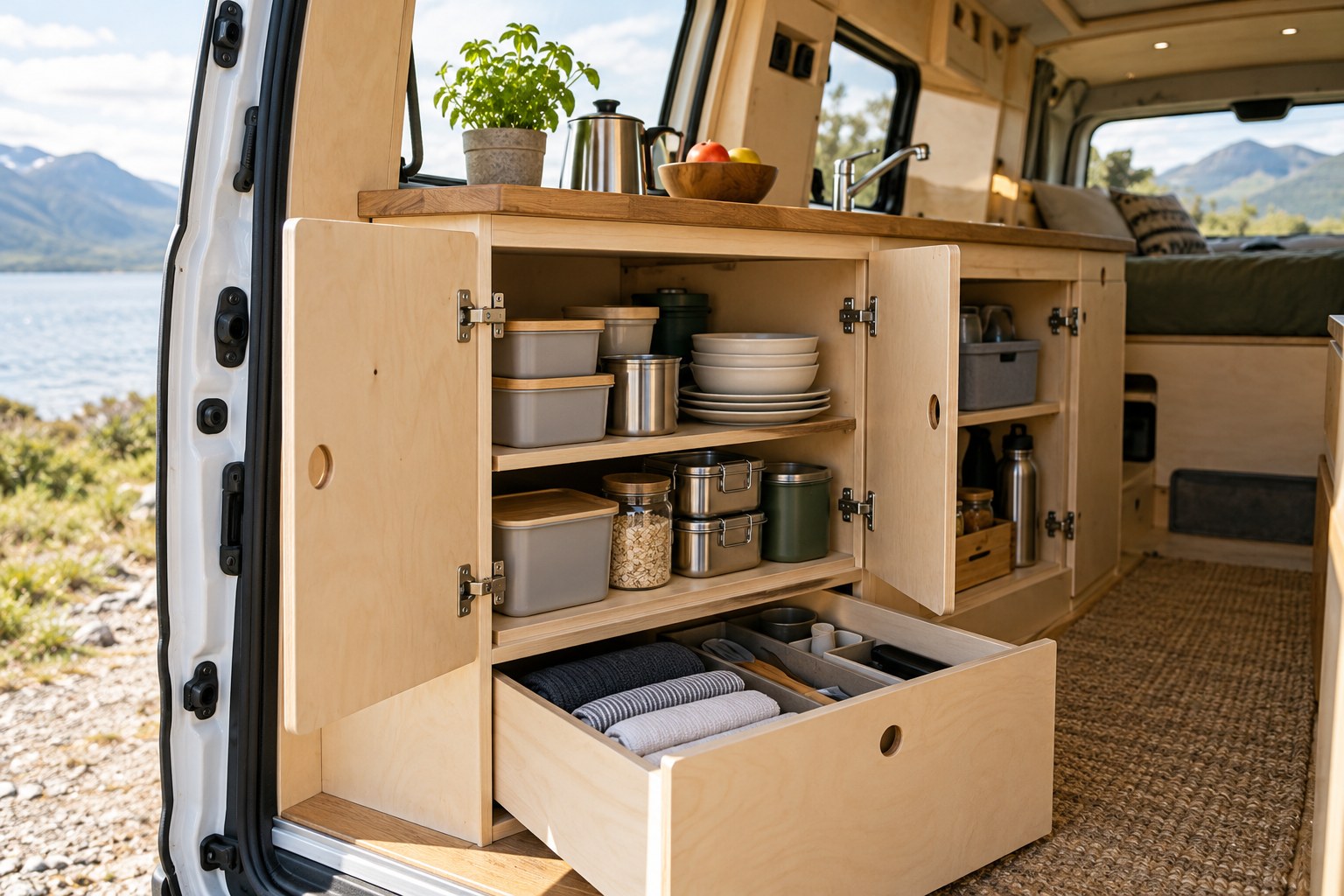
Campervan cupboard storage ideas work when they reduce the number of things you move to reach one item. Filling every gap is less useful than being able to take out breakfast supplies without unpacking the cupboard onto the floor.
Before buying organisers, list the contents and measure the cabinet opening. A basket that fits on a shelf may still be difficult to lift past the hinge or pull through the door.
Measure the usable opening first
Record the clear width and height with the door in its normal open position. Include projecting hinges, catches and shelf edges. Measure the depth at more than one height where the van wall curves behind the cupboard.
Now test the largest item you want to store. Use its real packed shape, including handles and lids. A saucepan with a long handle creates a different problem from a rectangular food box, even when both have similar volume.
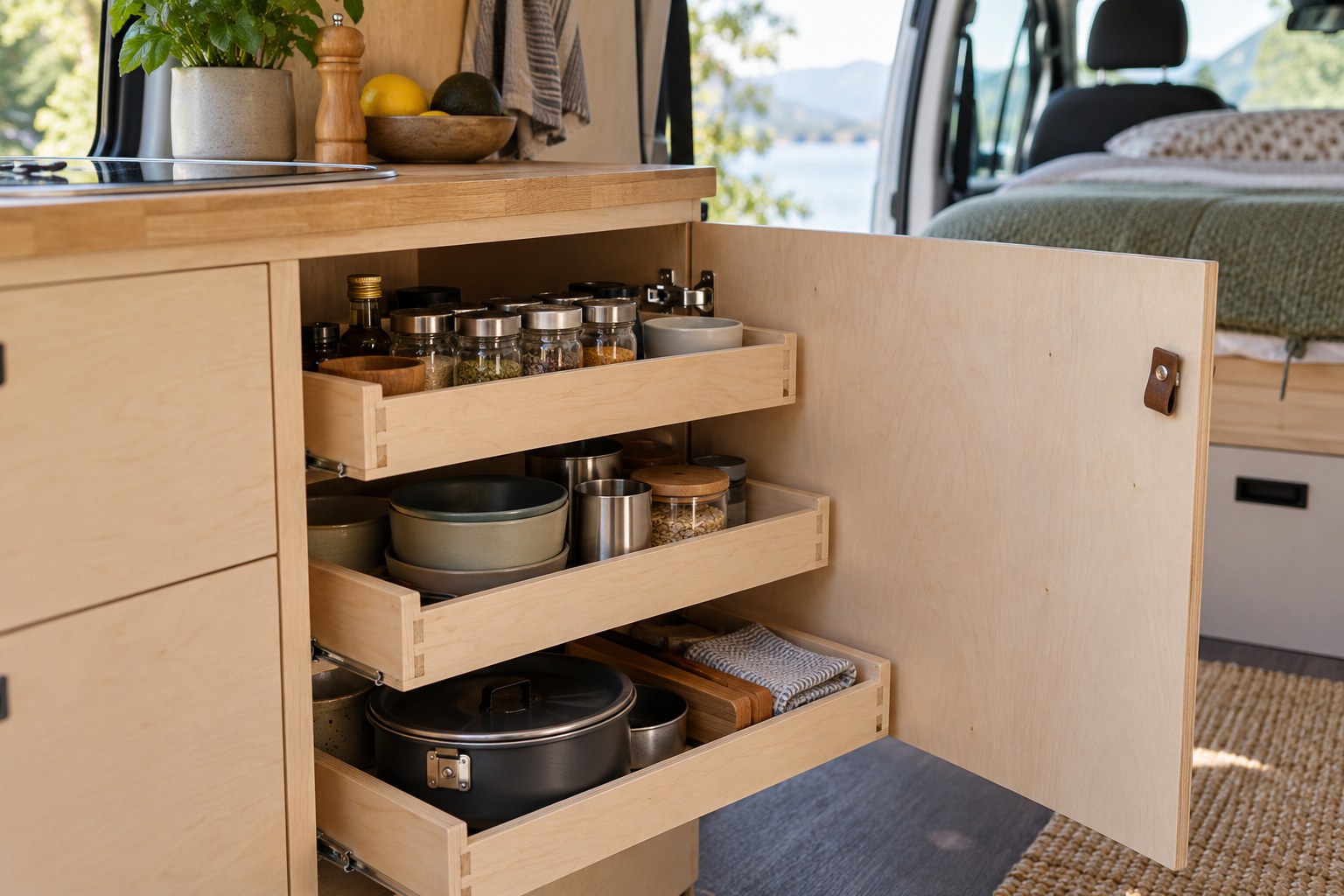
Use removable trays for small groups
A shallow tray can bring several small items to the front at once. Group things that are used together: tea and coffee supplies, breakfast ingredients or washing-up accessories. Keep food and cleaning products in appropriately separate storage.
Check the filled tray’s weight and whether you can grip it comfortably. A deep basket packed to the top may be harder to use than two smaller containers. Leave enough space above the contents to lift the tray out without catching handles or packaging.
A removable organiser also makes cleaning easier. Choose surfaces and materials you can care for according to their instructions. Avoid adding so many fitted dividers that small spills become difficult to reach.
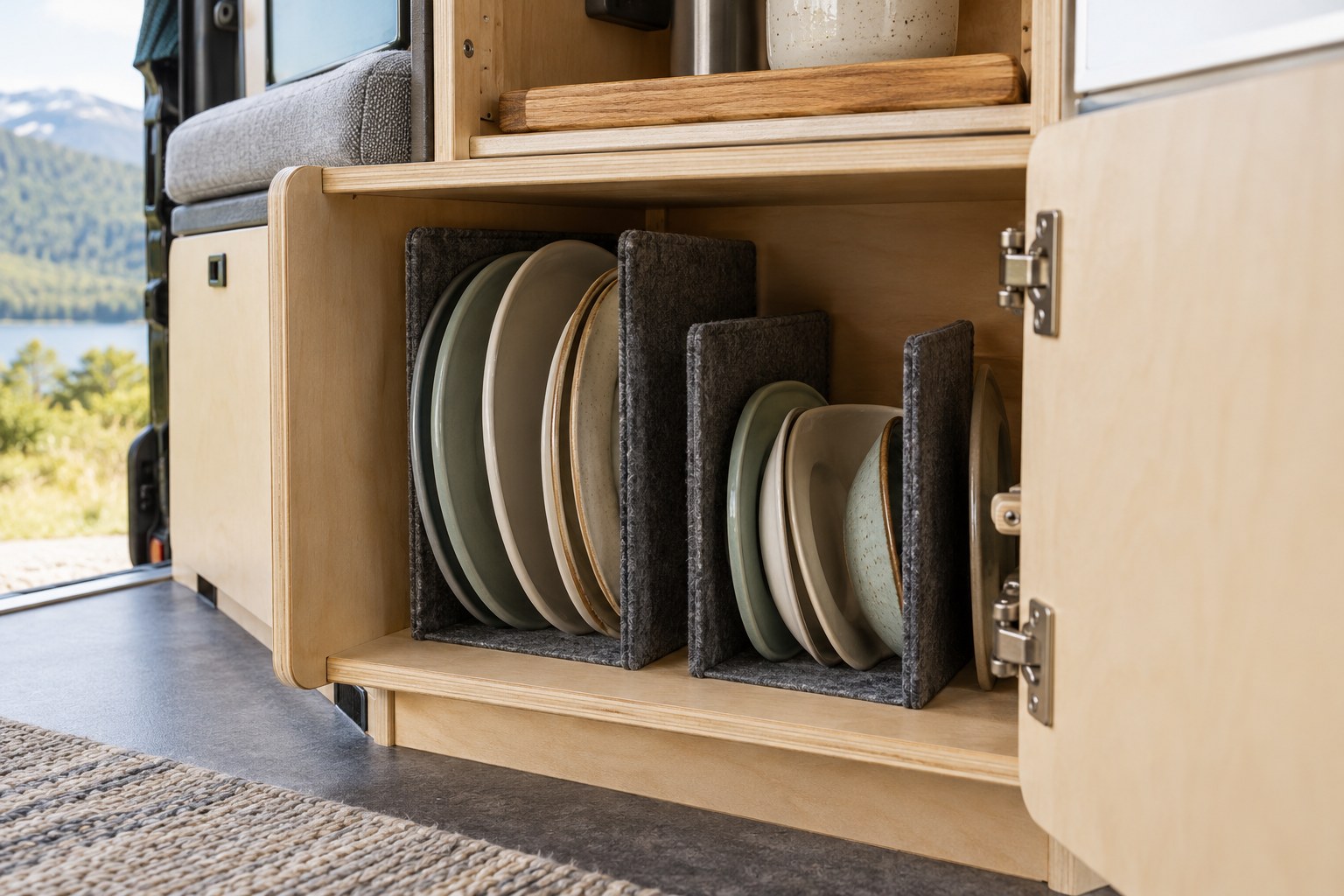
Match the divider to the item
Plate dividers, fabric separators and small boxes solve different problems. Choose them for the particular contents rather than trying to organise every cupboard in the same way. Soft protection can reduce contact between items, but it still needs a clean, dry home.
- Keep daily items near the front.
- Use an accessible compartment for tall bottles.
- Allow lids and handles to clear the opening.
- Leave service panels and required ventilation unobstructed.
Ask the furniture supplier before attaching accessories to doors or shelves. The extra load and the door’s movement need checking. An adhesive organiser should not be treated as suitable travel restraint without the accessory maker’s confirmation for that use.
Plan for driving as well as parking
Open the cupboard after a trial trip carefully and note which items have moved. Review the contents and intended restraint with the supplier rather than simply packing harder. Keep within the cabinet and hardware’s stated loading requirements.
Do not make a catch difficult to engage by overfilling a compartment. Check that all doors close properly before driving and that loose contents are secured as the design requires. Heavy objects generally need suitable low storage and appropriate retention.
Keep one small space adaptable
Travel changes what you carry. A useful cupboard arrangement leaves some flexibility for a loaf of bread, an unfamiliar food packet or an extra warm layer. Completely tailored compartments can be frustrating when the next shopping trip produces different shapes.
Try the plan through a full day of cooking, changing clothes and making the bed. Note the objects you leave on the table because their cupboard is awkward. Improve those locations before adding more accessories.
For kitchen-specific planning, see our kitchen storage guide. When choosing a NEVAN kit, confirm the internal dimensions and access arrangements before ordering containers or door-mounted fittings.