
Campervan dog bed ideas are most useful when they give your dog a consistent resting place without turning the main aisle into a permanent obstacle. Start with the space the dog actually uses while asleep, rather than the footprint of a tightly curled-up pet.
Plan the resting area for use while parked. The arrangement needed for appropriate restraint during travel is a separate part of the vehicle plan and should follow the relevant vehicle and pet-equipment instructions.
Measure the dog and the bedding together
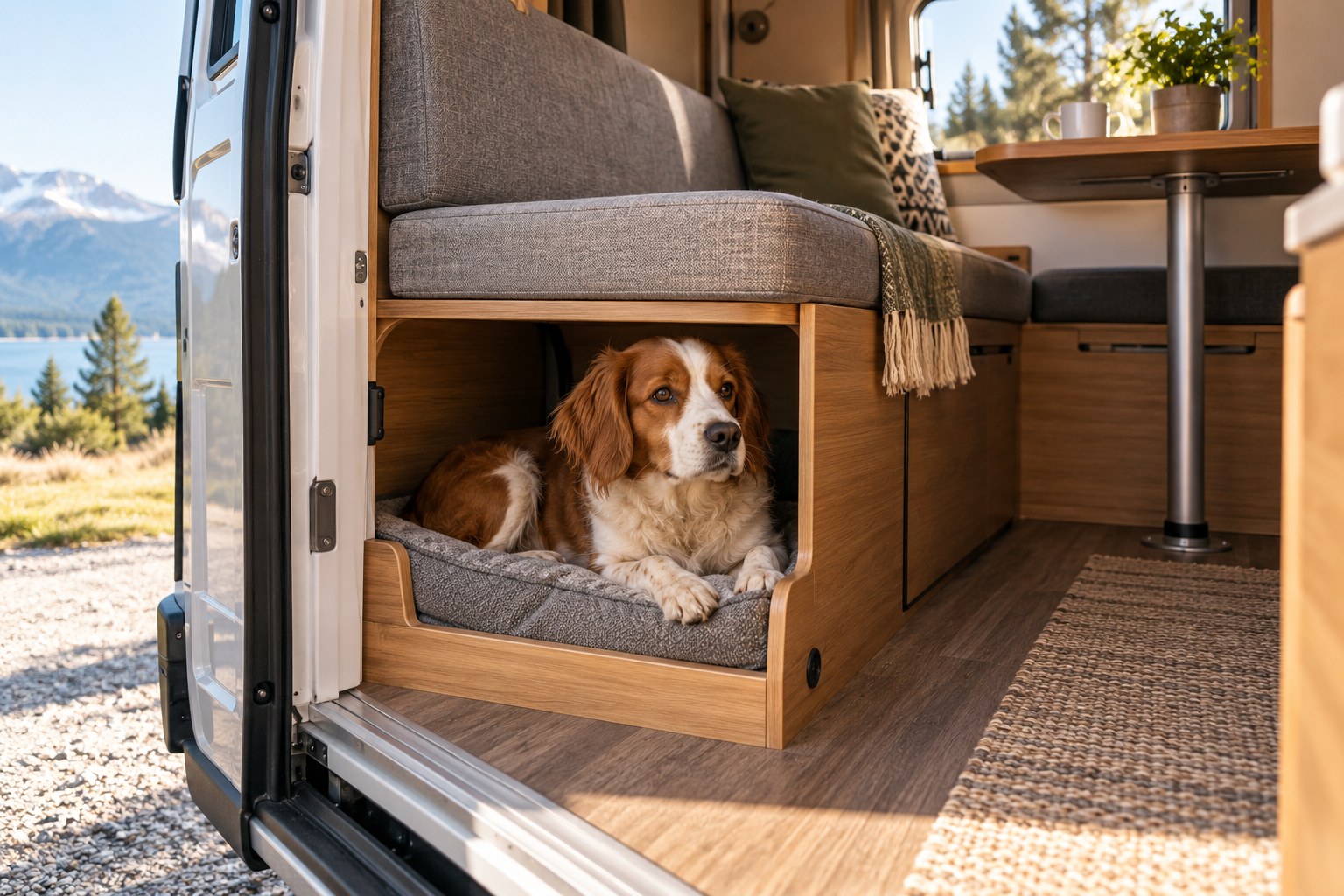
Look at the dog’s usual resting positions at home. Include the space taken by legs, a raised bed edge and any cover that will remain with it. A bed that fits a recess neatly can still feel too confined for the animal using it.
Try the existing favourite bed in a full-size layout mock-up. Check how the dog enters, turns and leaves the space. Avoid a location that requires passing through a narrow gap around furniture handles or stored bags.
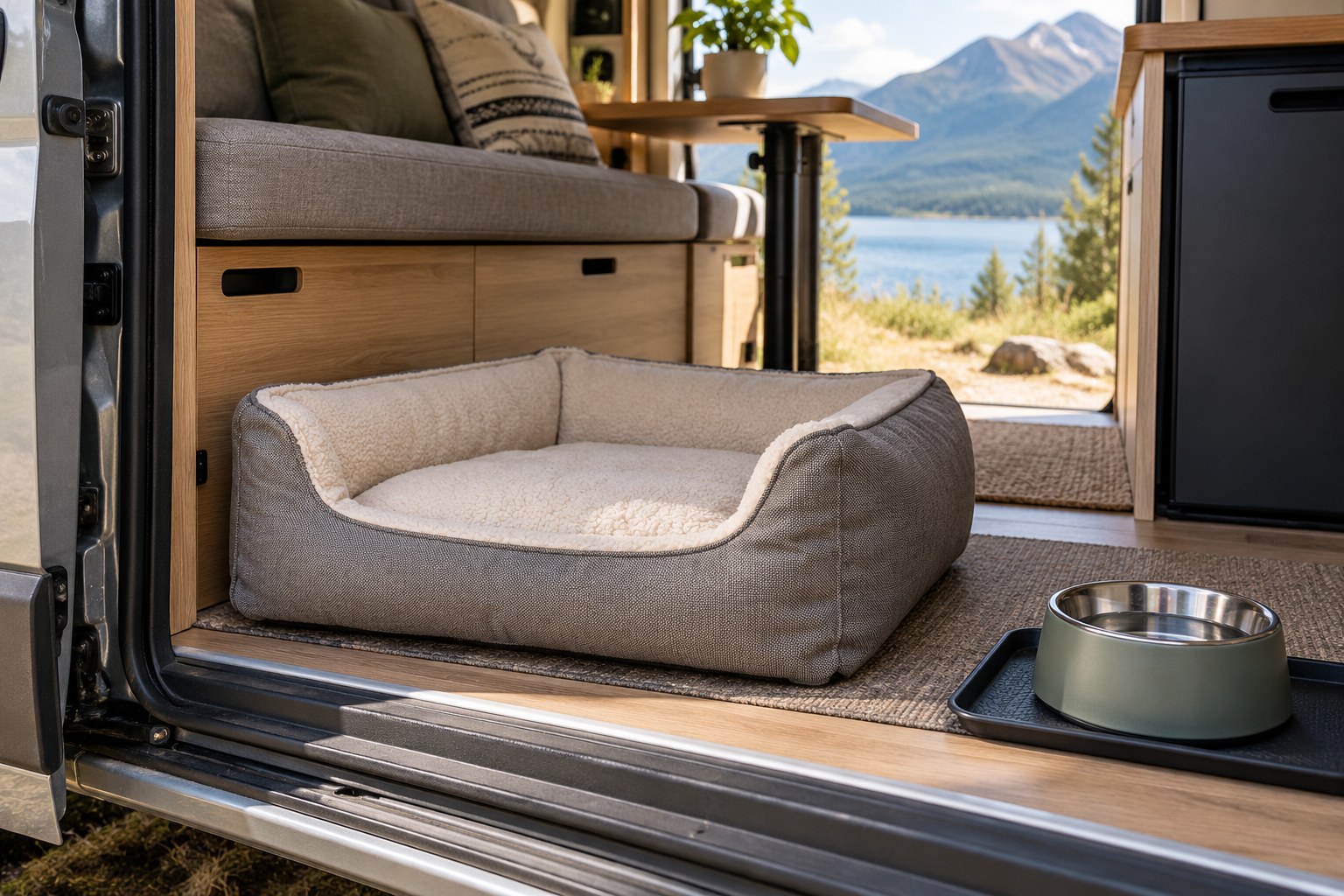
Test the position in day and night modes
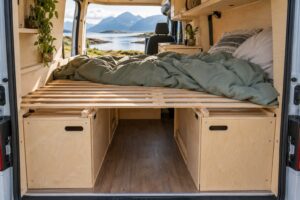
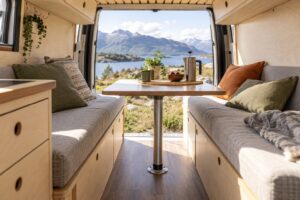
Make the human bed, set up the table and open the cupboards you use most often. Check whether the dog can remain in its resting place while someone reaches clothing or prepares food. A recess that disappears beneath a mattress extension will need a different night-time plan.
Keep the main route to the door clear. Think about getting up in poor light and carrying a bag through the entrance. If people repeatedly step over the bed, change its position before deciding it belongs in the aisle.
Keep the resting area away from equipment clearances and required ventilation openings. Ask the relevant installer about any nearby heater or appliance, and follow the equipment maker’s requirements.
Make cleaning and drying straightforward
Choose bedding you can remove through the actual opening and care for according to its instructions. Check the space needed to lift it out when dirty. A fitted recess should not trap the cover behind a permanent panel.
- Keep a removable place for muddy leads and outdoor accessories.
- Separate wet fabric from clean human bedding.
- Allow access to wipe the floor beneath the dog bed.
- Give spare covers and towels a defined storage location.
If a water bowl shares the area, check the walking route around it and how small spills will be cleaned. Put away or secure loose items appropriately before travelling.
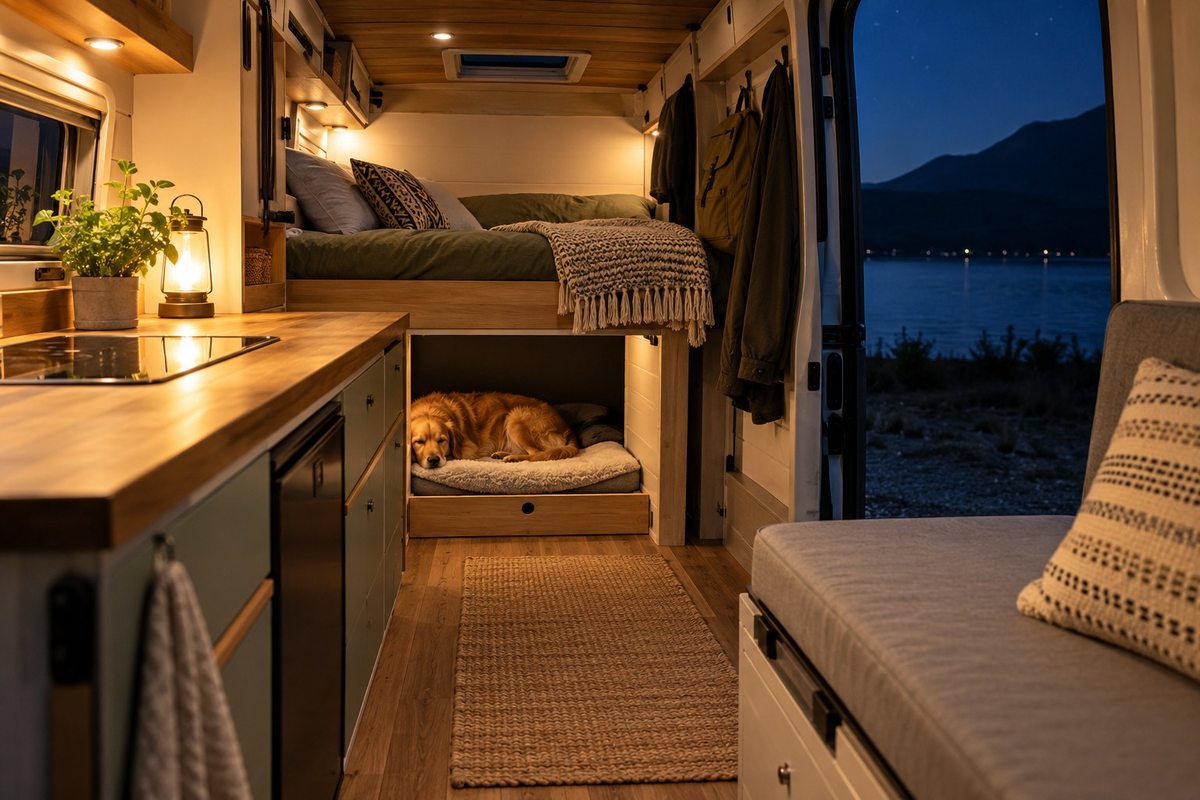
Protect useful human storage
It is tempting to use the whole under-bench space for pet equipment. First list what else needs access there, including service panels and the parts used to make the human bed. A dedicated dog recess works better when its boundaries are deliberate.
Keep the pet supplies you use at every stop easy to reach. Deeper storage can hold spares, provided the compartment remains suitable for its intended loads. Avoid hanging heavy accessories from cupboard doors without the furniture supplier’s agreement.
Try the routine before fixing the layout
Spend a parked trial evening using the proposed arrangement. Note where the dog naturally settles and where people repeatedly move the bed. Use that observation to adjust the position rather than adding furniture around an untested assumption.
A simple removable bed can make cleaning and future changes easier. Confirm any alterations to the furniture with its designer, including the supports and attachment that the surrounding bench needs.
The shoe storage guide can help organise the same entrance area. Discuss the dog-bed dimensions with NEVAN when choosing your van kit, and confirm which layout changes are available.