

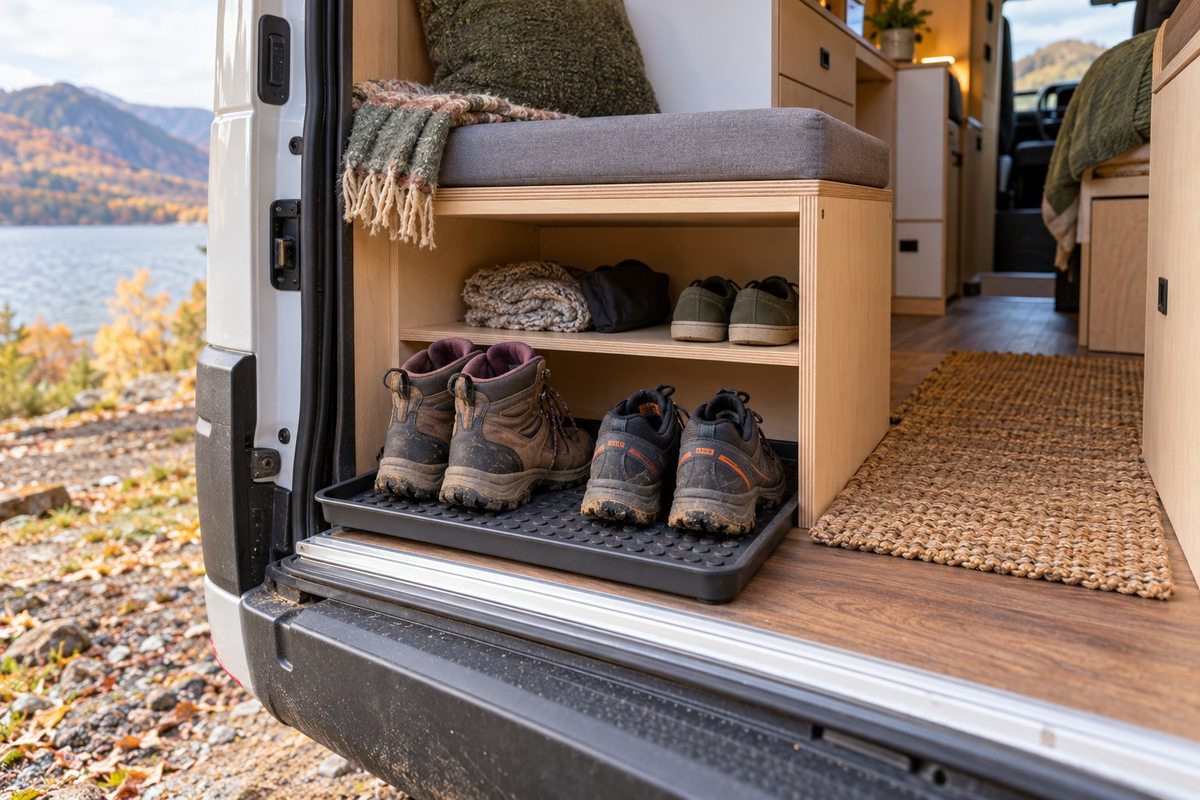
Campervan shoe storage works best when it follows the way you come inside. After a wet walk, you need somewhere to sit, take off your boots and put them down without crossing the whole living area. A neatly fitted cupboard at the opposite end of the van may be the wrong answer to that particular job.
Plan two places: a temporary spot for wet footwear and a dry home for the pairs you are keeping clean. They can share a small entrance area, but they should not rely on one overfilled box.
Count pairs, then measure the awkward ones
Lay out the footwear you actually take on a normal trip. Include walking boots, indoor shoes and any sandals that tend to travel loose. Measure the tallest and longest pair with soles resting naturally, rather than pressing them into the smallest possible shape.
Decide which pair needs daily access. Reserve less convenient storage for occasional footwear, and question whether every extra pair earns its space. The aim is to remove a routine obstruction from the aisle, not create a larger hidden collection.
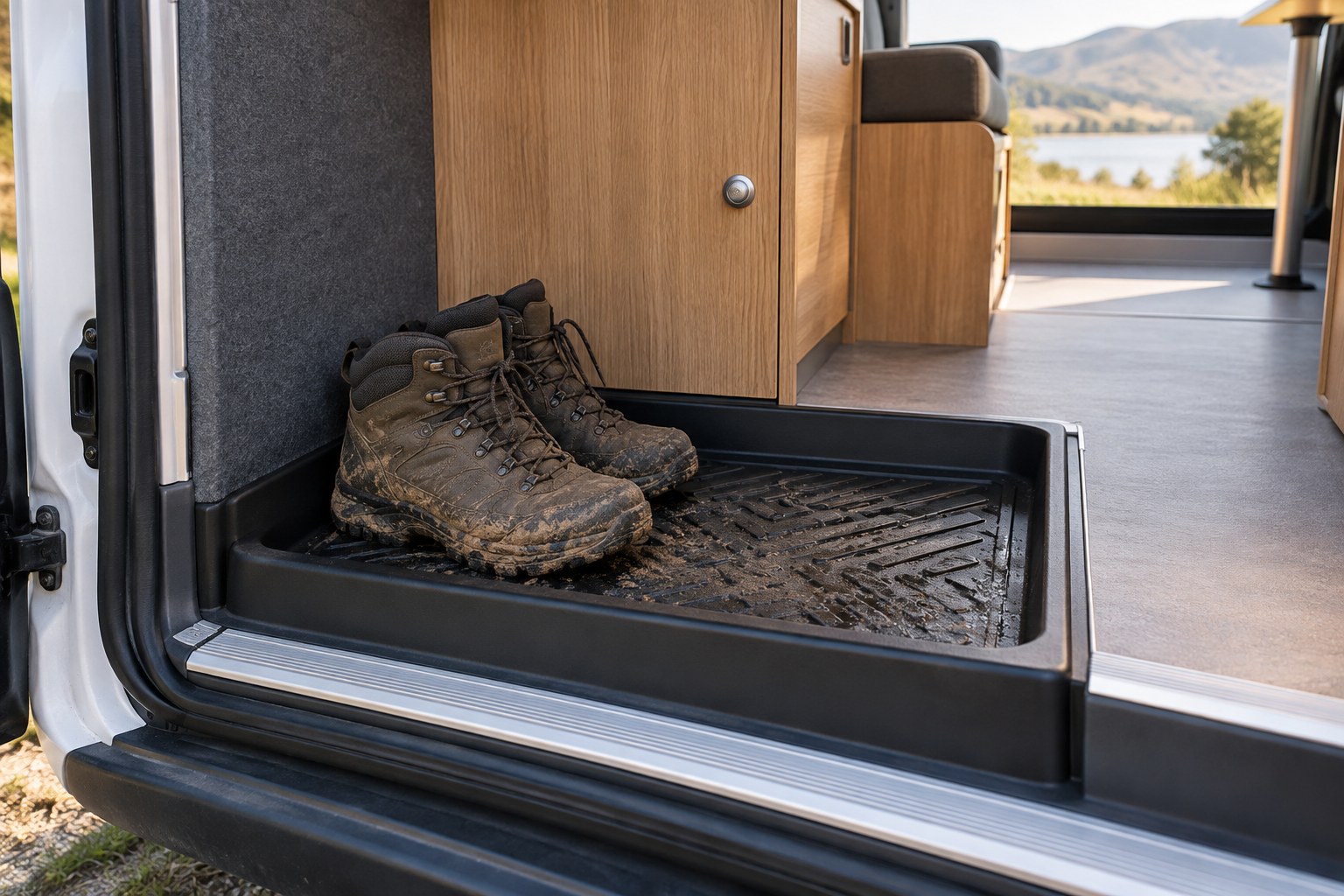
Put the wet-boot position beside the changeover
Test taking your shoes off at the proposed entrance seat. Check that the boot tray can be reached while sitting and that the open door does not force you to step over it. Repeat the movement with a coat and day bag in your hands.
A removable tray makes small amounts of grit and water easier to see and clean up. Choose one that fits through the cupboard opening when dirty, with enough room to grasp its edges. If it must be tilted sharply to come out, it may spill just when you need it most.
Give wet footwear an appropriate drying opportunity before enclosing it for longer storage. A waterproof container can hold a temporary mess, but closing damp boots in a cupboard does not dry them.
Choose an opening you can use at night
Check the shoe compartment with the bed made and the table installed. A door that opens into a mattress or a storage box encourages shoes to stay outside the cupboard. A low open recess may be convenient while parked, provided its contents have a suitable travel arrangement.
- Allow room for boot cuffs and laces.
- Keep the exit and main walking route clear.
- Check access without moving clean bedding.
- Make the floor below the storage easy to inspect.
If shoes live beneath a bench, separate them from clean fabric bags with a removable arrangement that can be cleaned. Avoid permanent dividers that make the back corners inaccessible.
Give the tray a travel position
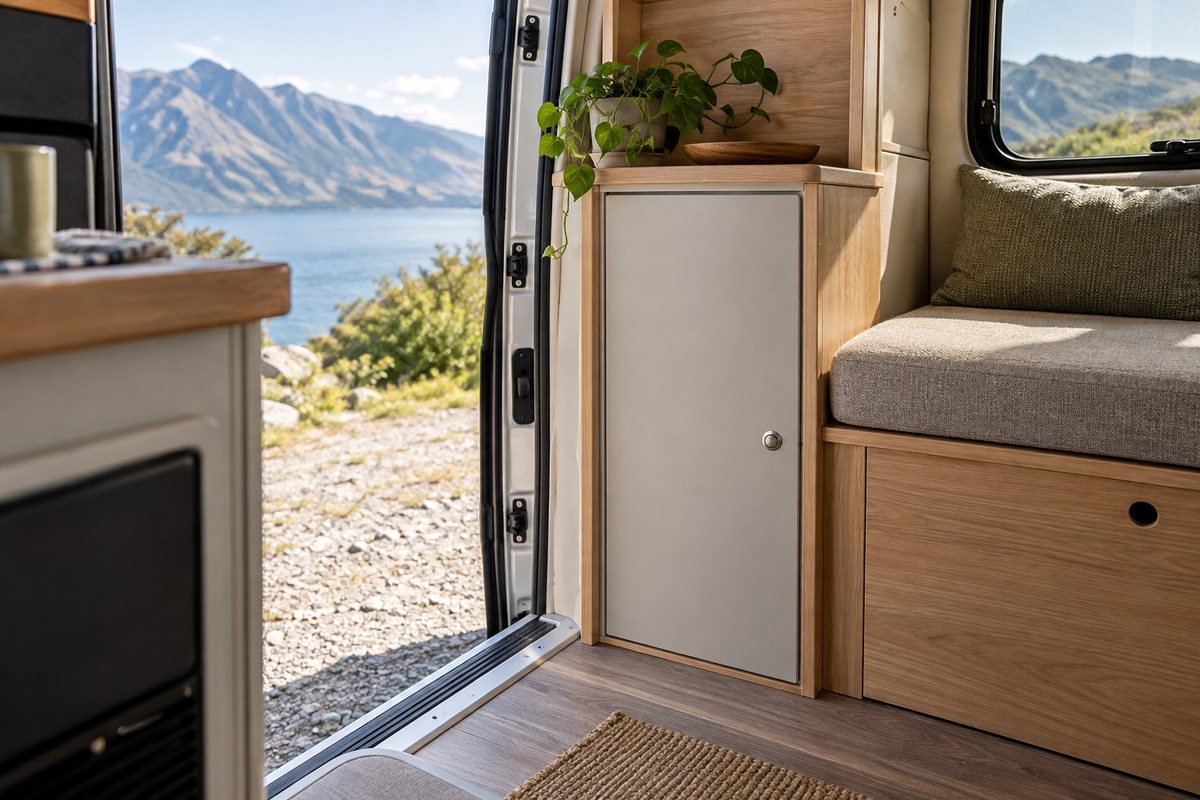
Loose footwear and trays need appropriate retention when the van moves. Follow the furniture and accessory suppliers’ instructions, and check that the loaded compartment closes properly. A tray placed on the step for use while parked needs to be put away before departure.
Keep required ventilation openings and service access clear. Do not use the empty-looking space beside a heater or another appliance without checking the equipment’s clearances.
Rehearse one complete arrival
Bring in a bag, hang the coat, sit down, remove the boots and reach a dry pair. Then have the other traveller repeat the routine. If the first person’s footwear blocks the second person, alter the location or capacity while the plan is still flexible.
Our clothes storage guide helps organise the rest of the wet-weather routine. When choosing a NEVAN kit, confirm the entrance and low-storage dimensions before buying a tray or fitting an accessory to the furniture.