
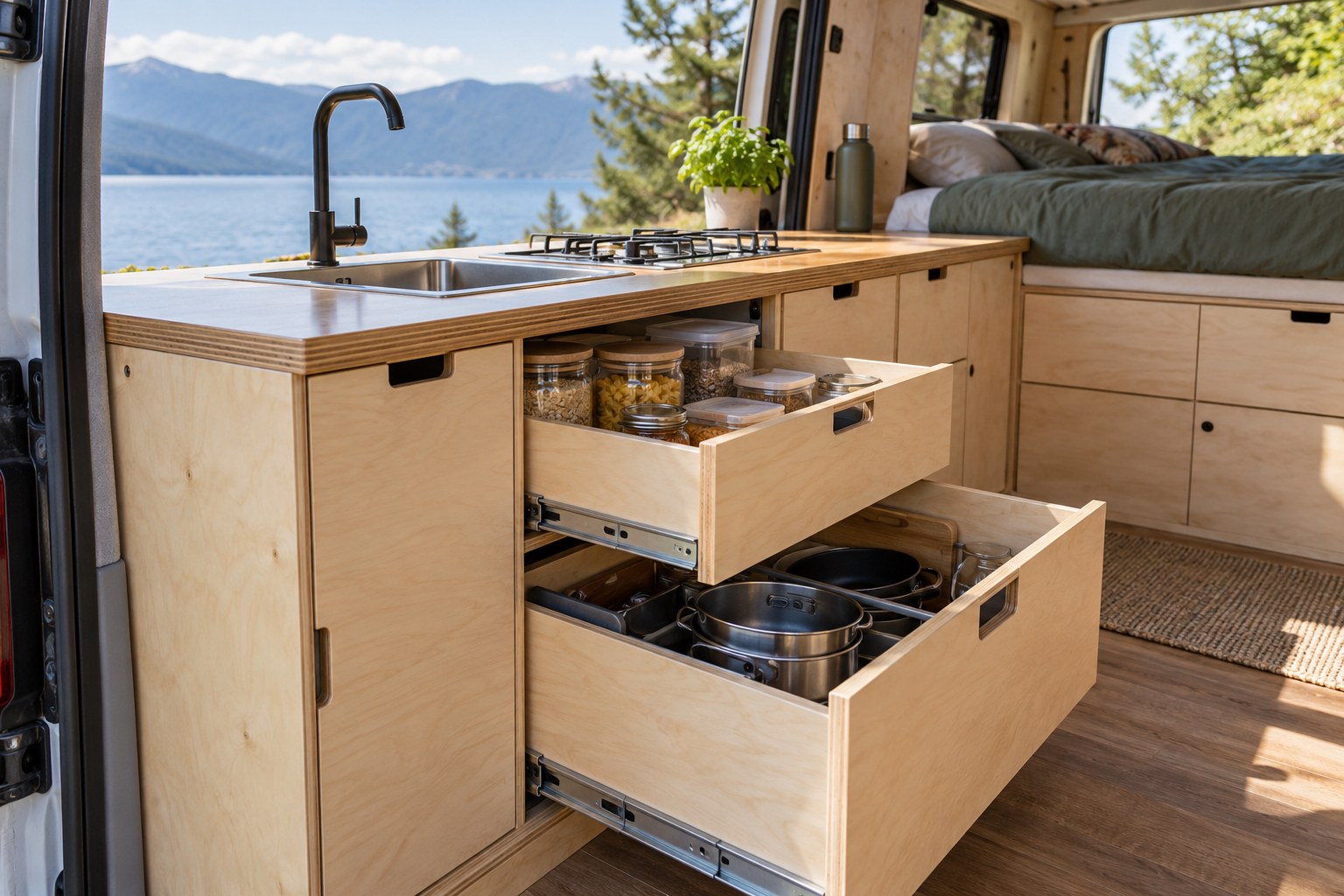
The most effective campervan kitchen storage ideas make cooking less of a packing exercise. A large cupboard is not much help if the pan you need is beneath the week’s groceries and the cutlery is behind someone sitting at the table.
Lay out your normal kitchen equipment before choosing internal organisers. Include the awkward items: a long pan handle, the coffee maker and the bottle that does not stand upright on an ordinary shelf.
Group equipment by the job it does
Put preparation tools, cooking equipment, eating utensils and washing-up supplies into separate groups. Think about where you stand for each task. Keep the frequently used group within a straightforward reach of its work area.
A small collection used every day often deserves the most accessible drawer. The spare pot or occasional baking accessory can occupy a less convenient position. Avoid giving the best space to equipment simply because it was packed first.
Test pans in the actual drawer shape
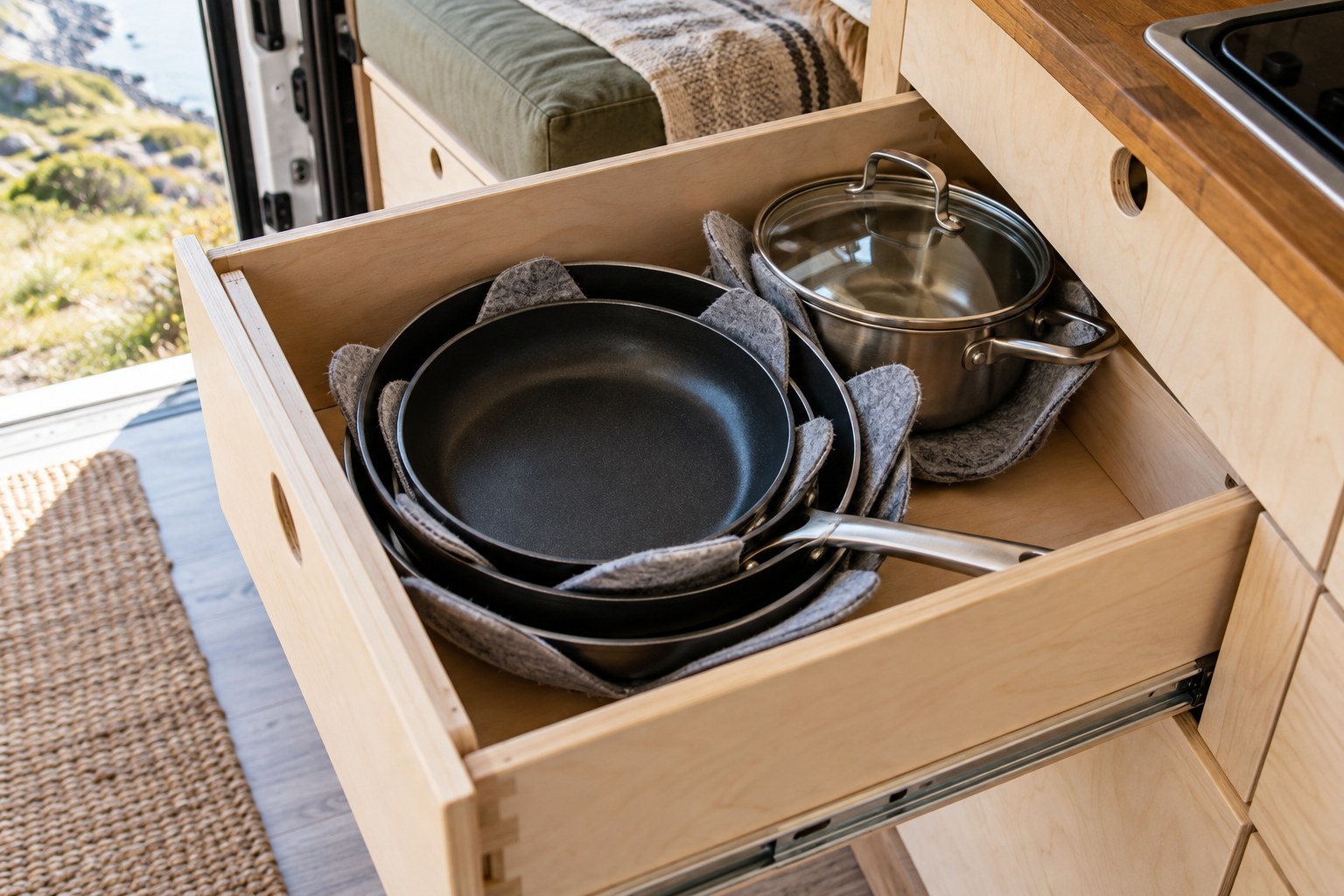
Measure the complete nested stack, including handles and lids. Check the drawer’s clear internal height and the opening above it. The space inside can be reduced by hardware, curved walls or the sink bowl behind the worktop.
Use appropriate separators where needed to protect surfaces and reduce contact between items. Keep them clean and dry, and check how the loaded drawer is intended to be retained for travel. Padding is not a substitute for suitable loading and restraint.
If a drawer becomes very heavy when filled, review its contents and the furniture supplier’s rating. Splitting equipment between two suitable low compartments may be more practical than one overloaded deep drawer.
Leave food storage flexible
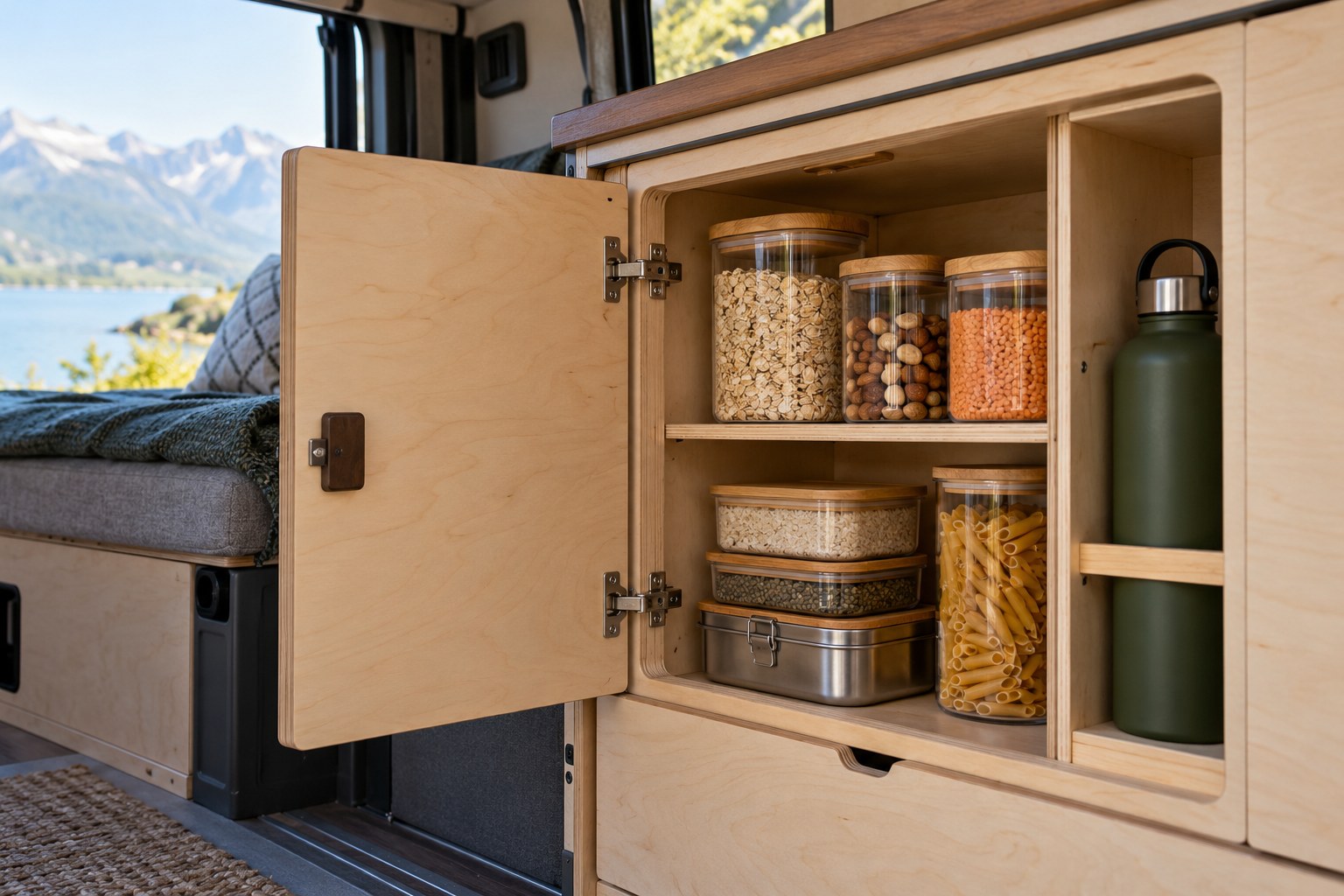
Reusable containers can make irregular packets easier to stack, but matching sets are not automatically the best use of space. Choose sizes around the food you buy and keep room for items that arrive in a different shape.
- Give tall bottles a suitable protected location.
- Keep daily breakfast supplies together.
- Leave room to read and retrieve packets at the back.
- Separate cleaning products from food and utensils.
Plan the cupboard for the number of days between shops, with a sensible margin. Empty organisers can make a cupboard look spacious; test it with a realistic shopping load.
Keep services and ventilation out of the storage allocation
Some areas inside a kitchen unit need to remain clear for an appliance or maintenance access. Mark them on the plan before allocating space to food. Follow the equipment manufacturer’s requirements rather than treating every gap as spare storage.
Check that you can reach the sink connections and remove any portable containers using the intended procedure. If the fridge needs removal for service, confirm that neighbouring fittings and shelves do not block that route.
Make washing up and travel checks simple
Give damp cloths and the washing-up brush somewhere appropriate to dry and be stored. Keep loose items off the worktop before moving the van, and check cupboard catches after packing.
Choose organisers you can lift out to wipe the cupboard beneath. If a tray makes a spill easier to clean, it is doing useful work. If it traps crumbs around several permanent dividers, simplify it.
For the overall arrangement, see the kitchen layout guide. Confirm internal dimensions with NEVAN for your chosen kit configuration before buying drawer inserts or containers.