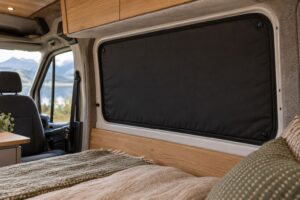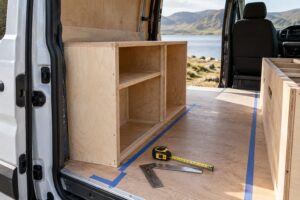

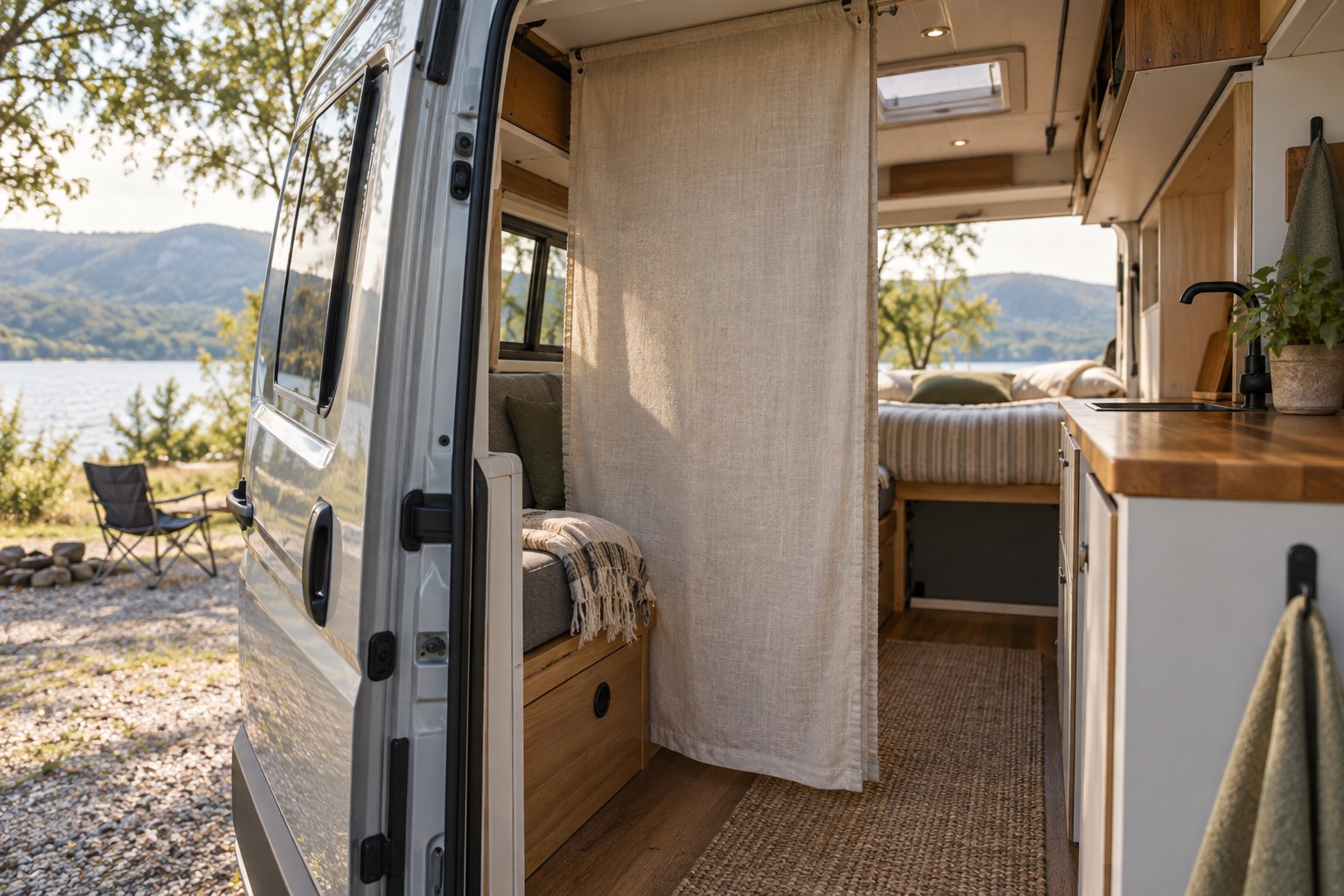
A campervan privacy screen can solve several different problems. You might want to obscure a window at night, separate the cab from the living area, or create a more private space beside the door while parked. These are different jobs, and one product may not do all of them well.
Write down exactly what you want to hide, from where, and at what time of day. That small brief makes the choice of size and position much clearer.
Check privacy from outside the van
Stand at the places people may pass: beside the sliding door, in front of the windscreen and near the rear doors. Have another person sit or stand in the intended private area. Look from normal eye height rather than judging the screen only from inside.
Repeat after dark with the interior lights on. A material that feels private in daylight may show silhouettes or gaps under different lighting. Test the actual sample or ask the supplier for clear information about its intended use.
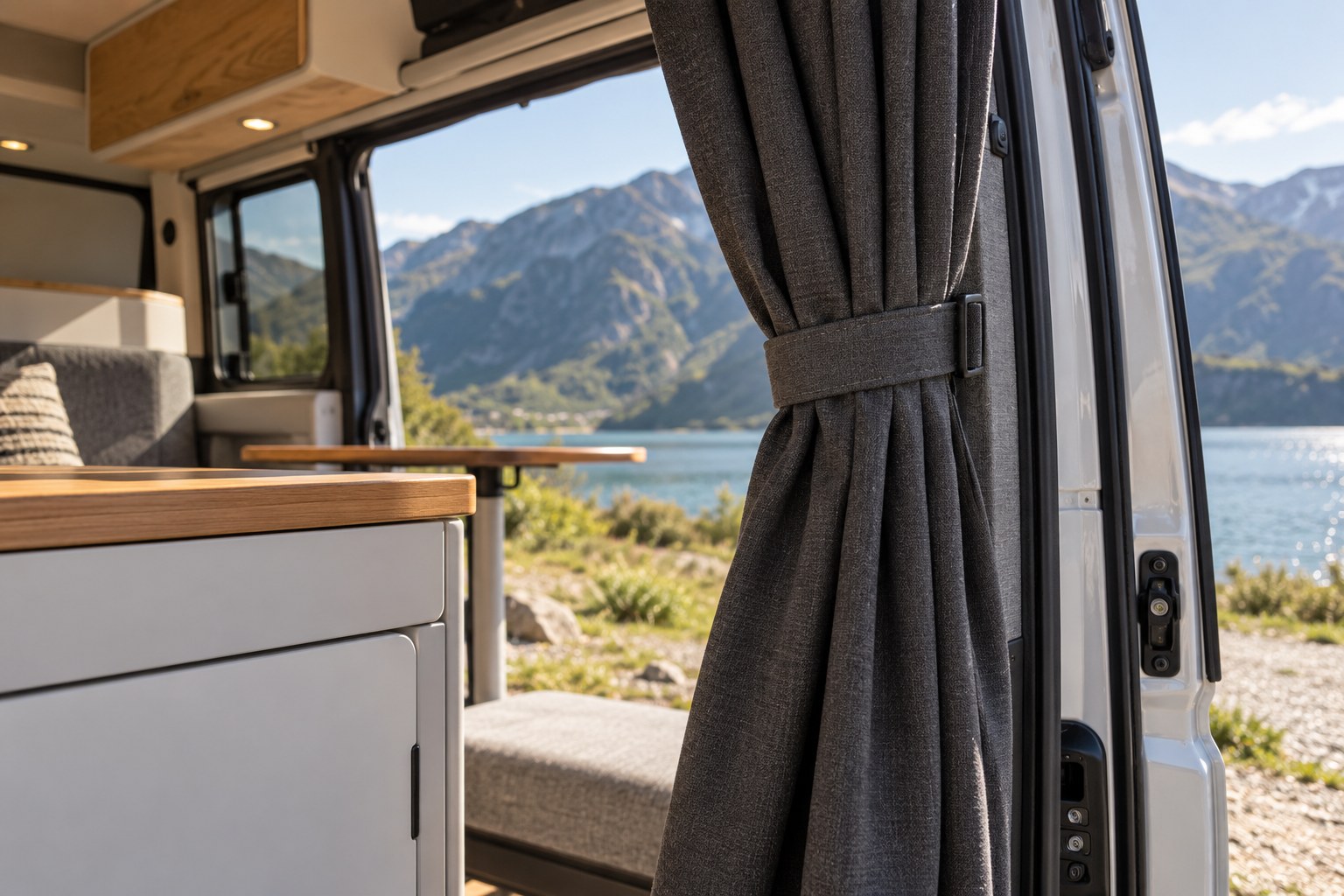
Choose the boundary that suits the routine
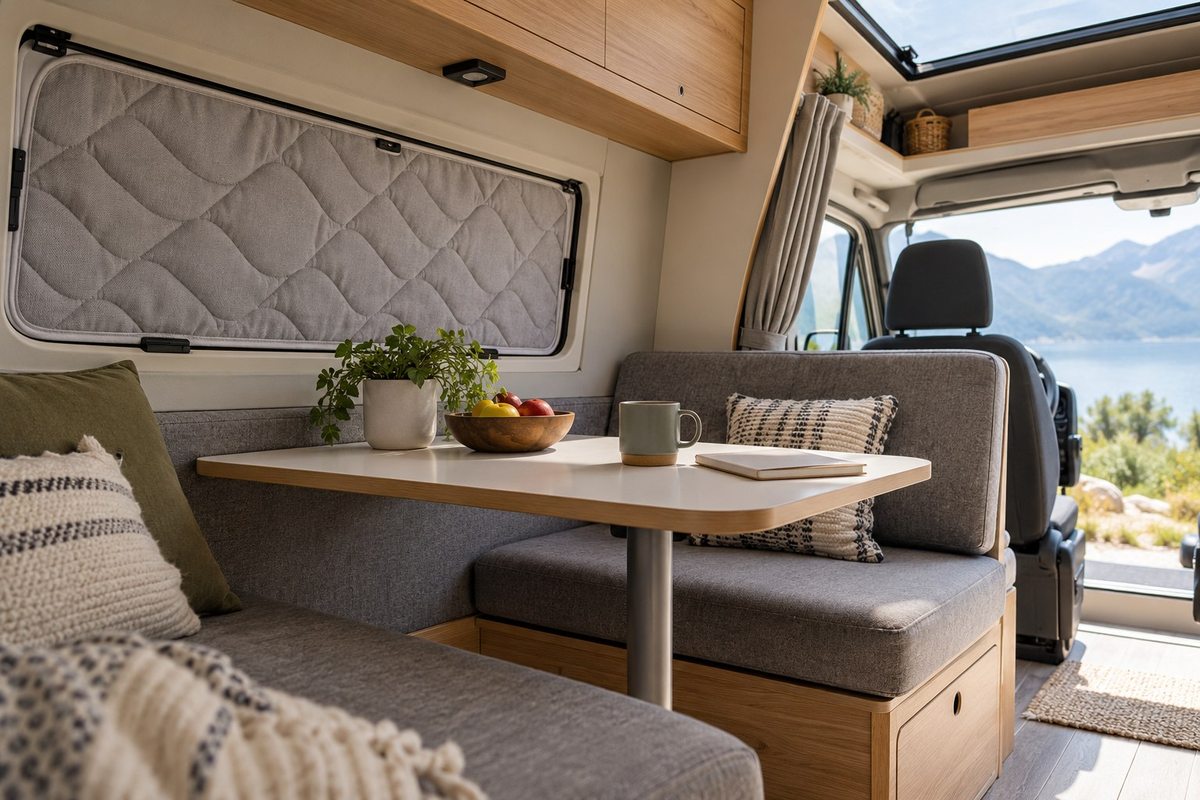
Window covers keep the boundary close to the glass. A cab divider moves it behind the front seats. An external freestanding screen can define a small area outdoors but needs an appropriate pitch, weather conditions and a suitable storage space.
For indoor use, check whether the screen makes essential items harder to reach. A barrier that has to come down whenever you need a coat or move to the cab may become an annoyance during an ordinary evening.
Keep the route through the van practical
Walk from the bed to the door with the screen in place. Check access to the toilet, lighting controls and daily storage. Keep required ventilation, exits and safety equipment available.
- Check gaps at the top, sides and bottom.
- Keep fabric clear of cooking and heating equipment.
- Confirm the mounting method with the relevant supplier.
- Give the screen an accessible travel position.
A privacy accessory for use while parked needs to be stowed appropriately before driving if it could obstruct visibility, controls or safe travel. Follow the product’s specific instructions.
Think through weather and drying
If the screen is used outdoors, ask about the intended conditions and securing requirements. Do not assume a light screen is suitable in wind simply because it stands upright on a calm driveway. Respect campsite rules and keep neighbouring pitches and access routes clear.
Plan where a damp screen will go temporarily and where it can be dried before long-term storage. Avoid packing wet fabric against clean bedding or leaving it enclosed without an opportunity to dry.
Choose storage before buying
Measure the folded product with its poles, bags and fittings. A screen that looks compact when spread flat may become a long awkward package once rolled. Check whether it fits through the chosen cupboard door.
For a closer boundary around the sleeping area, compare cab divider curtains and thermal window covers. When planning a NEVAN interior, confirm the doorway and storage arrangement before fitting screen hardware to the furniture.