

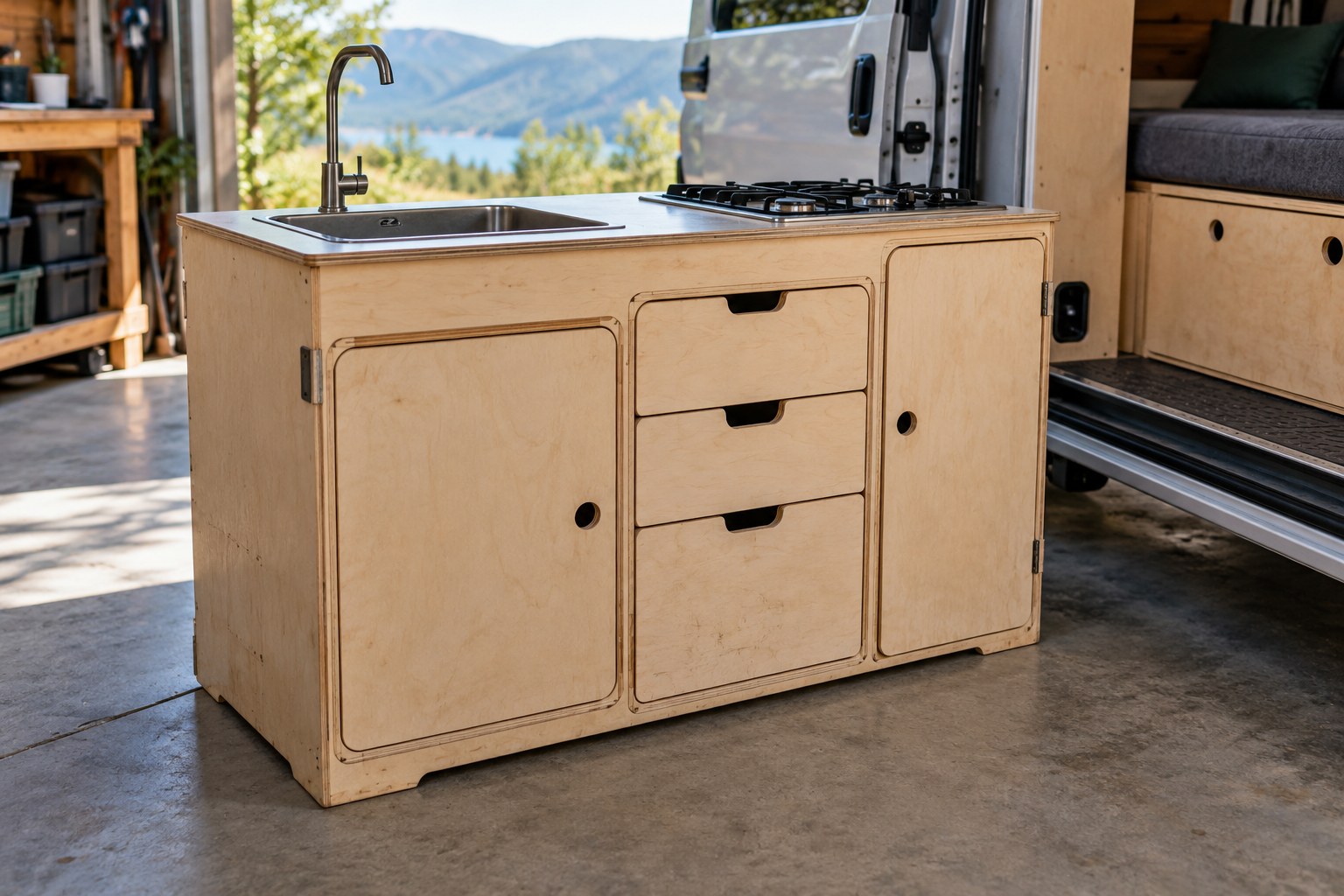
A second hand camper van kitchen unit can look like a quick way to start a conversion. Its value depends on what must change before it works in your van. A low purchase price can be outweighed by new doors, a different worktop or an appliance opening that does not suit the equipment you need.
Inspect the unit against a written list of dimensions and requirements. Treat furniture condition, appliance condition and vehicle installation as separate questions.
Measure your available space before viewing
Record the finished height, depth and length available in the van, plus the route through the doorway. Include wheel arches, wall curves and the space needed to stand in front of the kitchen. A unit that fits against one van’s wall may need substantial adaptation for another.
Ask the seller for the complete external dimensions, including the worktop, handles and any projecting fittings. Check whether the unit can be separated for transport using its intended construction, rather than assuming it will come apart neatly.
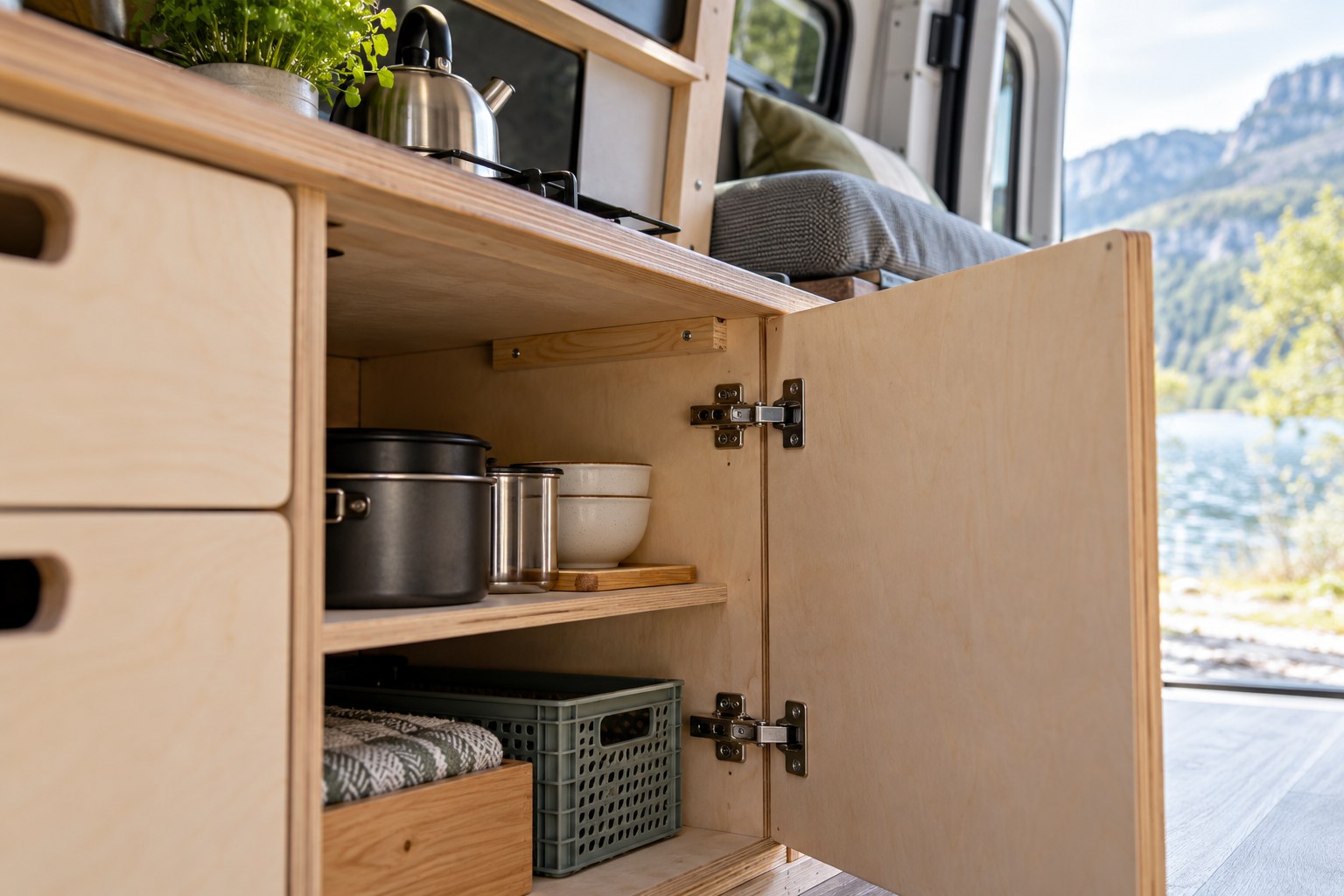
Inspect the hidden surfaces as well as the front
Open each cupboard and drawer. Look at the underside of the worktop, the sink area, the lower edges and the back of the unit. Note staining, swelling, damaged finishes, loose joints and any areas you cannot inspect properly.
Do not assume a fresh surface treatment resolves underlying damage. If the condition is uncertain, get an appropriate assessment before relying on the unit. Photograph the areas that need repair and establish whether replacement panels or hardware are available.
- Check that doors and drawers move as intended.
- List missing shelves, catches and fittings.
- Inspect accessible cut edges around openings.
- Ask what is included in the sale.
Identify the equipment exactly
Record model details for any sink, fridge, hob or other appliance included. Ask for the installation and operating documents and any relevant service information. A cabinet can be reusable while an appliance needs separate inspection or replacement.
Have gas, electrical and plumbing equipment assessed by competent people as appropriate. A seller’s demonstration or assurance is not a substitute for confirming suitability and condition. If an appliance will be replaced, compare the new model’s dimensions and requirements before buying the cabinet.
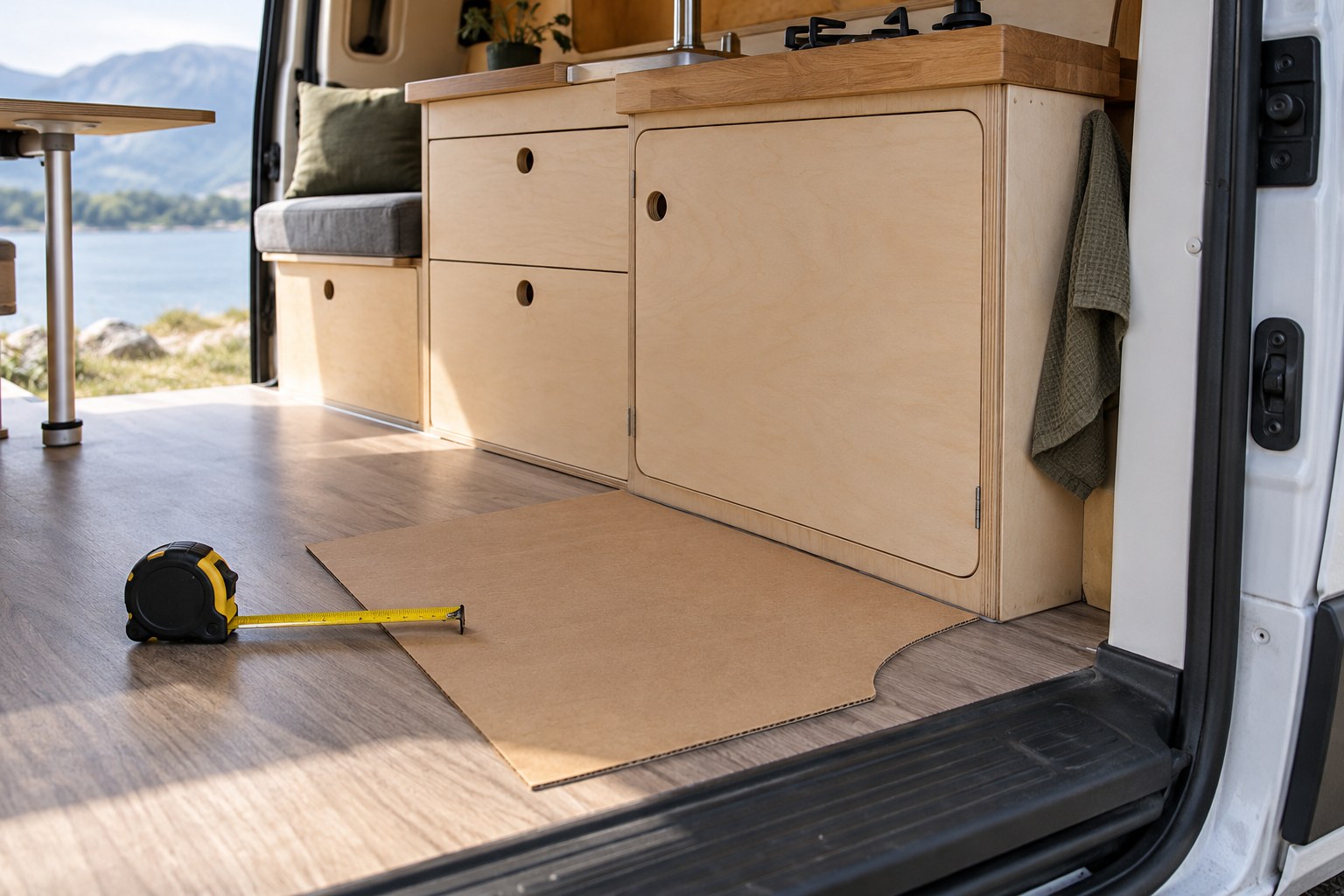
Price the adaptation as a complete job
List the likely changes: transport, repairs, replacement fittings, worktop modifications, finish repairs and a suitable installation. Include the time needed to remove old fixings and make damaged areas sound. Compare that complete picture with other furniture options.
Check the existing cut-outs carefully. Making a hole smaller or moving it slightly can be more involved than making a new cut-out in a fresh panel. Ask the relevant supplier how a proposed alteration should be handled rather than relying on a cosmetic patch.
Confirm the new installation independently
The old van’s fixing arrangement does not automatically suit the next vehicle. Obtain a suitable furniture attachment and travel retention plan for the unit, its contents and the new van structure. Keep service access and required appliance clearances available after installation.
Review the whole kitchen layout before committing to the used unit. If it requires too many compromises, compare a vehicle-specific NEVAN kit and ask for the scope of a suitable new arrangement. Choose using the finished result and total work required.