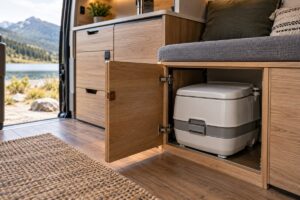

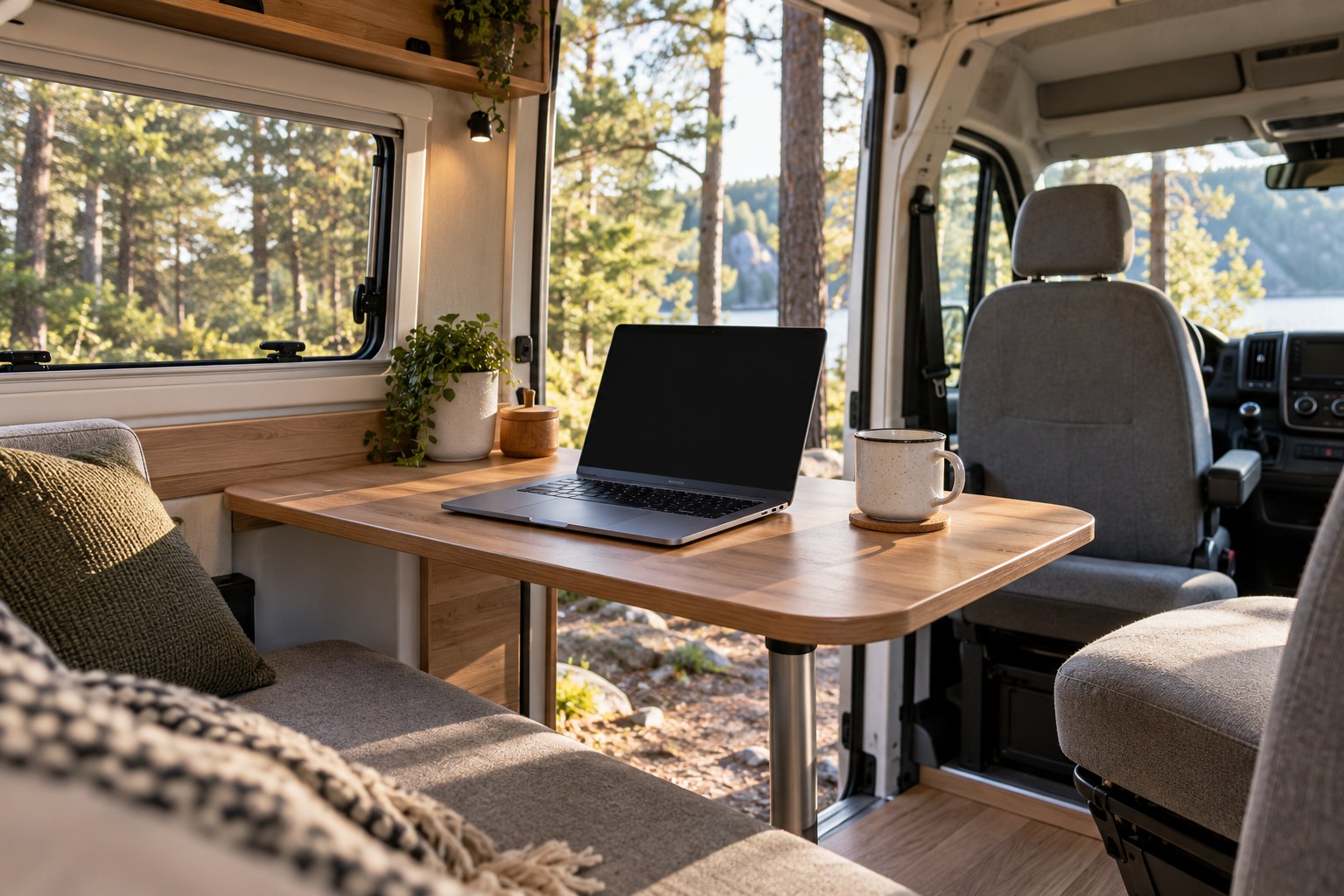
A camper home office needs to support a real working routine inside a very small living space. The question is not simply whether a laptop fits on the table. You also need somewhere to sit comfortably, deal with daylight, keep work equipment and put it all away when the table becomes part of lunch.
List the tasks you normally do in a morning. A few emails place different demands on the layout from several hours of calls, drawing or detailed keyboard work.
Start with the seated position
Try the actual seat and table together. Check the relationship between the cushion height, work surface and your feet. Sit with the equipment you normally use, including a separate keyboard or mouse if those are part of your routine.
A table that works for eating may need a different setup for longer periods at a screen. Use a comfortable trial session to identify changes, take regular breaks, and seek appropriate ergonomic advice if you have specific needs. Do not choose a layout from tabletop dimensions alone.
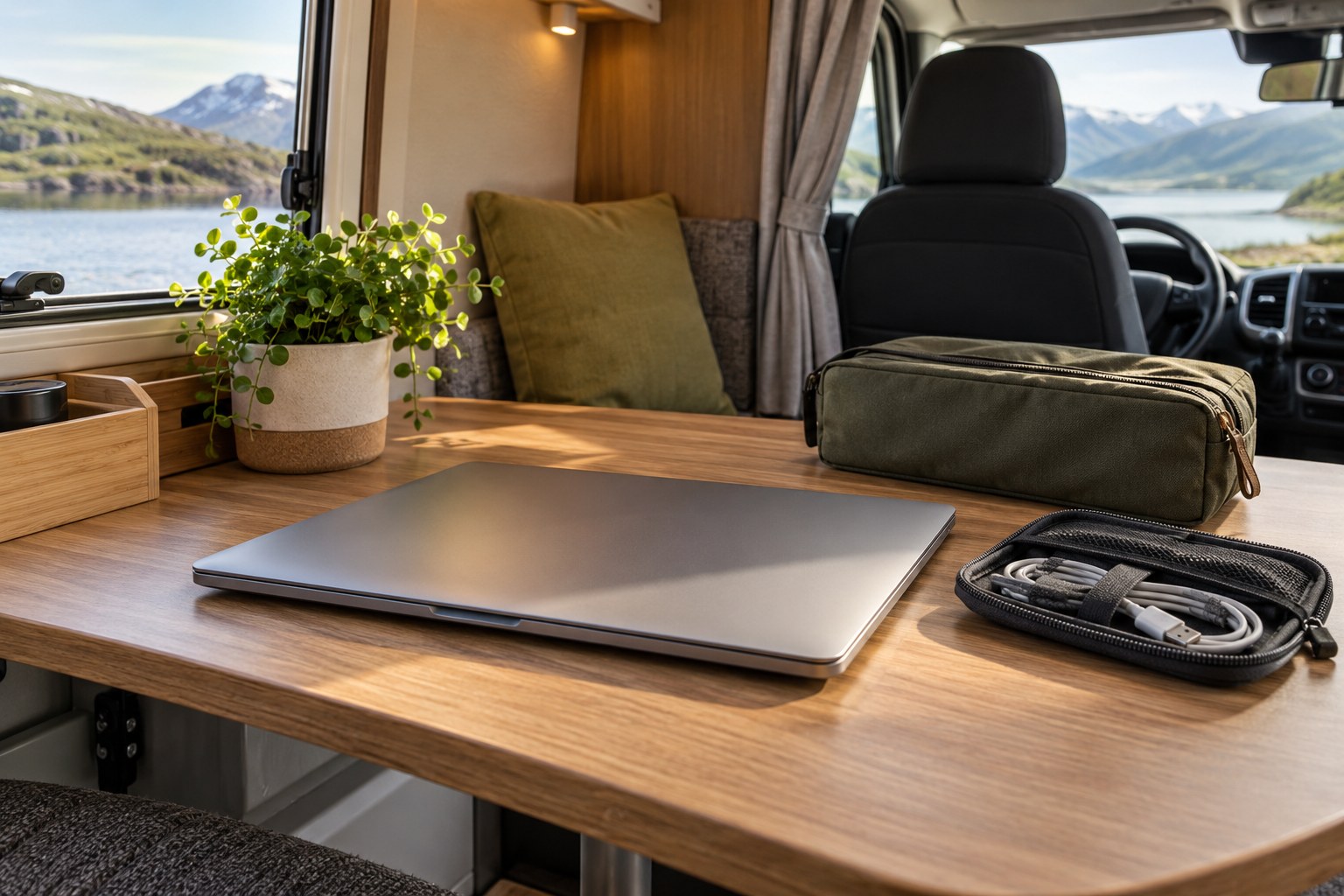
Test daylight from both sides
Set the laptop where it would normally sit and look at the screen at different times of day. Check reflections, glare and the effect of a bright window behind you during calls. The useful orientation may differ from the arrangement that looks most spacious in a photograph.
Plan a practical way to control that light using suitable covers or a privacy screen. Keep ventilation and any required view or access clear. The workspace should still function when the weather makes opening a door unpleasant.
Give equipment a home beside the table
Keep daily items close enough that setup does not become a search through several cupboards. A shallow compartment can hold a laptop, while a separate small organiser keeps chargers and stationery from falling into the same pile.
- Measure the laptop inside its protective case.
- Allow space for plugs without bending cables tightly.
- Keep drinks away from the storage compartment.
- Provide appropriate retention for everything during travel.
Plan charging with the electrical installer around your actual equipment and usage. Connection quality, mobile coverage and data allowances need checking for the places you intend to work; a furniture layout cannot guarantee them.
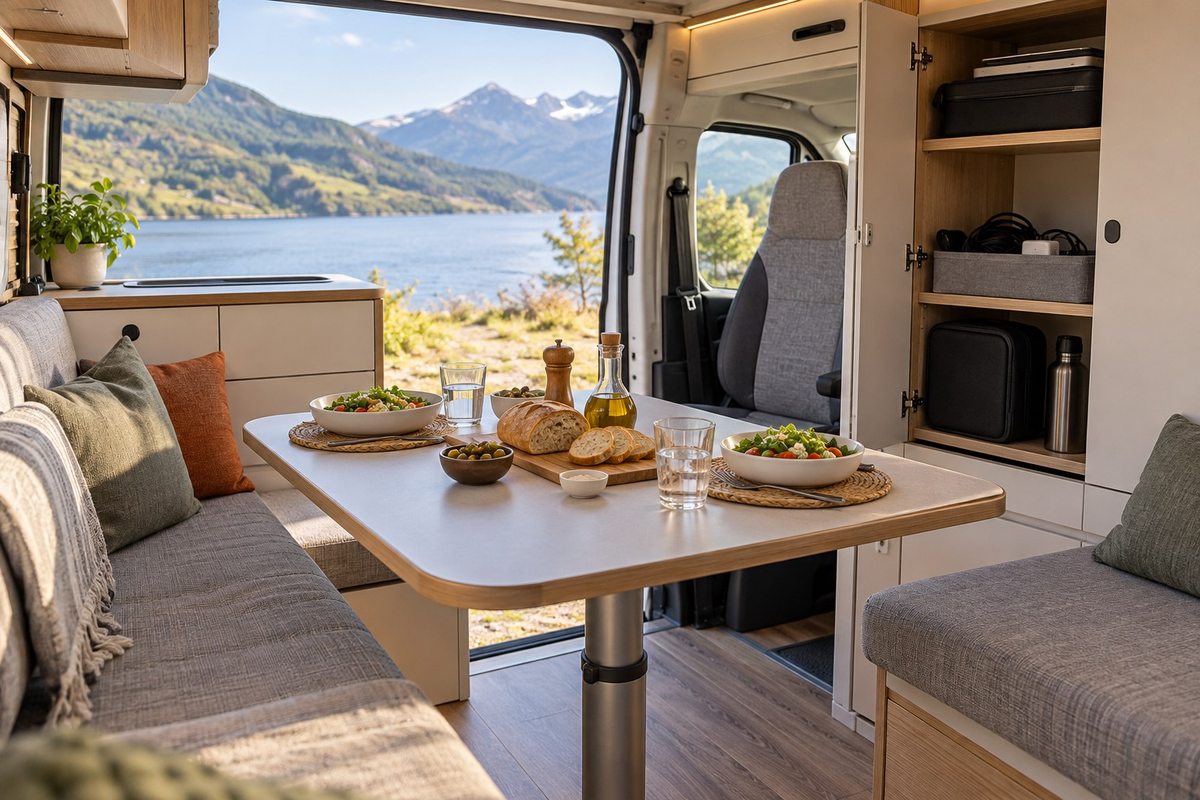
Rehearse the change from work to lunch
Time a normal pack-away. Save the work, unplug equipment, put small items away and clear the table. Then set out two plates. If a monitor has to move onto the bed or a cable crosses the cooking area, the routine needs another storage decision.
Try the reverse movement as well. A workspace that is quick to put away but takes twenty minutes to rebuild may suit occasional admin and frustrate someone working every day.
Share the space honestly
If two people travel together, mark what the other person can still do during a call. Check access to the kitchen, toilet, door and personal storage. Agree where a coat or kettle can be reached without moving the computer.
Use our table storage guide when comparing changeover routines. Ask NEVAN about table, seat and storage dimensions for the proposed kit before treating the dining area as a full-time office.