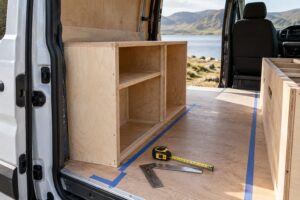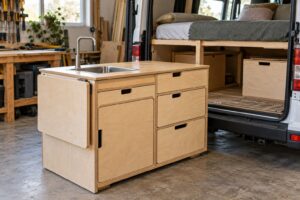

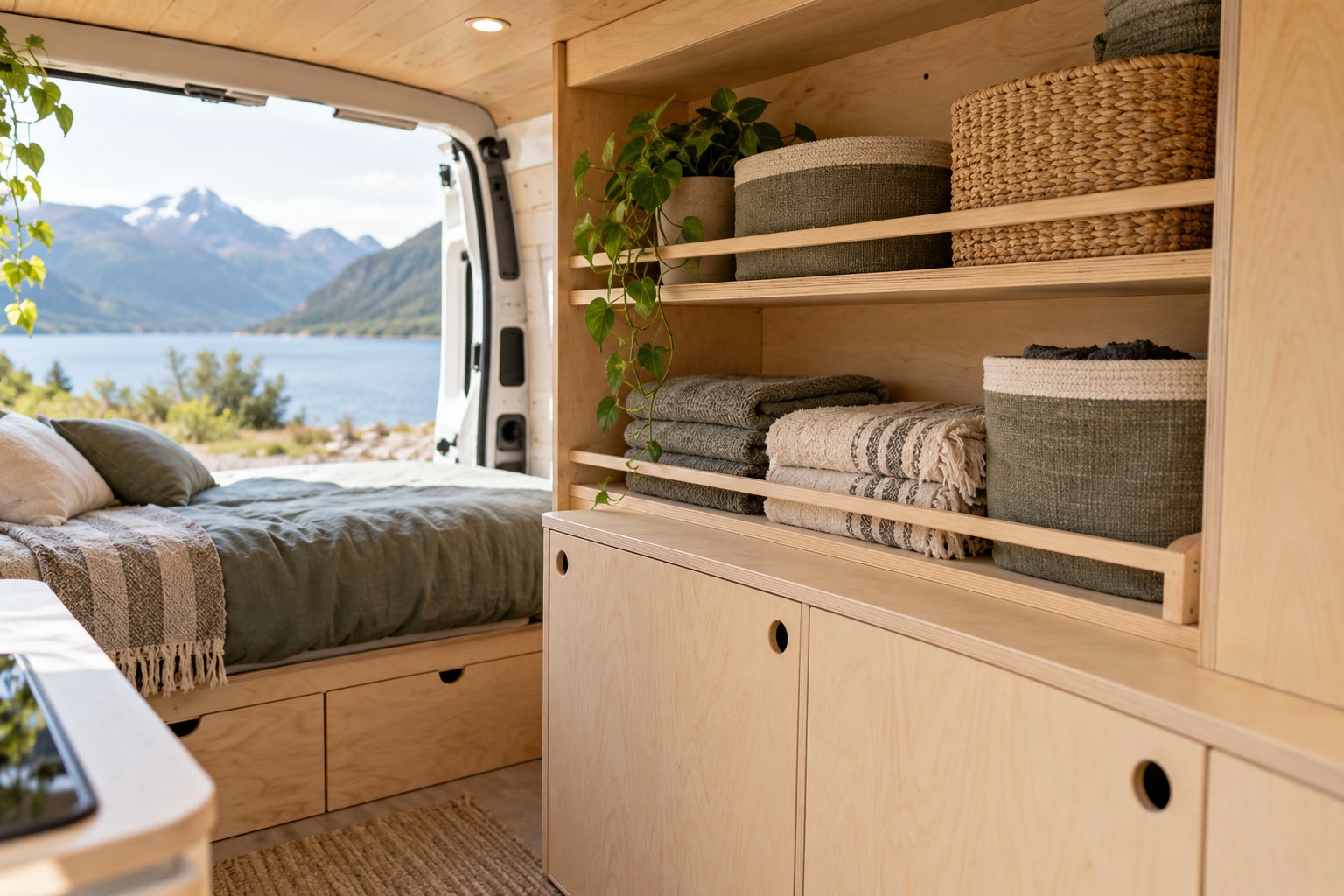
Camper van shelving ideas can make daily items easier to reach, especially where a cupboard door would be awkward. The shelf still has to work on the road. An attractive arrangement of loose jars and books in a parked van does not show how those items are retained for travel.
Choose the intended contents first. Then compare shelf depth, access and a suitable retention method with the furniture supplier.
Use open shelves for a defined group of items
List what you want to keep at hand: a few towels, soft clothing bags or a small removable basket. Keep the group limited and check its actual loaded weight. Avoid turning a shallow shelf into a general overflow space.
Frequently used light items may suit an easy-to-reach shelf. Heavy tools, large bottles and other dense equipment usually call for suitable lower storage and appropriate restraint. Match the cabinet’s intended loading rather than using whatever space happens to be empty.
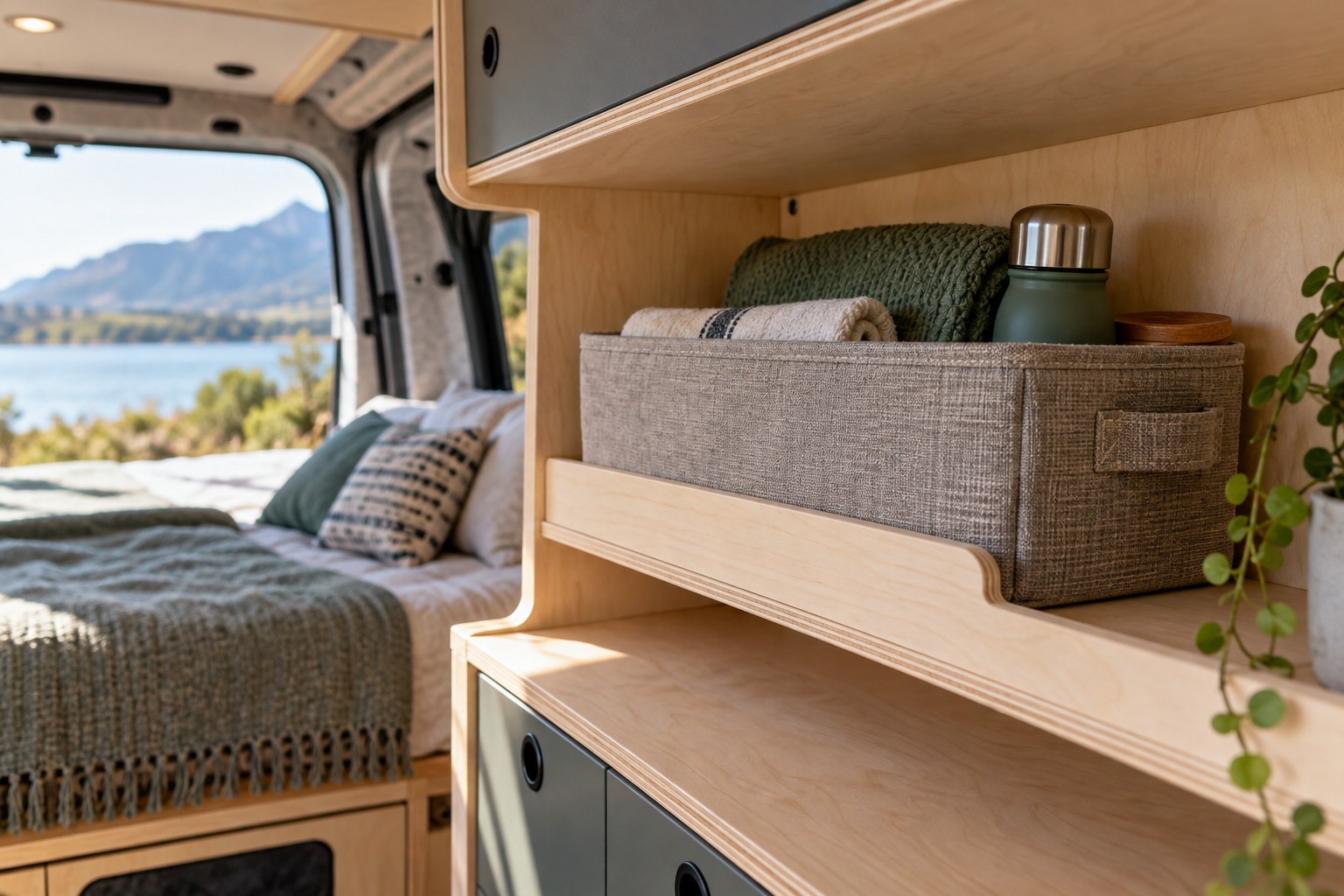
Choose a depth you can use comfortably
Mock up the shelf with the real basket or folded items in place. Leave room to grasp and remove them. A deeper shelf adds volume on paper but can be harder to use if the back is beyond a comfortable reach.
Check the shelf’s effect on the area below. Sit, stand and lean over the nearby worktop. Make sure its edge does not intrude into normal head and shoulder movement. Our overhead storage guide covers headroom checks in more detail.
Include nearby cupboard doors, windows and lights. The useful space around a shelf matters as much as the rectangle it occupies on a wall.
Plan suitable retention for travel
Ask how the shelf and its contents are intended to be secured while the vehicle is moving. A retaining edge may help organise a parked display without being sufficient for the intended travel load. Have the full arrangement checked for your vehicle and contents.
- Follow the shelf and accessory makers’ loading instructions.
- Use baskets only where their travel retention is suitable.
- Keep heavy items out of unsupported or unsuitable positions.
- Check the loaded arrangement before each journey.
Do not assume an elastic cord or adhesive accessory is appropriate because it fits the space. Its intended use, attachment and condition need to match the job.
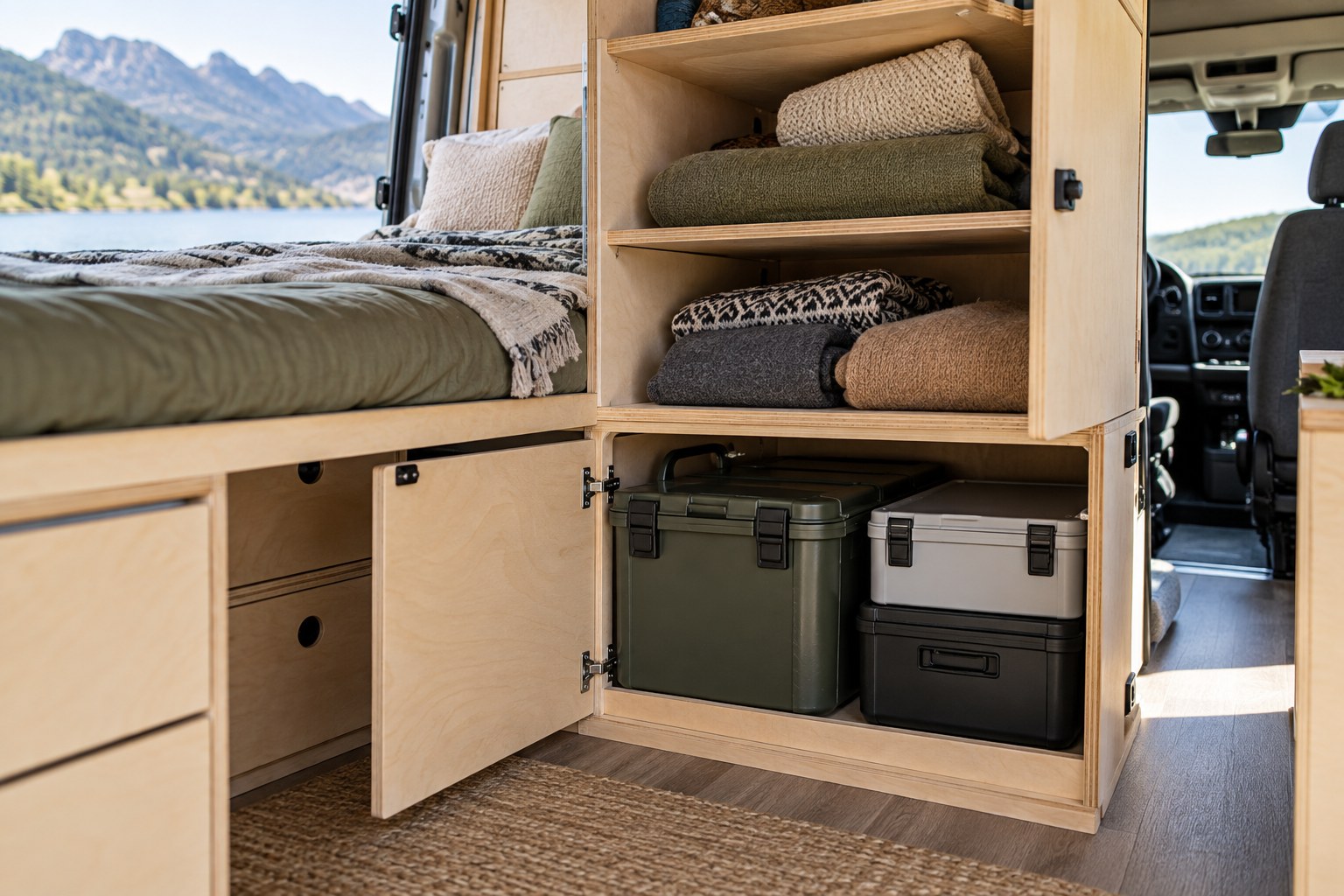
Keep shelves separate from service clearances
Leave required ventilation, equipment access and operating clearances unobstructed. Check the contents as well as the empty shelf. A soft bag can expand into a space that looked clear on the furniture drawing.
Confirm suitable attachment with the furniture designer or installer. Avoid treating decorative wall panels as structural support without an appropriate assessment. Changes near equipment or vehicle fittings should be coordinated before installation.
Make the shelf easy to reset and clean
Use removable groups where they help: one basket for morning items can be lifted onto a table while parked and returned afterwards. Choose a system you can empty and wipe without dismantling several permanent dividers.
Review the arrangement after a trip. If objects repeatedly move to the table because returning them to the shelf is awkward, change the location or reduce the contents. Simple access is more useful than an overfilled display.
For enclosed alternatives, see the cupboard storage guide. Confirm shelf options and loading with NEVAN for the furniture configuration you are considering.