

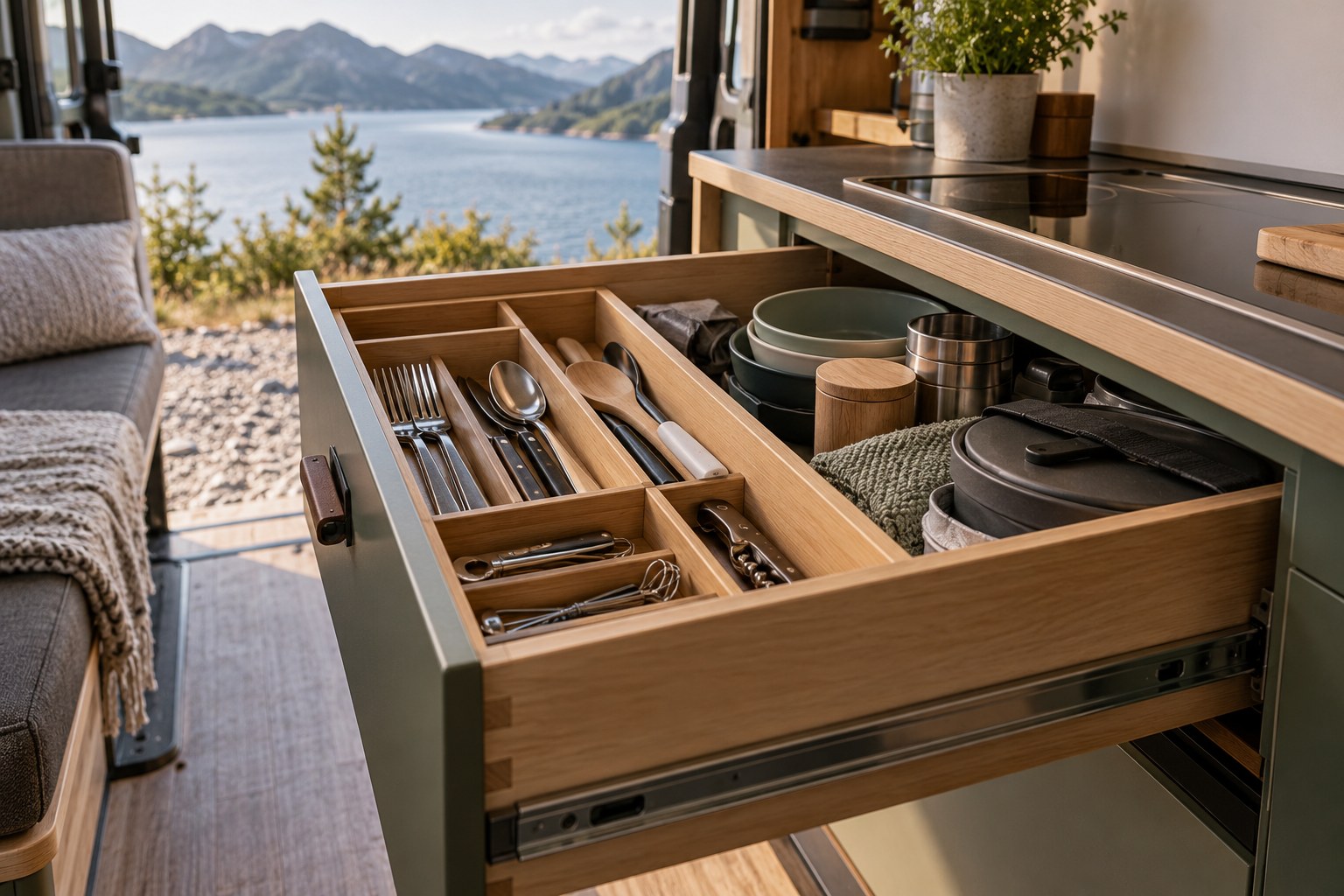
Campervan drawer inserts work when they fit both the drawer and the things you use. A beautifully divided tray can waste space if its compartments are the wrong length for your utensils, or if the tray cannot be lifted out once the drawer sits beneath the worktop.
Choose the drawer first and measure its usable interior. Then build a simple arrangement around a normal trip’s contents, leaving room to remove and clean each part.
Measure inside the completed drawer
Record the internal width, depth and clear height. Check for runner hardware, fixing heads or a shaped back that reduce the space available. The nominal cabinet size is not a reliable organiser dimension.
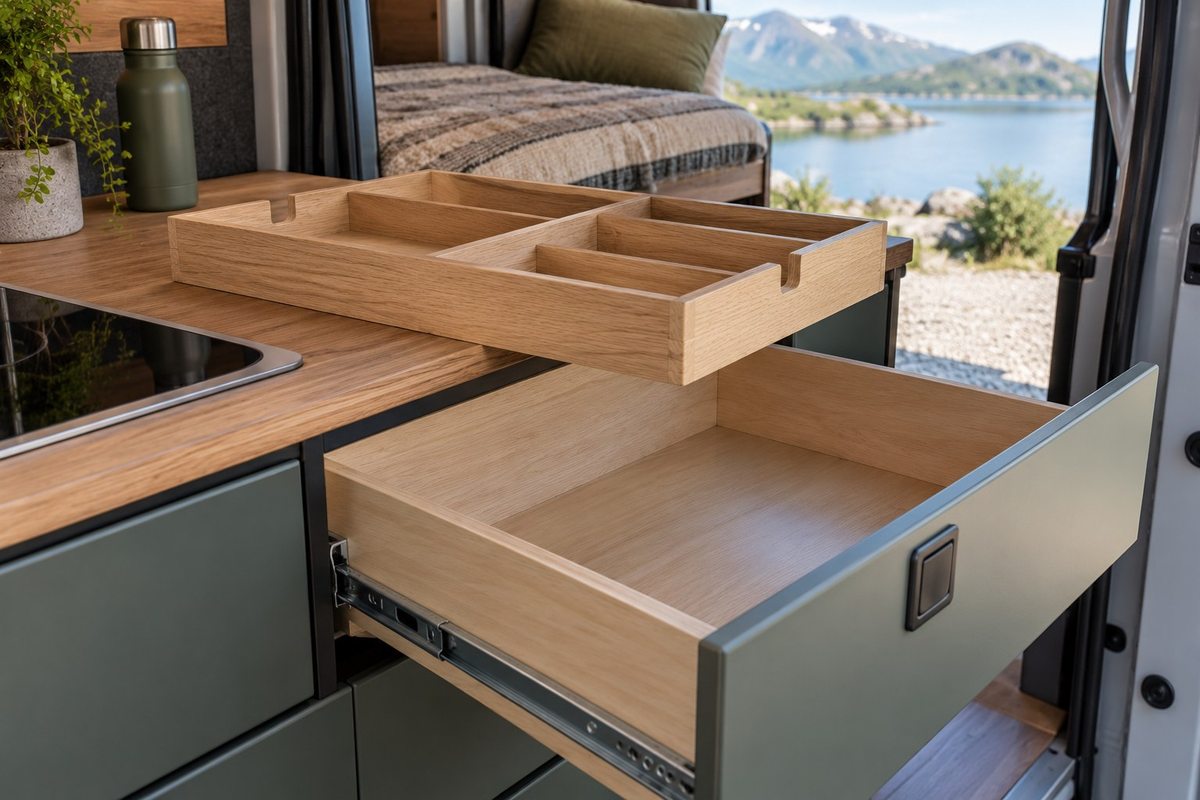
Also measure the opening above the drawer. A tall container may fit inside when the drawer is out of the cabinet yet be awkward to lift past the worktop when installed. Test the removal path, not just the footprint.
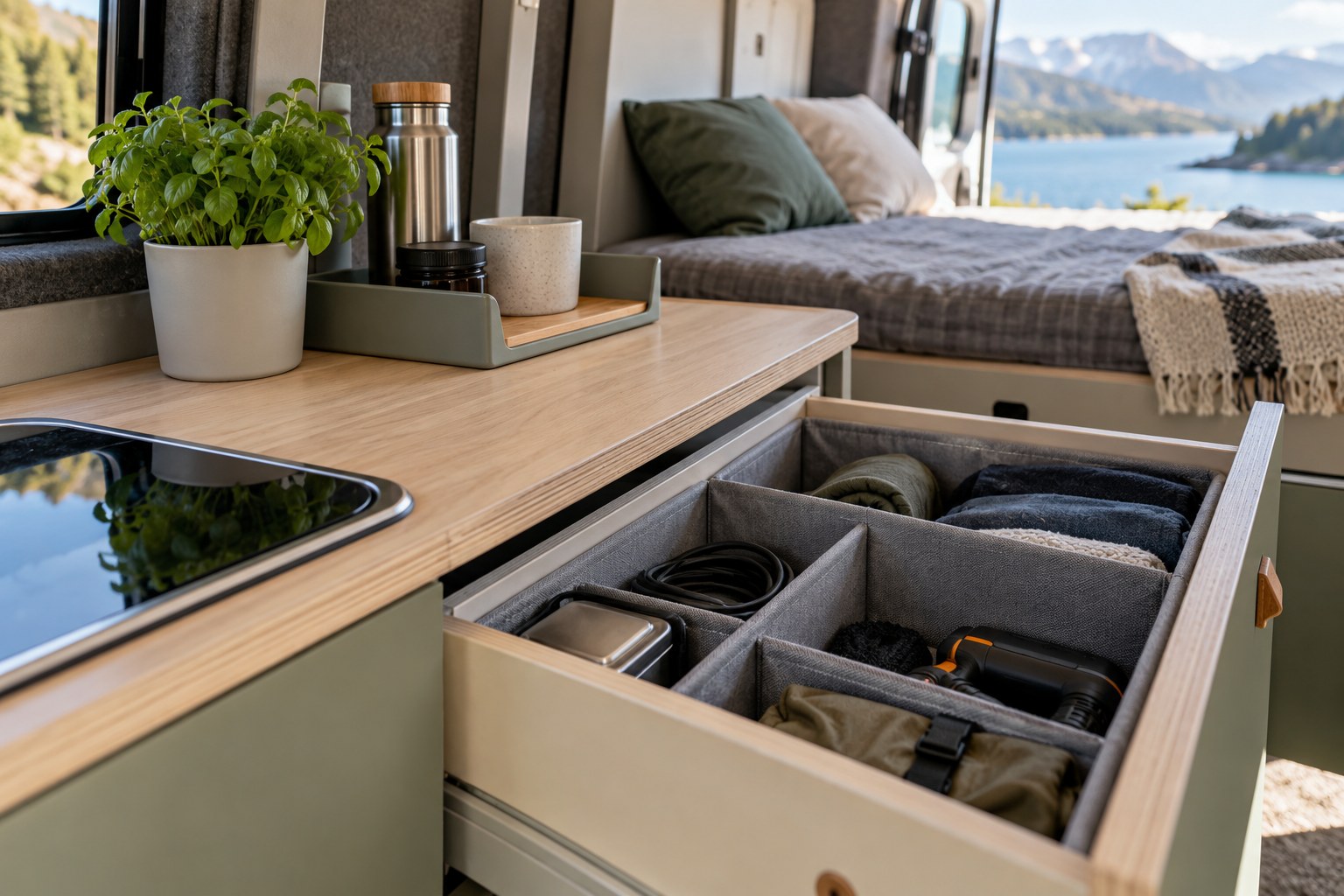
Sort by how often you reach for things
Lay the contents on a table in useful groups. Daily cutlery deserves an easy-to-reach position. Less-used tools can go further back, provided you can still see and retrieve them without emptying the drawer.
Question duplicate tools before making more compartments. A compact kitchen does not necessarily need a dedicated space for every item from a home kitchen. Keep the arrangement related to meals you actually prepare.
Compare trays with adjustable dividers
A removable tray makes a group of items easy to lift out. Adjustable dividers offer more freedom when contents change. Small separate boxes can help with awkward objects, although too many thick walls can consume a surprising amount of useful width.
- Check the longest utensil with its handle included.
- Leave fingers room to grasp flat items.
- Keep sharp tools in appropriate protective storage.
- Make every compartment reachable for cleaning.
Use a temporary arrangement before committing to a fitted insert. Simple containers let you test the divisions on a trip and discover which objects always end up in the wrong place.
Deal with movement without trapping dirt
Loose small objects can move and rattle in a travelling drawer. Choose suitable materials and retention arrangements in line with the drawer supplier’s instructions. Check any liner’s care guidance and make sure it can be removed to inspect the surface below.
Do not treat an organiser as the drawer’s travel latch. The drawer and its contents still need the appropriate closure and load arrangement. Avoid inserting a divider where it could interfere with the closing mechanism.
Leave room for the next trip
Keep one small area flexible for something that changes: coffee equipment, a lunch container or another traveller’s utensils. A completely fixed layout can be frustrating when the contents differ from the original packing list.
After your first trip, empty the drawer and review what was used. Remove unnecessary objects before redesigning the insert. A smaller collection with visible contents is easier to maintain than a crowded tray with elaborate divisions.
Our storage drawer guide covers the cabinet-level decisions. Confirm internal drawer measurements with NEVAN before ordering an insert for a particular furniture kit.