

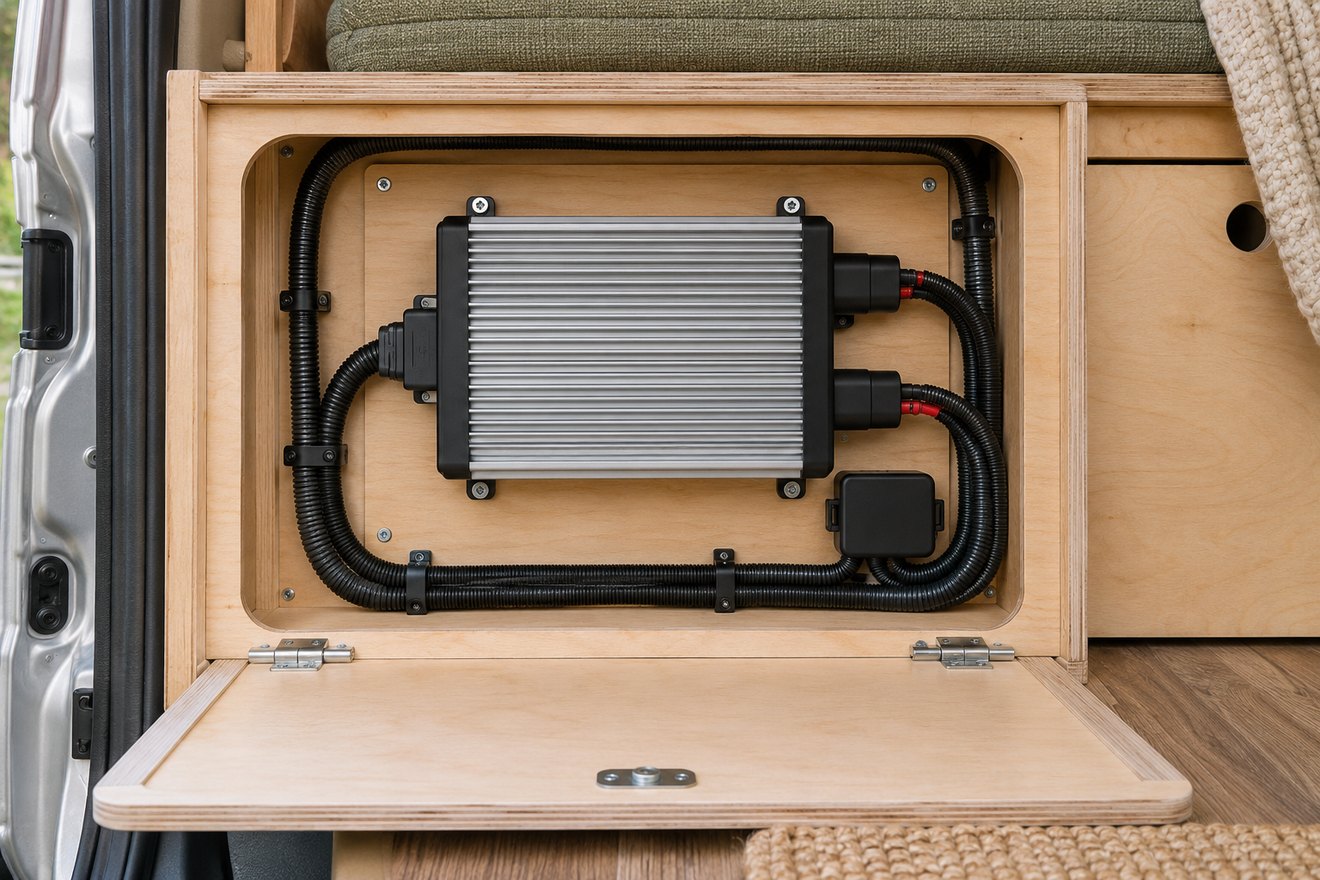
A campervan DC to DC charger controls how the leisure battery receives power from the vehicle while driving. It can be useful when the alternator voltage varies or the leisure battery requires a specific charge profile. The first figure to work out is your actual driving time between nights away.
Compare usable driving time with your energy use
If you draw about 35 Ah per day, a charger supplying a steady 20 A could deliver about 20 Ah in an hour under ideal conditions. Actual charging can be lower if the battery reduces acceptance or the charger limits its output. Use that estimate to decide how much you still need from solar or hook-up on your typical trip.
Choose limits for the vehicle and the battery
Check the leisure battery’s permitted charge current and profile, including any low-temperature limits. Have a qualified auto electrician check the approved vehicle connection, alternator headroom, protection, cable run and engine detection. The Victron Orion XS technical overview gives an example of how an individual charger handles variable alternator voltage.
Plan cooling and future access
Plot the unit, cable entries and inspection space on your furniture diagram. Follow the chosen charger’s mounting and airflow requirements and keep the box clear of stored clothes. After fitting, confirm with the installer how to tell when charging has started and how the system behaves on a short journey and immediately after stopping.
FAQ
Is the largest DC to DC charger the best choice?
Check the battery limits and approved vehicle connection first, then compare the available charging with your actual daily use.
Can solar charging work alongside it?
A compatible installation can use several charging sources. Have the installer check their combined behaviour, limits and settings for your battery system.
Read our guide to planning a campervan battery bay for the next part of the build. You can also send your layout and measurements to NEVAN.