
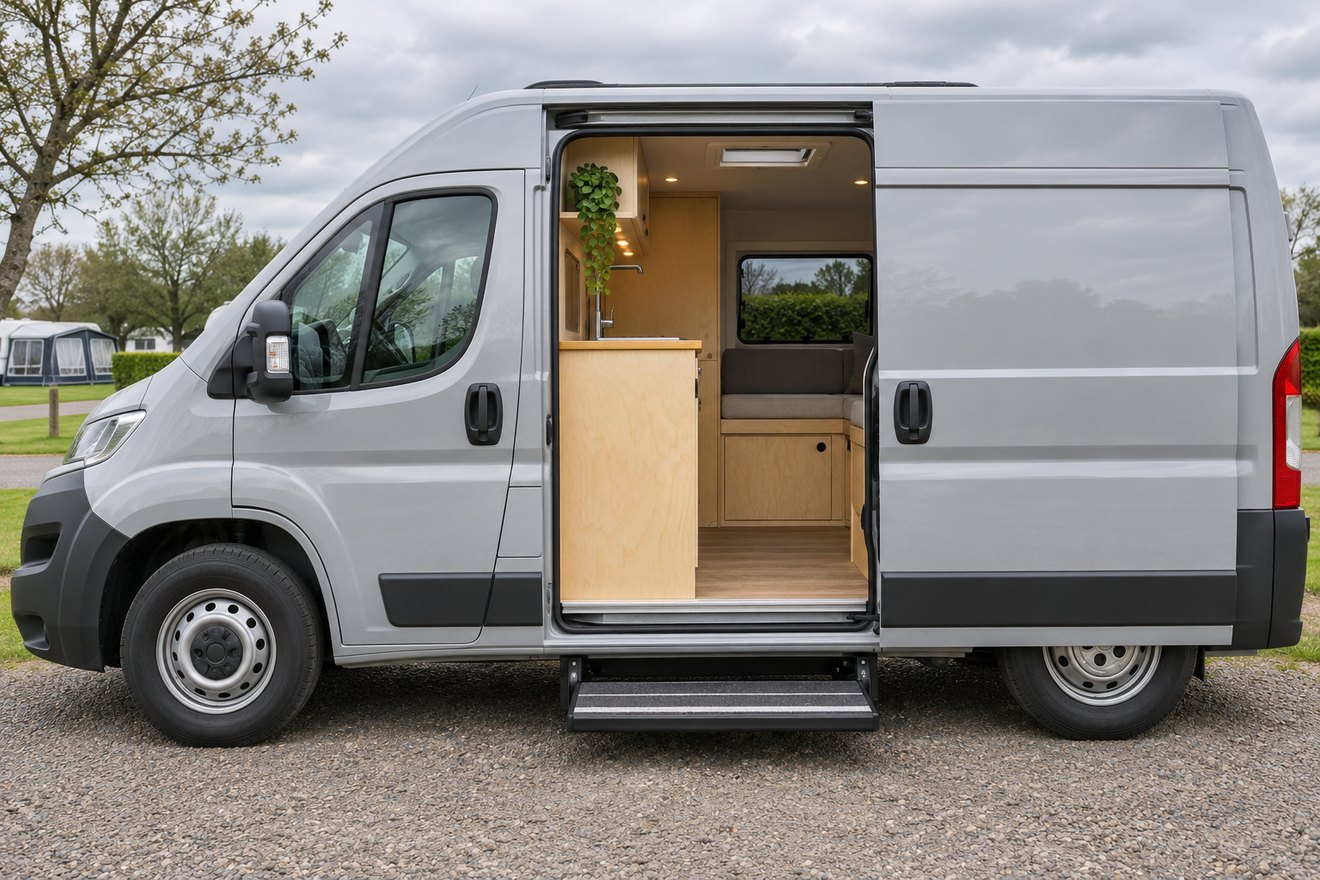
A campervan side step helps at a high doorway, particularly if you added a thick finished floor or use the van with children. First check the height from firm ground to the everyday threshold. Mark where a foot lands when leaving the van, since a step that appears centred under the door can sit too far back for the natural walking line.
Decide between a portable and fitted step
A portable unit needs a suitable, stable surface and a place to go during travel. A fitted step saves unpacking time, but its retracted position must suit the vehicle’s ground clearance and underside fittings. Check the manufacturer’s load and fitting instructions and measure what remains clear beneath the van. Include the step in the conversion weight estimate.
Plot the step alongside the sliding door
With the van parked, mark the open doorway, ground contact and walking route on a drawing. Check where someone can place a full foot and grasp a support. If you use a drive-away awning, show the step against the tunnel and groundsheet. Have the installer confirm the mounting position, wiring if applicable and clearance from vehicle systems.
Add it to the departure routine
Learn the required travel position and the operation of any warning or interlock supplied with your step. Keep dirt, ice and trapped fabric clear as the instructions direct. Store a portable step so it cannot move about while driving. Make one departure practice at home with your normal footwear, mat and doorway furniture in place.
FAQ
Is a taller portable step always easier to use?
Try the rise onto the step and from the step to the threshold. A stable unit that creates a manageable pair of rises usually matters more than raw height.
Can a fitted step go under any sliding door?
Confirm compatibility with your vehicle version, fittings and proposed mounting point before buying or altering the van.
Read our guide to taking campervan furniture measurements for the next part of the build. You can also send your layout and measurements to NEVAN.