
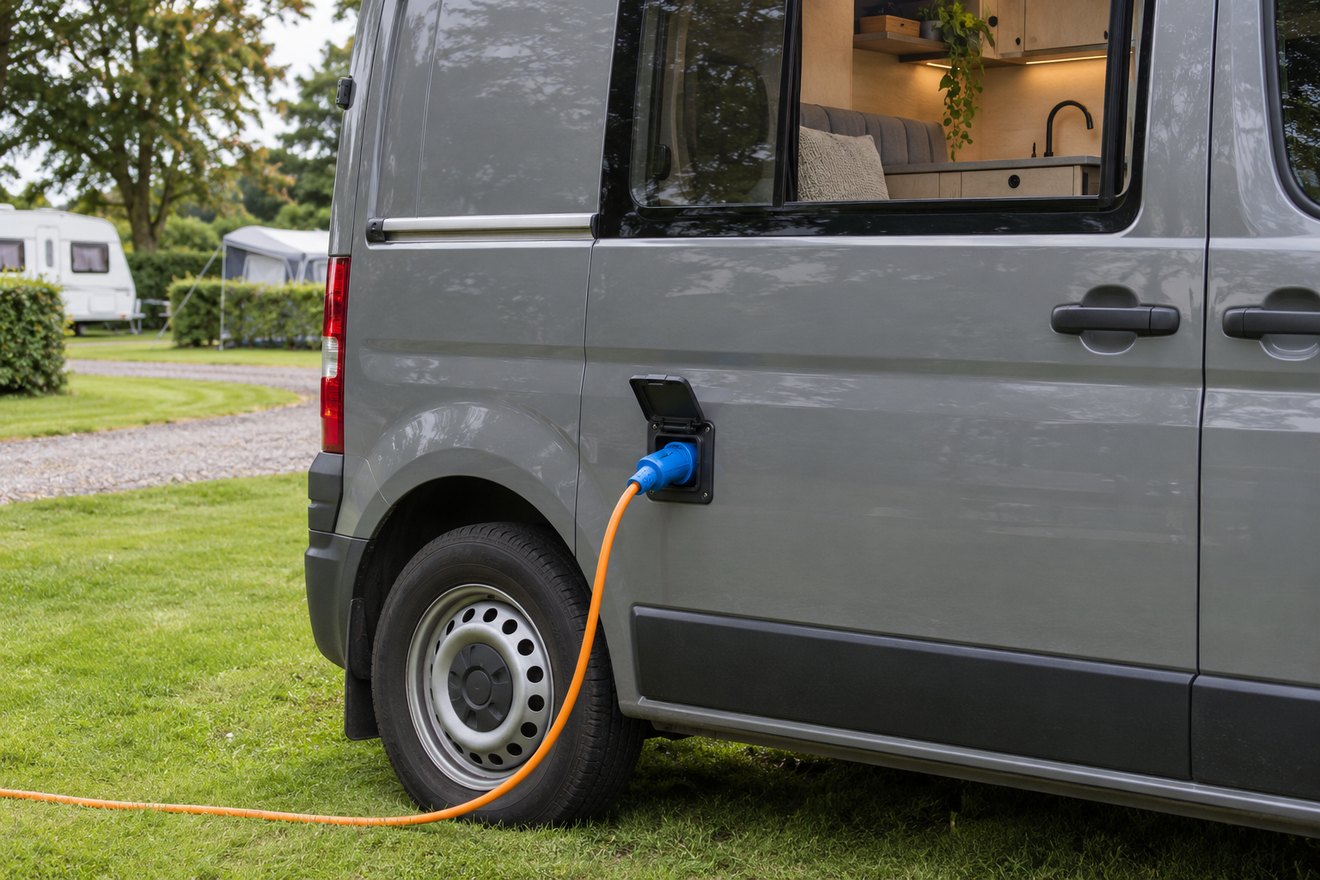
A campervan hook-up supplies mains power from a campsite pitch. Before relying on it for heating or cooking, find out the available current at that site and what your van’s installation allows. Put both numbers in your arrival notes so the person connecting can check them without digging through manuals.
Compare the pitch supply with your appliances
At a nominal 230 V, 10 A gives about 2,300 W. A 2,000 W kettle and an 800 W heater already exceed that figure, before adding any other load. Read the input ratings and include built-in equipment that can start automatically. A separate circuit inside the van may have a lower limit than the bollard. Ask the site about its supply before arriving if mains power is essential for your trip.
Use the right lead and ask about the site procedure
Use approved, undamaged hook-up equipment, fully unwind the lead and route it away from wheels and walking lines. Follow the campsite and vehicle instructions. The Camping and Caravanning Club’s campsite electricity guide covers supply limits, cable use and safety checks. Have fixed vehicle mains work and inspections handled by a qualified technician.
Plan the inlet and the equipment bay
In a conversion, stand beside the proposed inlet and imagine unpacking on a wet pitch. Check where the cable will reach, how you will stow it and what sits immediately behind the inlet. The electrician needs access to inspect the installation later. Arrange the furniture so a crowded cupboard cannot routinely block that access.
FAQ
Does hook-up charge the leisure battery automatically?
Only if the installed system includes a suitable charger that operates on hook-up. Confirm its settings and operation in the system documentation.
What if the pitch supply keeps tripping?
Switch off appliances and ask site staff or a qualified technician to help diagnose the cause. Repeated trips can indicate overload or a fault.
Read our guide to a campervan leisure battery system for the next part of the build. You can also send your layout and measurements to NEVAN.